The Government of Ghana has stepped up its nationwide land reclamation efforts as part of renewed measures to reverse the environmental destruction caused by illegal mining, popularly known as galamsey.
The initiative, introduced under the administration of President John Dramani Mahama, focuses on restoring degraded forest reserves, reclaiming abandoned mining pits and rehabilitating polluted landscapes through large-scale reforestation projects.
The latest phase of the programme is targeting Nkroful in the Western Region, the hometown of Ghana’s first President, Kwame Nkrumah.
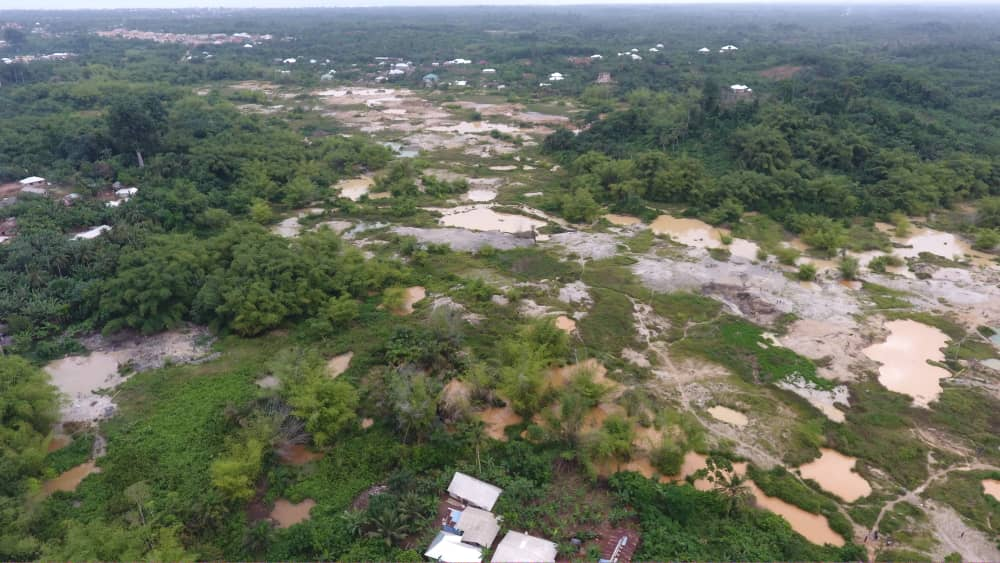
Approximately 800 acres of mined-out land along the Subri River have been earmarked for full restoration after years of illegal mining activities left the area heavily degraded.
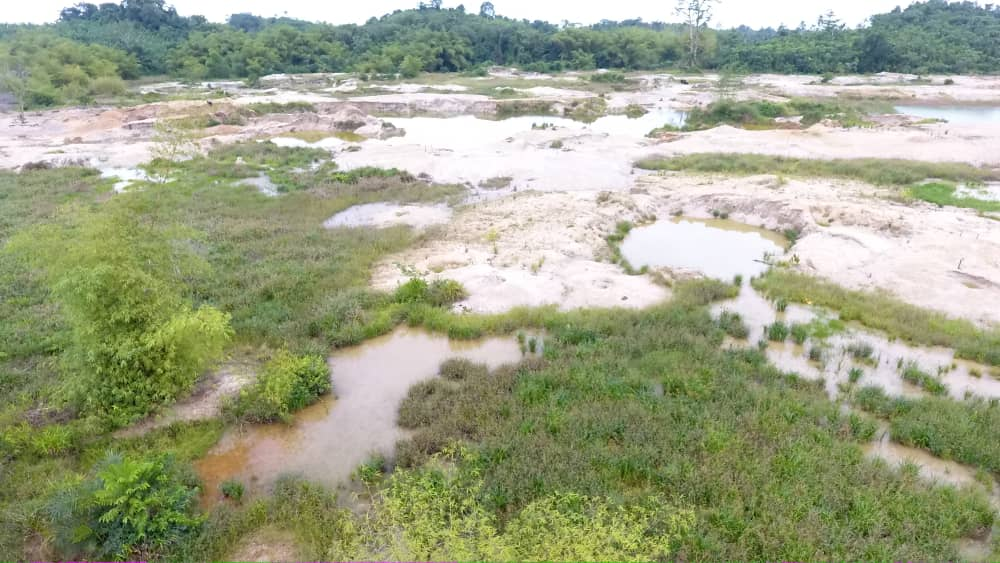
The abandoned pits, many of which are filled with rainwater, have become a major safety concern for residents, particularly parents who fear for the safety of children in the community.
Nkroful Agriculture Senior High School is among the institutions severely affected by the illegal mining activities.
Just months ago, a student of the school reportedly drowned in one of the abandoned pits located behind the campus, highlighting the dangers posed by the unregulated mining operations.
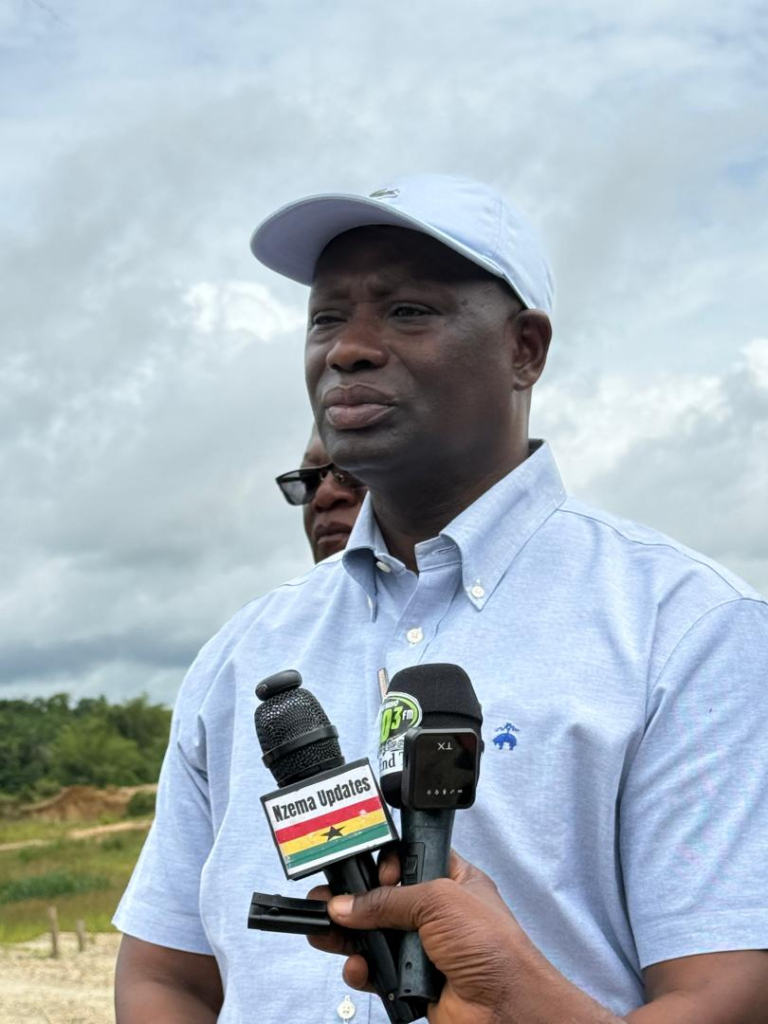
Minister for Lands and Natural Resources, Emmanuel Armah-Kofi Buah, has expressed concern over the devastating impact of illegal mining on communities and educational institutions in affected areas.
Speaking after officially handing over a degraded mining site for restoration, the minister revealed that even his former school has not been spared from the destruction caused by illegal mining activities.
“My own school is affected by illegal mining activities, and it’s sad. When I go there sometimes I feel like crying. This is a school that made me literate,” he said.
Communities including Nkroful, Bokazo and Anwia are among areas where lands have been severely degraded by illegal mining operations.
As part of the reclamation exercise, thousands of cassia and teak seedlings will be planted to stabilise the soil, restore biodiversity and return the land to productive use. The two tree species were selected for their fast growth and strong soil restoration qualities.
RM Ecorestore Ghana Limited has been tasked with overseeing the reclamation and reforestation works.
Lead Operational Director of the company, Nana Kyeame Ampratwum, praised the Mahama administration for prioritising land restoration efforts.
He also commended Mr. Armah-Kofi Buah for his active involvement and commitment to the project.
“The Minister has shown hands-on leadership and commitment to seeing the project through,” he stated.
The restoration initiative is being funded by Zijin Golden Ridge Limited, a large-scale mining company operating in Akyem, helping to ease the financial burden on the state.
The partnership, facilitated by Lands and Natural Resources Minister Emmanuel Armah-Kofi Buah, is expected to save the state millions of cedis while creating employment opportunities in mining-affected communities.
Beyond restoring degraded lands, the project is expected to generate direct jobs in seedling production, tree planting, plantation management and long-term forestry activities for residents whose livelihoods have been disrupted by illegal mining.
Restoration process
The land restoration exercise will be carried out in phases to remove toxins and rehabilitate the damaged environment.
The process will begin with backfilling mined-out pits, followed by land restoration and reshaping works.
According to Nana Kyeame Ampratwum, effective water management will play a critical role in the rehabilitation process, including de-ponding, dewatering and redirecting water flow across the degraded sites.
“We will then check the turbidity level of the soil. If there is mercury or any other contaminant in the soil, we will remove it,” he explained.
He added that the restoration efforts are also expected to improve the condition of the Subri River, which has suffered severe pollution from illegal mining activities.
A similar reclamation initiative has already transformed abandoned mining sites at Nyankumase in the Amansie South District of the Ashanti Region, where cassia and teak plantations now thrive on previously barren land.
Speaking at the groundbreaking ceremony in Nkroful, Mr. Armah-Kofi Buah reaffirmed government’s commitment to protecting Ghana’s lands, forests and water bodies, describing environmental restoration as a key national priority.
“The Mahama administration is determined to reverse the destruction caused by years of irresponsible mining, particularly in forest reserves and farming communities,” he stated.
He highlighted two major initiatives driving the government’s environmental agenda — the Tree for Life Programme and the Blue Water Programme.
Since returning to office, President John Dramani Mahama has placed environmental protection and sustainable resource management at the centre of his administration’s governance priorities.
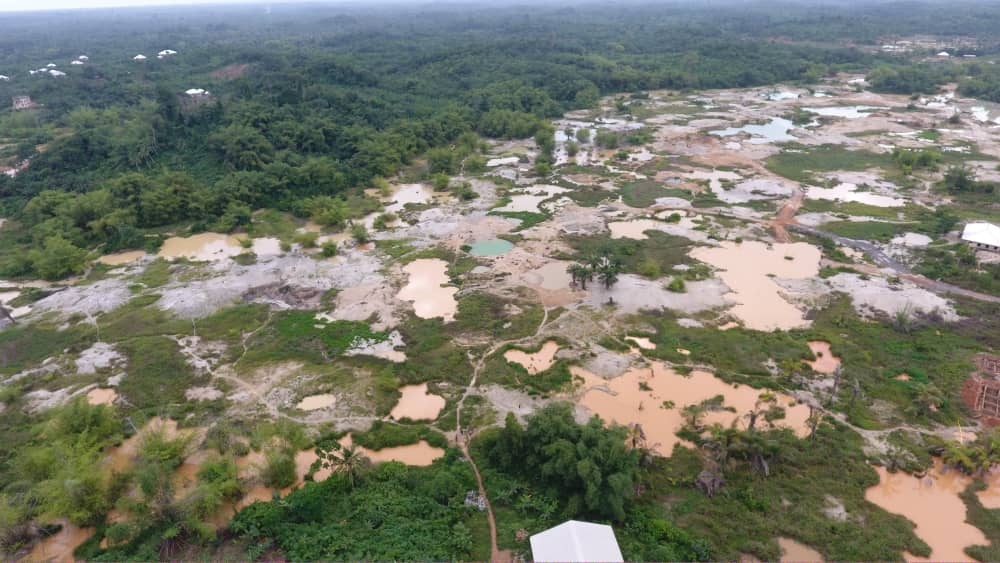
Open and abandoned mining pits continue to pose serious threats to both lives and livelihoods, with government aiming to restore the degraded lands through farming and sustainable forest cover.
Minister Armah-Kofi Buah said reclamation efforts currently underway in Nkroful and Nyankumase mark only the beginning of a broader national initiative.
According to him, government plans to aggressively scale up such partnerships across the country to ensure that lands destroyed by illegal mining, popularly known as galamsey, are fully rehabilitated and returned to productive use.
He stressed that no land should be permanently lost to the effects of illegal mining activities.