Only 11.8% of private and international schools in Ghana consistently teach a Ghanaian language, according to data presented at the launch of the Kids Discovering Ghana initiative, raising fresh concerns about the preservation of the country’s cultural identity.
The findings also show that about 71% of these schools do not incorporate traditional games into their learning activities, prompting questions about how effectively indigenous knowledge and cultural values are being passed on to younger generations.
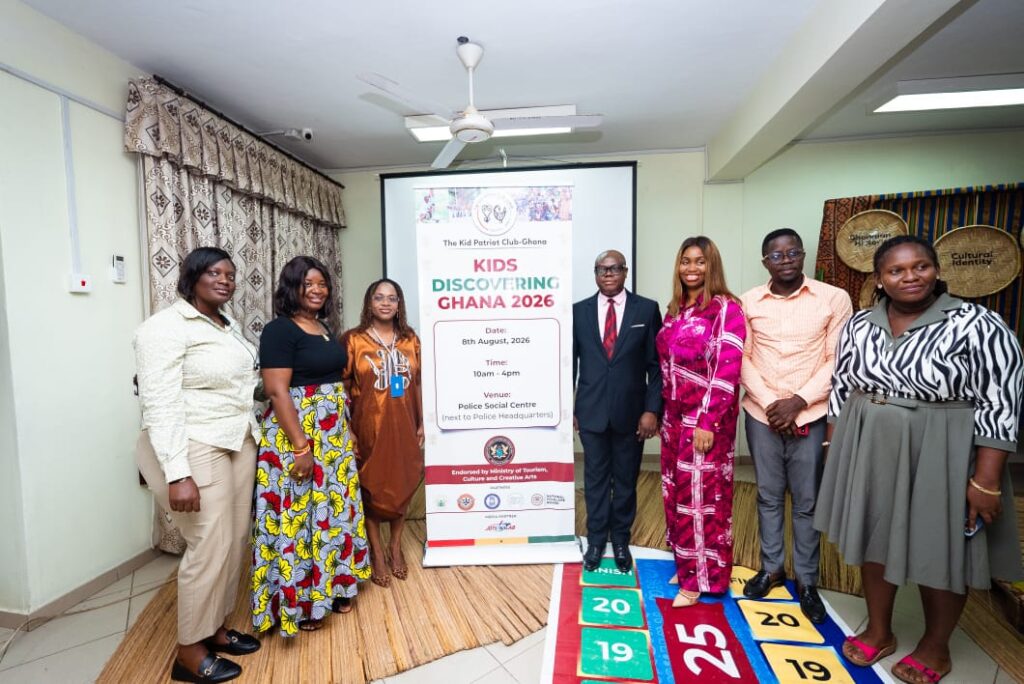
The Founder of Kids Patriot Club and Kids Discovering Ghana, Eleanora Baffour-Agyei, has raised concern over what she describes as a growing national challenge that could weaken Ghana’s cultural heritage.
She warned that many children are gradually becoming disconnected from their linguistic and historical roots, calling the trend “a quiet, devastating national disaster.”
According to her, language remains central to preserving identity, culture and traditional knowledge.
“Every time a Ghanaian child is unable to speak their mother tongue, a piece of our history dies,” she said.
The concerns were echoed by the Director of the Bureau of Ghana Languages, Ebenezer Ahiator, who emphasised that language goes beyond communication.
He explained that expressions such as “Maakye” in Twi, “Kormando” in Dagbani, and “Oo ba ke” in Ga carry deeper cultural meaning, including values, wisdom, proverbs and ancestral worldviews.
“When a child learns to say these words, they are inheriting the wisdom, proverbs, and worldview of their grandparents,” he said.
Mr Ahiator also pointed to a widening generational gap, noting that many children today are more familiar with foreign cultural references than local historical figures and traditions.
“Our children are slowly losing their grip on who they are,” he cautioned.
The initiative has received backing from the Ministry of Tourism, Culture and Creative Arts, which stressed that cultural education is key to nation-building and identity formation.
The Ministry noted that instilling national pride and civic responsibility must begin early, adding that exposure to Ghana’s languages, traditions and heritage helps secure the country’s cultural future.
Stakeholders at the event called for stronger collaboration between government institutions, schools and the media to promote local languages and cultural awareness.
The Kids Discovering Ghana initiative, launched in 2017 as a community project, has since grown into a nationwide programme, engaging more than 1,500 children through cultural and educational activities.
Organisers say the 2026 edition will include language-learning corners, traditional games, cultural performances and civic education sessions aimed at reconnecting young people with Ghana’s heritage.
Participants expressed optimism that such efforts will help revive local language use and strengthen cultural identity among future generations.