The Executive Director of the Centre for Policy Scrutiny, Dr. Adu Owusu-Sarkodie, has called for a strategic increase in state and local participation in Ghana’s mining sector, while cautioning against any abrupt move towards full nationalisation.
Speaking at the theme, “To Nationalise or Transform: Rethinking Ghana’s Approach to Gold Mining, Oil and Critical Minerals,” Dr. Owusu-Sarkodie stressed the critical role the country’s natural resources continue to play in sustaining the national economy.
According to him, gold production alone generated about US$21 billion in 2024, accounting for nearly 67 per cent of Ghana’s total exports. He said the figure translates to approximately GH¢264 billion based on the average exchange rate for the year.
Dr. Owusu-Sarkodie noted that the amount exceeded government revenue and grants by almost GH¢40 billion, underscoring the mining sector’s enormous contribution to the economy.
He explained that Ghana’s economy has historically depended heavily on gold and cocoa since 1911, with mining remaining one of the country’s biggest sources of export earnings. He added that mineral royalties reached GH¢5.2 billion in 2024.
Comparing the figures with revenue generated from abolished taxes such as the COVID-19 levy, e-levy and betting tax, he said the combined taxes brought in about GH¢4.8 billion during the same period — lower than the revenue from mineral royalties alone.
Dr. Owusu-Sarkodie also pointed out that Ghana is currently Africa’s leading gold producer and ranks sixth globally, producing between 130 and 150 tonnes of gold annually, comparable to countries such as Kazakhstan and Uzbekistan.
Despite the sector’s strong performance, he expressed concern about what he described as the relatively low share of mining revenue retained by the state.
Citing research by the Institute for Fiscal Studies, Dr. Owusu-Sarkodie said Ghana’s economic rent from mining between 2011 and 2018 was estimated at US$43 billion, yet the government received only US$4.5 billion, representing about 10.4 per cent.
He said the figures reflect both the high-risk and capital-intensive nature of mining, as well as its significant profit potential, arguing that Ghana must adopt more effective strategies to secure greater value from the sector.
However, he warned against any sudden shift away from concessionary agreements towards full nationalisation, saying such a move could destabilise the industry and discourage investment.
Instead, he advocated a gradual and carefully managed transition towards stronger state participation, noting that radical policy changes would be risky considering the number of mining companies currently operating in the country.
Dr. Owusu-Sarkodie further acknowledged that Ghana may have made policy mistakes in the past by limiting state involvement in a sector known for both high risks and high returns.
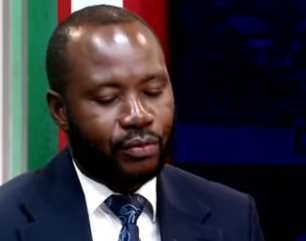
Dr. Owusu-Sarkodie also pointed to international examples from countries including Norway, Qatar, Saudi Arabia, China and Botswana, noting that many resource-rich nations have adopted stronger state participation policies in managing their natural resources than Ghana.
According to him, mining agreements generally fall into three main categories — service contracts, production-sharing agreements and concession arrangements.
He explained that Ghana’s mining sector has predominantly operated under the concessionary model, where private companies are granted rights to extract minerals with limited state ownership and control.
Dr. Owusu-Sarkodie noted that unlike production-sharing and service contract models, the concession system often provides fewer opportunities for the state to maximise revenue and maintain greater control over its mineral resources.
He therefore stressed the need for Ghana to carefully reassess its mining policies and adopt a more strategic approach that will enable the country to derive greater value and long-term benefits from its vast mineral wealth.