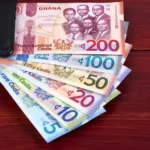
The Ghanaian Cedi has shown notable improvement in 2025, recovering from a deeply weakened position that saw it trade as high as GH¢15-16.00 to the US Dollar. This recovery offers much-needed breathing room to importers, businesses, and consumers alike, but it remains dangerously fragile.
Beneath the surface of these recent gains, a persistent and often overlooked threat continues to undermine confidence in our currency and economy: Economic Policy Uncertainty (EPU).
Policy uncertainty is a situation where businesses, investors, and markets cannot confidently predict the direction of government economic policy. It emerges when tax measures change
abruptly, when new levies are introduced without sufficient clarity, or when political transitions create deep doubts about the long-term economic strategy. This uncertainty is a self-inflicted wound, and addressing it must be the immediate focus if we are to convert temporary relief into lasting currency stability.
How Economic Policy Uncertainty Weakens the Cedi
Globally, research indicates that EPU tends to weaken currencies. When investors are uncertain about a government’s next move, they may delay investments, reduce their exposure, or shift
their capital to safer currencies. This reduces foreign currency inflows and intensifies demand for dollars, thereby pushing the local currency down.
Three mechanisms are especially relevant for Ghana:
Investor Confidence Erodes Quickly. Local and foreign investors need a stable horizon to plan.
When policy direction shifts without warning, such as surprise changes to gold export rules or unclear tax enforcement, they adopt a “wait-and-see” stance. Reduced investment means fewer
dollars entering the economy.
Expectations Become Unanchored. In forex markets, perception often drives reality. If businesses expect the Cedi to fall due to policy confusion, they rush to buy dollars early. This behaviour creates a self-fulfilling cycle of depreciation, even in the absence of new external shocks.
Government Communication Gaps Deepen Uncertainty. Even when policies are well-intentioned, unclear communication regarding import restrictions, foreign exchange surrender rules, or IMF-related reforms can trigger speculation. In the absence of clarity, markets assume the worst.
The Double Tax of EPU: Opportunistic Pricing
The most painful consequence of policy uncertainty is the failure of the market to pass the benefits of the Cedi’s recovery on to the consumer. This failure is both structural and behavioural.
Despite the Cedi’s recent appreciation, many Ghanaians are still paying the same high prices. While external shocks and past costs play a role, we must also admit a harder truth: some price-setting behaviour in Ghana has become opportunistic, not just protective.
For years, traders have adjusted their prices upward at the speed of light whenever the Cedi weakens, yet when the currency recovers, prices come down at the speed of a tortoise. It has
become a one-way escalator; always moving up, never coming down.
This reluctance is not simply caution; it is an economic behaviour nurtured by EPU:
Expectation Management or Expectation Manipulation? Policy uncertainty makes traders fear future depreciation, but it also gives them room to hide behind a “just in case” price premium. They price based on fear, not current fundamentals.
Recovery of Past Losses, or Holding on to Windfalls? Many bought goods when the forex rate was high. However, some are also using old stock, purchased at old, low exchange rates, to justify profits at today’s stronger rate. This is price inertia, a form of economic arbitrage.
A Habit Formed from a Fragile Economy. Years of volatility have trained market participants to move only in one direction—upward. Over time, this habit has replaced honest market adjustment with a culture of price stickiness.
Ghana must confront this behavioural pattern honestly. A stronger Cedi cannot benefit citizens if pricing behaviour remains trapped in a cycle of “quick to rise, slow to fall.” The root of this dysfunctional dance is policy uncertainty.
Some may argue for a more direct approach: enacting strict laws against rapid price increases or “price gouging.” While this sentiment is understandable, history cautions us that such controls often create more problems than they solve. They can lead to artificial shortages, a vibrant black market, and stifle the very investment we need. The goal, therefore, is not to replace the market’s invisible hand with the government’s heavy fist, but to cure the economic policy uncertainty that has made that hand so dysfunctional. When businesses can confidently predict the economic environment, honest competition, not opportunistic hoarding, becomes the most viable strategy for growth. A more predictable policy environment would not only stabilise the currency; it would impose a much-needed discipline on pricing behaviour.
The Hidden Cost: Undermining Capital Markets
The corrosive effects of EPU also cripple the formal economy. Building on my foundational research into the GSE, my current empirical analysis demonstrates that policy uncertainty is directly impairing the exchange’s efficiency. When stock prices across an entire market begin to move together, a phenomenon called high Stock Price Synchronicity, it signals that investors are ignoring company-specific facts and are focusing overwhelmingly on the perceived risk from the macro-policy environment. This high synchronisation, directly linked to EPU, has two severe costs: it cripples capital allocation and discourages foreign direct investment (FDI) by making Ghana’s market look like a highly correlated, single gamble on government stability.
Why Predictability is Non-Negotiable
Ghana is still under an IMF Programme. Credibility isn’t just about meeting targets; it is about predictability. The path to currency stability does not require new taxes or burdensome levies.
Instead, it demands discipline in governance and communication:
Enforce Existing Rules Consistently. Focus on applying current laws fairly and transparently.
Predictable enforcement builds trust far more than frequent changes.
Improve Policy Coordination Across Institutions. The Bank of Ghana, the Ministry of Finance, and key agencies must align publicly and privately. Contradictory statements confuse markets and invite speculation.
Signal Commitment Through Actions, Not Just Words. Follow through on announced reforms like the GoldBod framework with visible, consistent implementation. Markets respond more to deeds than declarations.
The Cedi’s recent improvement is a gift, but only if we use it wisely. Reducing self-inflicted uncertainty is the most effective step Ghana can take right now to protect its currency, discipline market behaviour, and lay the groundwork for sustainable, equitable growth.
–
Author Bio:
Ruth Wonipo Bandjie is a second-year PhD student in Finance at the Southwestern University of Finance and Economics (SWUFE), China. Her research interests include financial market efficiency, economic policy uncertainty (EPU), stock price synchronicity in emerging and frontier markets, and the use of machine learning techniques in empirical finance.