The Ghana Health Service (GHS) has released a public health advisory as the country prepares for the onset of the harmattan season, urging the public to take precautionary measures against the health threats associated with the dry and dusty conditions.
In a statement issued on Monday, December 1, and signed by the acting Director-General, Dr Samuel Kaba Akoriyea, the GHS explained that despite recent sporadic rains, the harmattan is fast approaching.
As a result, Ghanaians are likely to face heightened risks of skin irritation, dehydration, respiratory problems, eye infections, and meningitis.
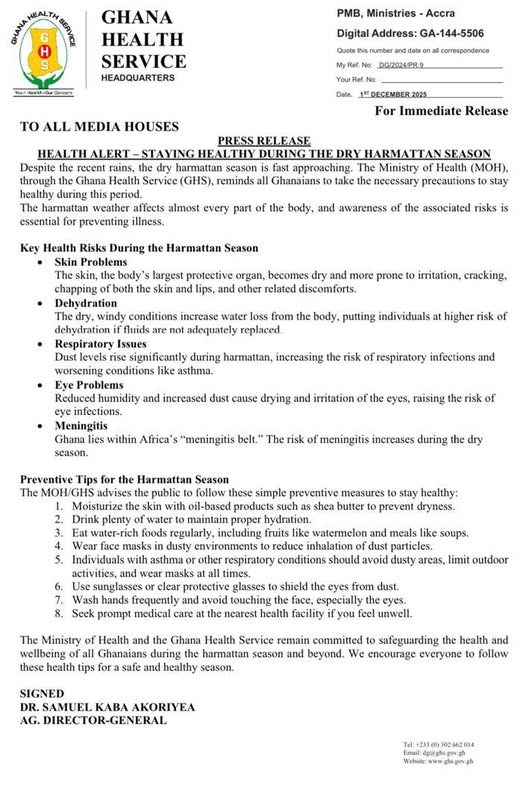
The Service noted that the harsh conditions of the harmattan affect several parts of the body, highlighting common concerns such as:
Skin irritation: dryness, cracking and general discomfort due to reduced moisture.
Dehydration: increased loss of body fluids caused by the dry winds.
Respiratory challenges: worsening of asthma and other respiratory infections as dust levels rise.
Eye infections: irritation and redness resulting from exposure to dust and dry air.
Meningitis: increased vulnerability as Ghana lies within the African meningitis belt, where cases spike during the harmattan.
To minimise these risks, the GHS recommended a series of preventive actions, including:
Regularly moisturising the skin with oil-based products such as shea butter.
Drinking adequate water and consuming water-rich foods like fruits and soups.
Wearing face masks to reduce exposure to dust particles.
Avoiding dusty environments, especially for those with asthma or heart-related conditions.
Using protective or medicated eyewear to reduce irritation.
Washing hands and face frequently to clear accumulated dust.
Seeking prompt medical attention when symptoms arise.
The GHS assured the public that it remains committed to safeguarding the nation’s health throughout the season.
“We encourage everyone to follow these health tips to ensure a safe and healthy harmattan,” the statement concluded.