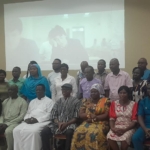
The monitoring and evaluation officer of the Ghana Anti-Corruption Coalition (GACC), Solomon Nyankah, has called on citizens to resist, reject, and report (3 Rs) incidences of corruption.
He said citizens needed to oppose, challenge, or prevent corruption in any form by firmly refusing to take part in or benefit from corrupt acts and to inform the appropriate authorities or institutions about a suspected or confirmed act of corruption for effective investigation.
Mr Nyankah, during a GACC multi-stakeholder forum on the Office of the Special Prosecutor (OSP) and other corruption-related subjects, said slow judicial processes, limited resources and funding, public expectations against practical realities, institutional and political interference were challenges inhibiting the anti-corruption fight.
He said the constitution does not provide a clear definition of corruption, which has created room for multiple interpretations and legal loopholes, as well as the reverse burden of proof, which would require the OSP to prove beyond a reasonable doubt that the accused committed the offence.
Mr Nyankah said the impacts of the OSP included securing seven convictions, 33 persons standing trial, nine cases prosecuted, recovering GH₵ 31.89 million, saving GH₵ 6.55 billion and GH₵ 6.42 billion in suspended transactions, while 22.1 million persons were sensitised.
On the functions of the OSP, he said these included the investigation of corruption and corruption-related offences, disseminating information gathered during the investigation and prosecution of these offences under the law.
Mr Nyankah explained that corrupt practices were manifested in bribery, fraud, embezzlement, extortion, conflict of interest, favouritism, nepotism, facilitation payment, abuse of discretion, and illegal contributions.
He said the expected outcomes of these engagements were to improve public understanding of the OSP and related anti-corruption frameworks, increase public education on the Witness Protection Act, enhance the capacity of stakeholders to advocate for the revision and passage of the Conduct of Public Officers (COPO) Bill, and increase willingness to report corruption and support investigations.
Mr Nyankah said the GACC was a coalition of 13 public institutions, the private sector, and civil society organisations with a common goal of fighting corruption and promoting good governance.
Mr Ernest Amedior, the Hohoe Municipal Director of the National Commission for Civic Education (NCCE), reiterated the need for citizens to examine and begin to exempt themselves from corrupt environments.
He encouraged members of the public to kindly educate and correct others when they came across persons who engaged in such wrongdoings, and if they refused to listen, they should report them to the law enforcement agencies for appropriate actions to be taken.