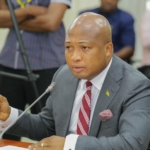
Ghana has reaffirmed its position on reciprocal deportations involving Israeli nationals despite an apology from Israeli authorities, insisting that any future mistreatment of Ghanaian travellers will be met with an equal response.
Foreign Affairs Minister Samuel Okudzeto Ablakwa said the government would “not compromise on the dignity” of its citizens following last week’s incident at Ben Gurion International Airport.
Speaking in an interview on Joy FM on Thursday, December 11, 2025, Mr Ablakwa said Israel’s Chargé d’Affaires had apologised and appealed for calm after Ghana deported three Israeli nationals earlier this week in retaliation.
He emphasised that the government’s policy remained firmly in place. “We made it clear that if they deported 10 Ghanaians, we will deport 10. If they deport 20, we will deport 20. If they deport 50, we will deport 50. We are not going to accept this,” he said.
The dispute began when Israeli authorities deported three Ghanaians despite the travellers holding valid visas. Two of them were travelling to Israel for a government-organised cybersecurity conference, while the third was on a Christian pilgrimage.
According to Mr Ablakwa, all three had visas issued by the Israeli Chargé d’Affaires and had complied with their travel conditions. “None of them had violated the terms of their visas. They were not illegal immigrants,” he emphasised.
He also clarified widespread reports suggesting that a parliamentary delegation had been detained. He said those involved were staff of the Parliamentary Service rather than Members of Parliament. “There was no MP in this delegation,” he stated.
Mr Ablakwa said the government’s response was not based on the professional status of those affected but on the need to defend Ghanaian citizens abroad. “If the government of Ghana does not stand up for its nationals, nobody will. If we do not insist that we are respected, if we do not insist that our dignity is safeguarded, nobody will do it for us,” he said.
The Minister also challenged Israel’s explanation for the deportations. Israeli officials claimed Ghana’s embassy in Tel Aviv had failed to cooperate with requests for travel certificates for six individuals earmarked for deportation.
However, Mr Ablakwa said the ministry’s checks revealed significant inaccuracies, noting that one person on the list was Gabonese, another had been declared medically unfit to travel, a third already had a travel certificate, and a fourth case had never been referred to Ghana’s authorities.
“In any case, even if you have rounded up people you want deported, is this how you go about it?” he asked, adding that concerns should have been raised through diplomatic channels rather than through the detention of conference participants and pilgrims.
Mr Ablakwa explained that Ghana’s action was grounded in the principle of reciprocity under the Vienna Convention, which he said sovereign states rely on to safeguard mutual respect. He added that the matter also touched on broader issues of dignity and equality. “The black race is not inferior and we will stand up for our people. That is the message we are sending to the Israeli authorities and to every country,” he said.
He stressed that Ghana expects its citizens to be treated abroad with the same respect afforded to foreign nationals at home. “Do not treat Ghanaians in a dehumanising way. Do not undermine our dignity. We are all human beings. We deserve the same respect, the same way we treat your nationals when they travel to our country.”
Ghana and Israel have enjoyed more than six decades of cordial relations, and Mr Ablakwa said the government did not seek confrontation. However, he maintained that Ghana had not triggered the events that led to the current diplomatic tension.