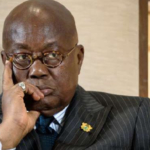
The Legal Director of the United Party (UP), Andrew Appiah Danquah, has delivered a scathing critique of Ghana’s political and legal establishment for what he describes as a collective failure to impeach former President Nana Addo Dankwa Akufo-Addo over his role in legalising mining in forest reserves.
Speaking on Channel One TV on Saturday, December 20, Mr. Appiah Danquah called the decision a “heinous crime against the environment” and condemned the nation’s inability to hold the former leader constitutionally accountable.
“If I have one regret or one disappointment about all of us as Ghanaians, then it was in our inability or our refusal to impeach Nana Addo when he committed this heinous crime and how he deliberately fueled galamsey,” he stated.
His comments follow the recent repeal of Legislative Instrument (L.I.) 2462, a controversial regulation passed in 2022 that granted the sitting President discretionary powers to permit mining activities within protected forest reserves.
The repeal, formalized under the Environmental Protection (Mining in Forest Reserves) Revocation Instrument, 2025, was successfully passed by Parliament on December 10, 2025, after months of pressure from environmental groups, civil society organizations, and concerned citizens.
Mr. Appiah Danquah, a respected legal practitioner and environmental advocate, argued that no president prior to 2022 had the legal authority to allow mining in forest reserves—a position that L.I. 2462 fundamentally altered.
“Prior to 2022, the President of Ghana did not have power to permit mining in forest reserves. That was the essence of that L.I. The essence of that L.I was to give the president power to permit mining in forest reserves,” he explained.
He described the former president’s decision to both seek and utilize such powers as a betrayal of Ghana’s legal and environmental integrity.
“Now to think that the President, Nana Addo will want power to allow mining in forest reserves itself is a fundamental crime on Ghana,” he charged.
Mr. Appiah Danquah did not hold back in his criticism of the ruling New Patriotic Party (NPP), accusing members of the party of lacking the moral authority to speak on the galamsey (illegal mining) crisis that has plagued Ghana’s natural landscapes, polluted rivers, and devastated farming communities.
“I can’t believe he has the cojones, he has the moral authority; anybody in NPP to speak about galamsey,” he declared.
Instead of defending their record, he urged party members to show remorse for what he described as an environmental and moral failure of historic proportions.
“What they should do is wear sackcloth, look for ashes, put the ashes on their heads and bow their heads down in shame for the sin they committed against Ghana,” he added.
The passage of L.I. 2462 in 2022 sparked widespread outrage among environmentalists, with many warning that it would accelerate deforestation, threaten biodiversity, and undermine Ghana’s longstanding efforts to protect its forest reserves.
Under the now-repealed instrument, the President could authorize mining concessions in forests previously deemed untouchable—areas considered critical for water regulation, wildlife protection, and climate resilience.
Since its passage, several forest reserves—including parts of the Atewa, Bia, and Tano Offin forests—had come under threat from mining interests, prompting street protests, lawsuits, and international concern.
Although the repeal has been welcomed as a legislative victory, critics say it comes too late to reverse the environmental damage already done.
They are now calling for a comprehensive review of all concessions granted under L.I. 2462, and for stronger constitutional and legal safeguards to prevent future abuse of executive power in environmental matters.
Mr. Appiah Danquah’s remarks reflect a growing sentiment among sections of the Ghanaian public that accountability must not end with repeal.
He is among a rising chorus demanding retrospective investigations, and in some quarters, calls for a truth and accountability commission on environmental governance under the Akufo-Addo administration.
Though no formal impeachment proceedings were ever initiated against the former President, the debate surrounding his environmental legacy is far from over.
As Ghana continues to grapple with the devastating consequences of illegal and poorly regulated mining, many believe this moment offers an opportunity for national reckoning—and a chance to reestablish the rule of law in the country’s environmental management.