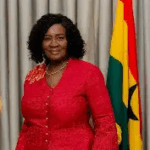
Vice President Prof Jane Jane Opoku-Agyemang says the African diaspora is central to Ghana’s economic recovery, historical justice, and long-term transformation agenda.
She urged sustained collaboration and concrete action as she officially closed the 2025 Diaspora Forum.
The Vice President, speaking on behalf of President John Dramani Mahama at the closing ceremony of the 2025 Diaspora Summit, said the forum was convened at a critical moment when Ghana had deliberately chosen to place history, justice, and responsibility at the heart of its national and continental engagements.
She noted that the conversations over the two days had reaffirmed that reparations were not merely abstract moral claims but complex political, economic, and historical issues that required structure, persistence, and credible leadership.
She said the engagement had helped to clarify Ghana’s evolving partnership with its global citizens.
The Vice President stressed that the idea of the diaspora as the country’s 17th region was far more than a slogan.
According to her, the designation recognised the enduring place of the diaspora in Ghana’s national life and development trajectory, given their continued contributions through remittances, skills transfer, investment, advocacy, and cultural preservation.
The Vice President said resetting Ghana would not be possible without strong and purposeful partnerships, adding that the government was committed to strengthening diaspora-friendly policies and expanding clear pathways for return, investment, and collaboration.
She cited ongoing national initiatives aimed at economic revitalisation and agricultural transformation as deliberate entry points for diaspora participation, emphasising that sustainable partnerships were built on enabling conditions rather than rhetoric.
She noted that under the Reset Ghana agenda, macroeconomic stability was gradually being restored, with inflation declining, reserves improving, and confidence returning to the economy.
Prof Opoku-Agyemang said these gains were not end points but baseline conditions needed to attract serious investors, innovators, and partners, both at home and abroad.
She, therefore, called on the diaspora to help consolidate the progress made so far.
Reflecting on Ghana’s continental role, the Vice President said President Mahama’s mandate as the
The African Union’s champion for reparations went beyond symbolism to reflect a firm commitment to the dignity, memory, and material claims of Africans and people of African descent worldwide.
She said the forum had demonstrated that engaging with historical legacies required more than remembrance but demanded sustained economic, social, and psychological rebuilding anchored in accountability and continuous action.
Mr Samuel Okudzeto Ablakwa, the Minister for Foreign Affairs, said the 2025 Diaspora Forum marked a watershed in Ghana’s engagement with its global diaspora, describing it as a decisive step towards institutionalising diaspora participation in national development.
He said the summit had laid the foundation for a comprehensive framework to mainstream diaspora engagement as a permanent feature of state policy.
Mr Ablakwa said the deliberations brought together a wide range of stakeholders from Africa, the Caribbean and the broader international community.
whose contributions reinforced the global relevance of Ghana’s reparations and diaspora agenda.
He said discussions were characterised by deep reflection on historical injustices, policy-driven partnerships between the state and the diaspora, and a reaffirmation of Ghana’s Pan-African leadership.
The Foreign Minister said participants highlighted persistent structural barriers that limited diaspora investment and participation, including regulatory and legal constraints, and called for reforms to unlock the full potential of diaspora capital and expertise.
He said the summit recognised reparatory justice as a legal and moral obligation rather than an act of charity, while acknowledging that financial compensation alone could not fully remedy the damage caused by colonialism.
He stressed that Ghana’s pursuit of reparatory justice would not undermine its cordial relations with international partners but would rather strengthen them through dialogue rooted in restitution, forgiveness, and mutual respect.
The minister said Ghana remained committed to maintaining friendly relations while advocating for the return of stolen artifacts and broader restorative measures.
Mr Ablakwa announced that, under the directive of President Mahama, the government would roll out an e-visa policy in the first quarter of 2026, with special dispensations for Africans in the diaspora to make travel to Ghana easier and more affordable.
The minister said the success of the engagements and discussions would ultimately be measured by the implementation of their recommendations, stressing that follow-up actions would be critical.
Participants expressed confidence that sustained collaboration with the diaspora would help translate shared history into shared prosperity, positioning Ghana as a leading voice in Africa’s global engagement.