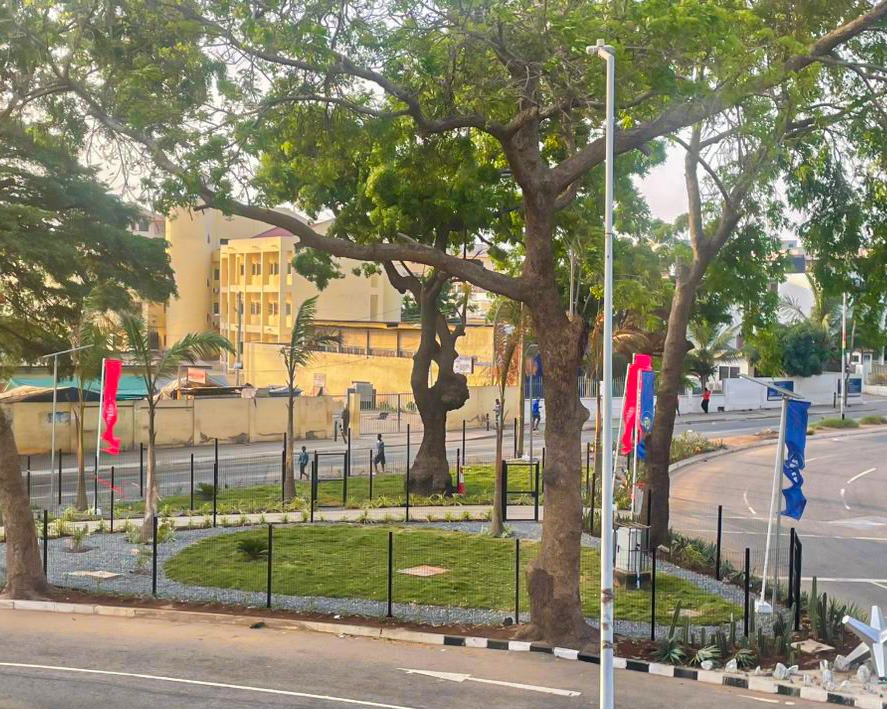
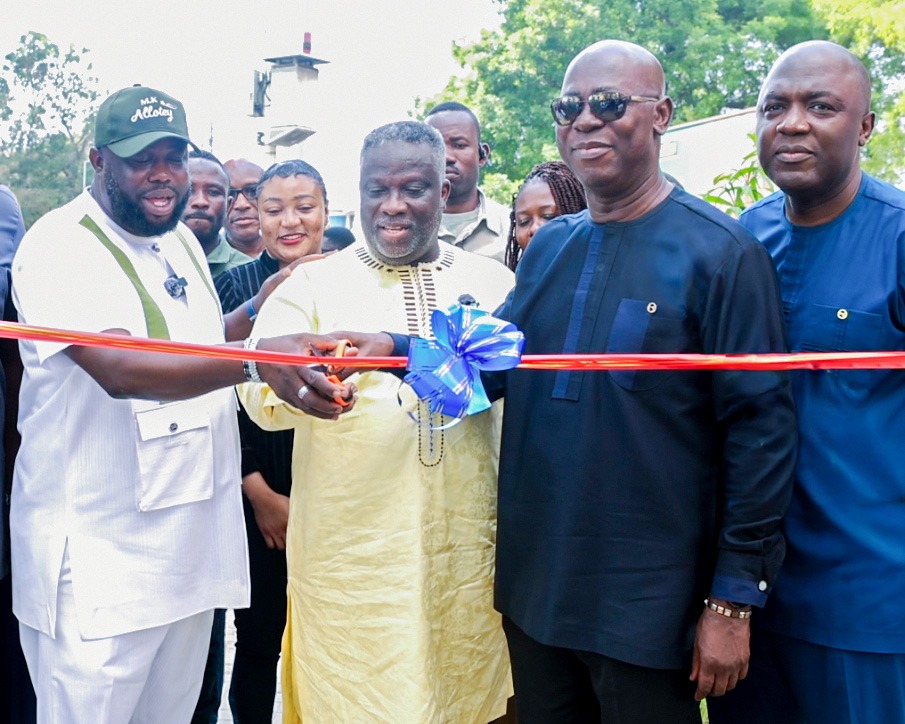
Margins ID Group, in partnership with the Korle Klottey Municipal Assembly and the Accra Metropolitan Assembly, has officially unveiled the Kinbu Triangle green landmark, completing the urban regeneration project in just 30 days. The initiative, commissioned on 19 December 2025, addresses urban heat, environmental degradation and pedestrian safety along one of Accra’s busiest commercial corridors.
The climate-resilient space features native, drought-resistant landscaping and pedestrian-friendly design elements aimed at reducing ambient temperatures and enhancing the urban experience for surrounding schools, offices, businesses and hospitality facilities.
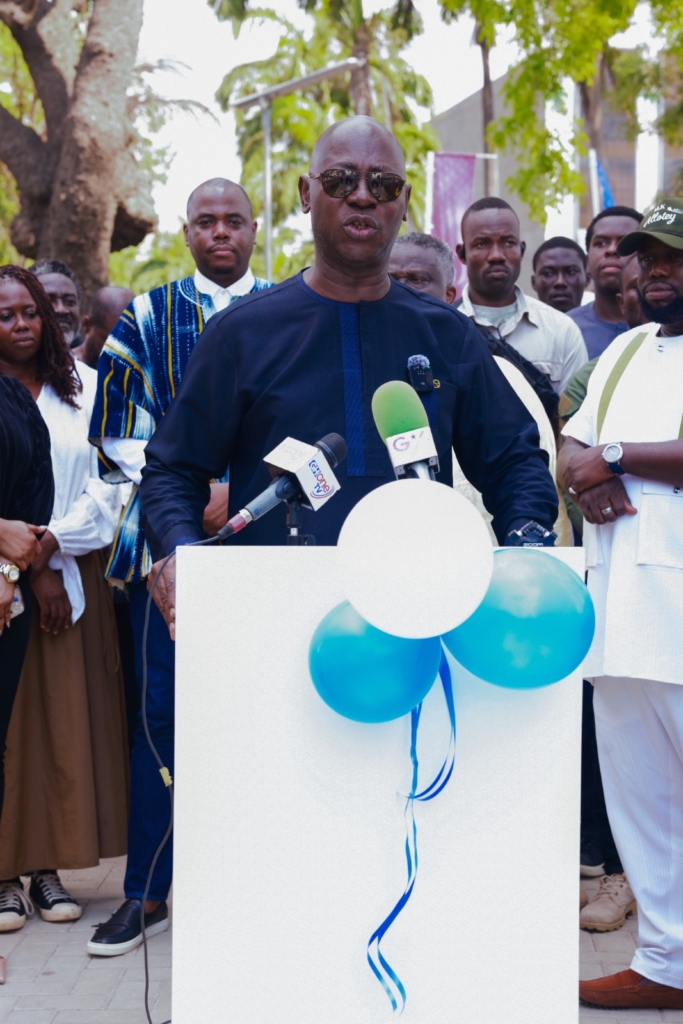
Speaking at the unveiling, the Chief Executive Officer of Margins ID Group, Moses Baiden Jnr, said the project reflects the company’s belief that national development must extend beyond digital systems into the physical spaces people inhabit. He noted that Margins ID Group is headquartered at the Octagon, directly opposite the site, alongside its subsidiaries—Margins ID Systems Applications Limited and special purpose vehicles IMS and IMS II—while the Mayor’s office is located just behind the building.
He explained that the previous state of the triangle did not reflect the standards the company aspires to as a corporate neighbour, adding that “this project reflects our belief that corporate social responsibility should be practical, visible and impactful.”
Mr Baiden further explained that the Kinbu Triangle redevelopment, delivered as part of the company’s 35th anniversary corporate social responsibility initiatives, was driven by proximity to the site and a shared responsibility to improve the immediate environment. He said that given the condition of the triangle, it would not have been appropriate for the company to remain passive, and that through collaboration with the Assembly, Margins chose to act and demonstrate what effective corporate responsibility looks like in practice.
Over the years, Margins ID Group has contributed to society through Sustainable Development Goal (SDG) 9 on Industry, Innovation and Infrastructure; SDG 4 on Quality Education; SDG 5 on Gender Equality; and SDG 16.9 on Legal Identity for All. The redevelopment project also advances SDG 13 on Climate Action by reducing heat, increasing greenery and improving Accra’s urban outlook.
Addressing the media, the Deputy Chief Executive Officer of Margins ID Group, Kwesi Baiden, underscored the importance of public–private partnerships in urban development. He noted that while the private sector often generates innovative ideas, successful implementation depends on collaboration with public institutions to create well-planned, liveable cities.
He highlighted sustainability features integrated into the project, including an automated irrigation system, solar lighting powered by 300-watt panels, and CCTV installations to enhance security.
Mr Baiden also called on city authorities and the public to exercise civic responsibility in protecting the facility, stressing that while private entities can invest and monitor, enforcement requires the active support of city authorities and the collective vigilance of the public.
Accra Mayor, Hon. Michael Kpakpo Allotey, welcomed the project as a meaningful contribution to the capital, commending Margins ID Group for delivering an innovative and impactful intervention. He described it as one of the best Christmas gifts an institution could offer the city.
The Municipal Chief Executive of Korle Klottey, Hon. Alfred Allotey-Gaisie, praised the speed of execution, noting that a project initially expected to take about three months was completed in under a month. He urged other corporate institutions to emulate Margins by partnering with local authorities to support urban renewal, environmental sustainability and the maintenance of public spaces.
The Kinbu Triangle project, delivered as part of Margins ID Group’s 35th anniversary corporate social responsibility programme, signals the company’s expanded approach to national development by integrating digital innovation with physical urban infrastructure, while aligning with SDG 13 on climate action. The initiative establishes a replicable model for future public–private urban regeneration projects across Accra, particularly in high-traffic commercial areas requiring climate-responsive design.