The Ghana National Fire Service (GNFS) has stepped up fire prevention efforts at the Konongo market in the Ashanti Akim Central Municipality, carrying out a market inspection alongside a fire safety education exercise to help reduce the risk of outbreaks and improve safety awareness among traders.
The activity was led by the GNFS Fire Safety and Public Education Team, headed by Assistant Divisional Officer I (ADOI) K. Barnes, as part of the Service’s ongoing campaign to promote fire prevention in busy commercial areas.
During the inspection, officers flagged a number of safety issues that need urgent attention. These included exposed and poorly installed electrical wiring, weak housekeeping practices within the market, and the use of open flames and cooking activities in trading spaces. The team warned that such conditions significantly heighten the risk of fires, especially in crowded market settings.
Beyond identifying hazards, the GNFS team also spent time engaging traders and market women in hands-on fire safety education. Vendors were taken through the safe use of Liquefied Petroleum Gas (LPG), with emphasis on proper cylinder placement and how to detect gas leaks early.
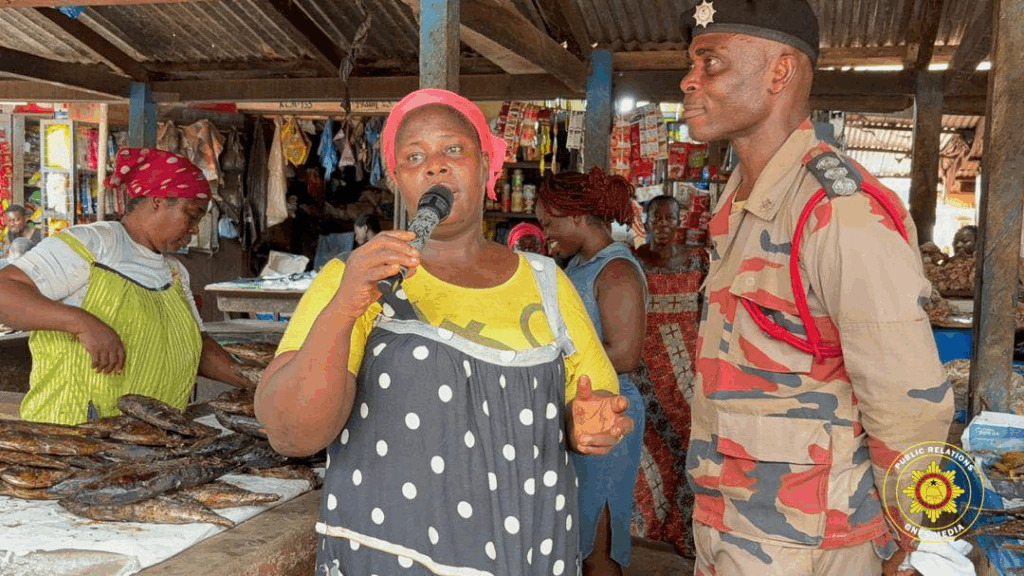
Demonstrations were also conducted on the correct handling and use of fire extinguishers, while traders were reminded of the importance of keeping their stalls and surroundings clean and orderly at all times.
The team said that good housekeeping, safe electrical installations, and the avoidance of cooking in market spaces are simple but effective measures that can prevent devastating fires. Traders were encouraged to take personal responsibility for fire safety and to report potential hazards promptly.
Through the exercise, the GNFS aims to empower market vendors with practical knowledge to protect their lives, goods, and livelihoods.
The Service also hopes the initiative will help reduce the incidence of market fires and foster a strong culture of safety within the Konongo community.
The GNFS reaffirmed its commitment to sustained public education and routine inspections across the Ashanti Region as part of its mandate to safeguard lives and property.