Tensions in the Gulf have escalated sharply after Iran intensified attacks on energy infrastructure, leaving two fuel tankers ablaze and sparking fires at oil storage facilities across the region.
The vessels were hit by explosions near the southern Iraqi port city of Basra, forcing a temporary halt to operations at Iraq’s oil terminals. According to the Iraqi News Agency, 38 crew members were rescued while one person was confirmed dead.
Iran’s state news outlet Islamic Republic News Agency (IRNA) reported that the Islamic Revolutionary Guard Corps (IRGC) carried out the strike on one of the vessels, a US-owned tanker named Safesea Vishnu, claiming the ship had ignored warnings and failed to comply with orders.
Indian authorities had earlier said the Safesea Vishnu, sailing under the Marshall Islands flag, was attacked by an unmanned speedboat.
A second vessel, the Greek-owned and Maltese-flagged Zefyros, was also hit during the incident. The ship was reportedly engaged in a ship-to-ship fuel transfer with the Safesea Vishnu at the time, according to its manager, Benetech Shipping.
In a separate development, a Chinese-owned container ship off the coast of the United Arab Emirates was struck by what authorities described as an “unknown projectile,” causing a small onboard fire. The report was issued by the UK Maritime Trade Operations (UKMTO) centre. Investigations are still ongoing to determine the cause of the strike.
The attacks come amid rising hostilities between Iran and Israel. The Israel Defense Forces said it had launched a new “large-scale wave” of strikes targeting sites in Iran.
Iranian officials warned the conflict could have serious consequences for global energy markets. Military spokesperson Ebrahim Zolfaqari cautioned that oil prices could soar to $200 per barrel if regional instability continues.
About 20 per cent of the world’s oil supply typically passes through the Strait of Hormuz, a strategic shipping route connecting Gulf producers to global markets. The escalating conflict has already pushed crude prices higher, with oil briefly reaching $100 per barrel.
Speaking on Wednesday, Donald Trump described the fluctuations in oil prices as a “matter of war” but insisted that prices were beginning to fall again.
Iran has also warned that it may target financial institutions linked to the United States and Israel in the region. The threat follows a reported strike on one of Iran’s oldest banks.
“Our powerful armed forces will exact retribution for this crime,” Iran’s Foreign Minister Abbas Araghchi said in a post on X, claiming the bank was bombed while employees were inside.
Amid the rising tensions, several international banks have closed their Gulf offices. HSBC shut its office in Qatar, while Citigroup and Standard Chartered asked staff in Dubai to remain at home.
Elsewhere in the region, authorities in Bahrain accused Iran of targeting fuel storage tanks near the country’s international airport. Thick plumes of smoke were seen rising from the site, and residents were urged to remain indoors and keep windows closed until the fire was brought under control.
In Oman, firefighters were still battling flames on Thursday at fuel storage tanks following a strike on the port of Salalah.
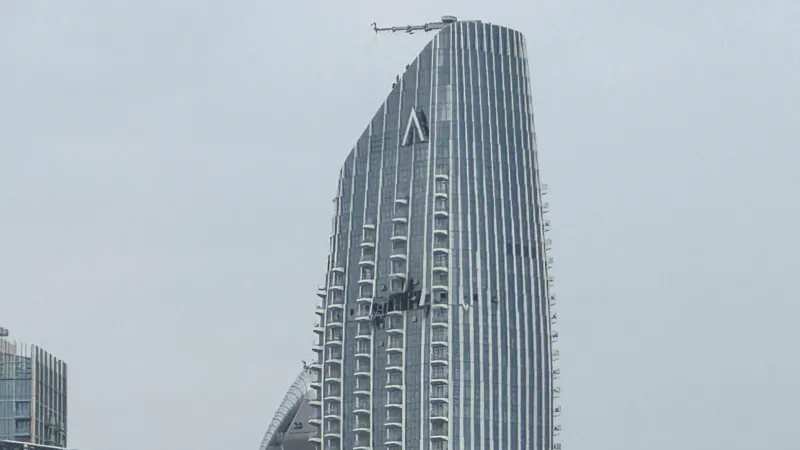
Meanwhile in Dubai, images showed a high-rise building with a large hole after authorities said a drone had crashed into the structure. Officials have not confirmed where the drone originated.
Kuwait also reported drone attacks targeting its international airport, with the country’s state news agency saying the strikes caused damage to airport facilities.
The incidents highlight the growing risk that the conflict could disrupt vital energy infrastructure and shipping routes across the Gulf, a region that plays a central role in global oil supply.
The Israel Defense Forces said on Thursday it had launched a new large-scale wave of strikes targeting infrastructure linked to the Iranian government.
Meanwhile, United States Central Command (CENTCOM) said its operations were aimed at dismantling Iran’s ability to threaten American forces and regional partners.
Speaking to reporters on Wednesday, Donald Trump said the pressure on Iran would continue.
“We have hit them harder than virtually any country in history has been hit, and we’re not finished yet,” he said.
The conflict has also triggered a growing humanitarian crisis. The United Nations High Commissioner for Refugees (UNHCR) estimates that up to 3.2 million people have been temporarily displaced within Iran since the fighting intensified.
Tom Fletcher, the United Nations humanitarian chief, described the war as a “reckless military adventure” while speaking to the BBC about the worsening situation for civilians.
In an interview on BBC Radio 4 Today Programme, he warned that the human cost of the conflict was rising rapidly.
“We’ve got hundreds of kids killed. We’ve got the warning lights flashing across the dashboard,” Fletcher said.
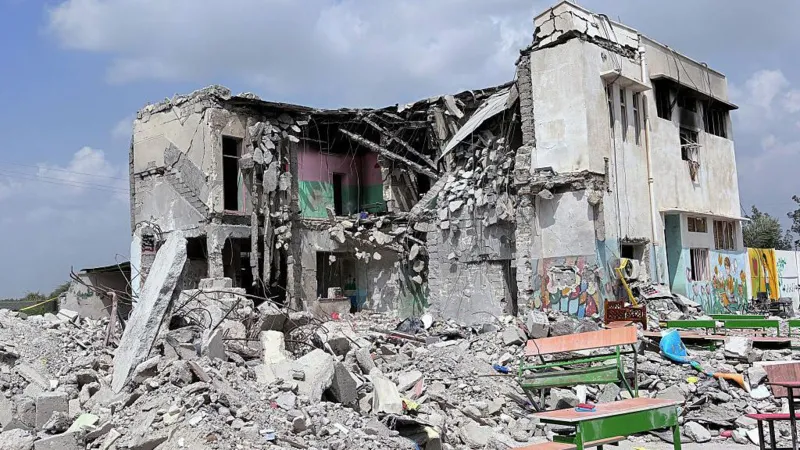
He also called for a full and transparent investigation into a strike on a primary school in Iran that Iranian officials say killed 168 people, including about 110 children.
According to expert video analysis, a Tomahawk cruise missile launched by the United States struck a military base located near the school in southern Iran.
“Every day that goes by is driving many more people from their homes and from their families. Many more people are dying,” Fletcher said.
He added that the United Nations is also working to ensure that the Strait of Hormuz remains open, as disruptions could affect global shipping and humanitarian supply routes.
Keeping the vital passage operational is particularly important for aid deliveries to parts of sub-Saharan Africa, where the UN warns that a “looming famine” could worsen if supplies are delayed.
The escalating conflict across the Middle East follows wide-ranging strikes carried out by the United States and Israel on Iran on February 28, which reportedly killed the country’s supreme leader.
Since then, Iran has responded with a series of attacks targeting Israel and several US-allied states in the Gulf. Some of the strikes have extended beyond military installations to include civilian sites and energy infrastructure.
According to Amir-Saeid Iravani, Iran’s ambassador to the United Nations, the conflict has so far claimed more than 1,300 lives in Iran, with about 17,000 people injured since the fighting began.