At 4:00 every morning, 40-year-old Fati Abdullai wakes up with a single task in mind: finding water.
Balancing two metal bowls on her head, she sets out into the dark streets of Atebubu in Ghana’s Bono East Region. On a good day, she returns home with two bowls of water — but even that rarely meets the needs of her household.
“You can fetch two bowls of water and it will still not be enough,” she says quietly. “Your children will bathe and go to school, but there will be no water left to cook.”
The water source she relies on is far from her home. A round trip takes about 30 minutes. Often, the effort is so exhausting that she can only carry one bowl back before she is too tired to return for the second.
By the time she gets home, the strain has already taken its toll.
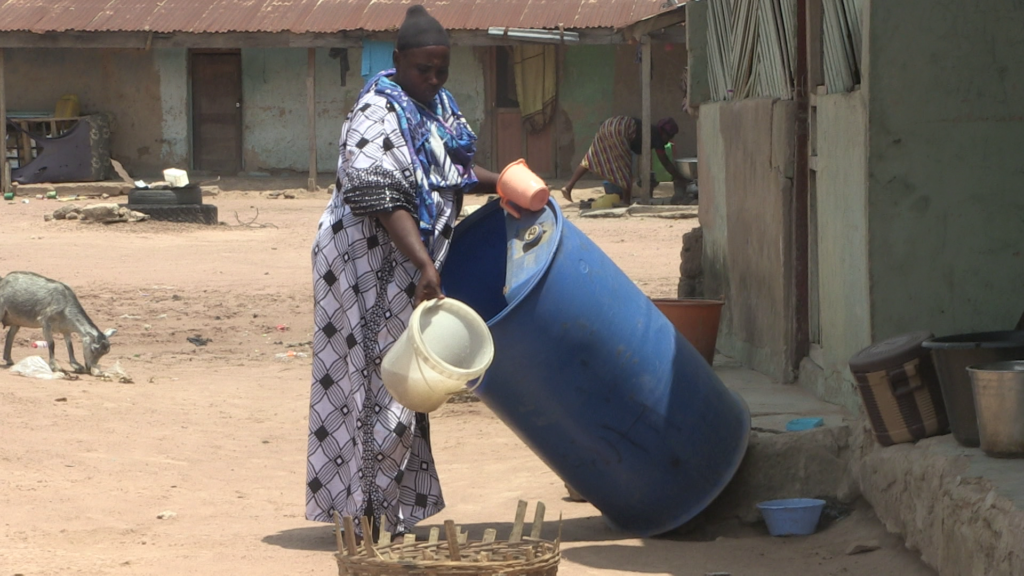
“We suffer from body aches and leg pains,” she says. “But we have no choice. We need water.”
In Atebubu, the challenge is not a lack of boreholes or wells. In fact, many households have one. The real problem is that a large number of them no longer produce water.
When the dry season sets in, or when the rains delay for weeks, many wells and boreholes simply run dry. Water sources that once served families throughout the year can no longer meet their needs.
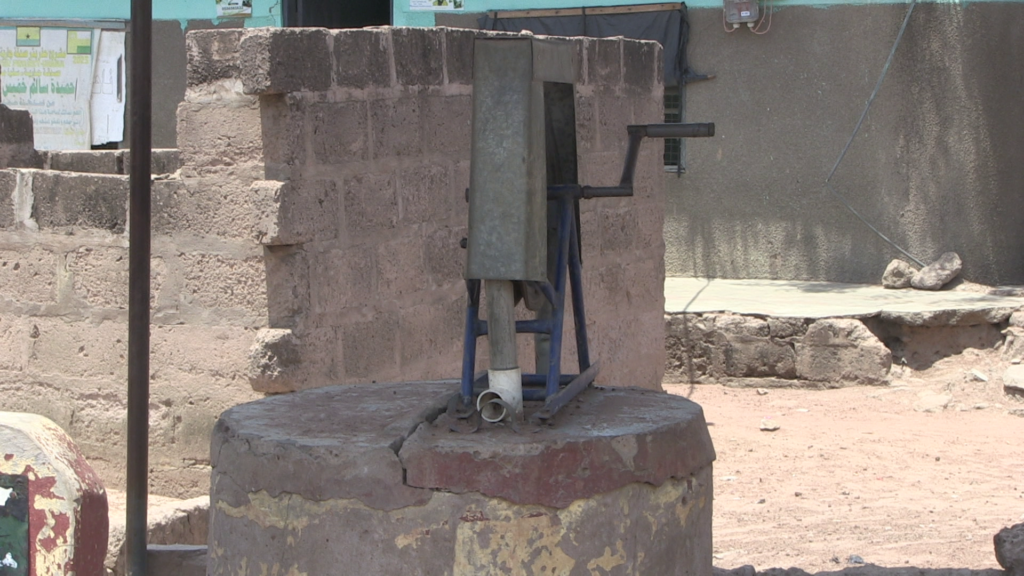
During these periods, water becomes the hardest commodity to find. Residents are then forced to walk long distances or depend on unsafe river water. For Ama Bayo, another resident, the situation has become unbearable.
“We have food in Atebubu,” she explains. “But water is the biggest problem we face.”
To fetch water, she travels from her neighbourhood to a distant place known locally as Daadinsei Wura. “It is not easy,” she says. “Even though we have many boreholes here, most of them don’t have water.”
Some boreholes were drilled recently, but still failed to produce enough water. Access to water, residents say, now depends on who can afford it.
“Those with money are the ones who can get water,” Ama says. “But many of us cannot.” During the harmattan season, the situation becomes worse.
Days without water
In Zongo Number One, Mohammed Abdul Rahman says water sometimes disappears completely.
“There are times we go three to five days without water,” he explains.
Even when water flows through boreholes, it often comes briefly and stops again. Residents rush with buckets and jerry cans whenever water appears.
Zainab Fuseini describes how they manage the small supply. “When the water comes, we fetch two or three buckets,” she says. “Then it stops. Later, we open the tap again, and maybe it will come out small.”
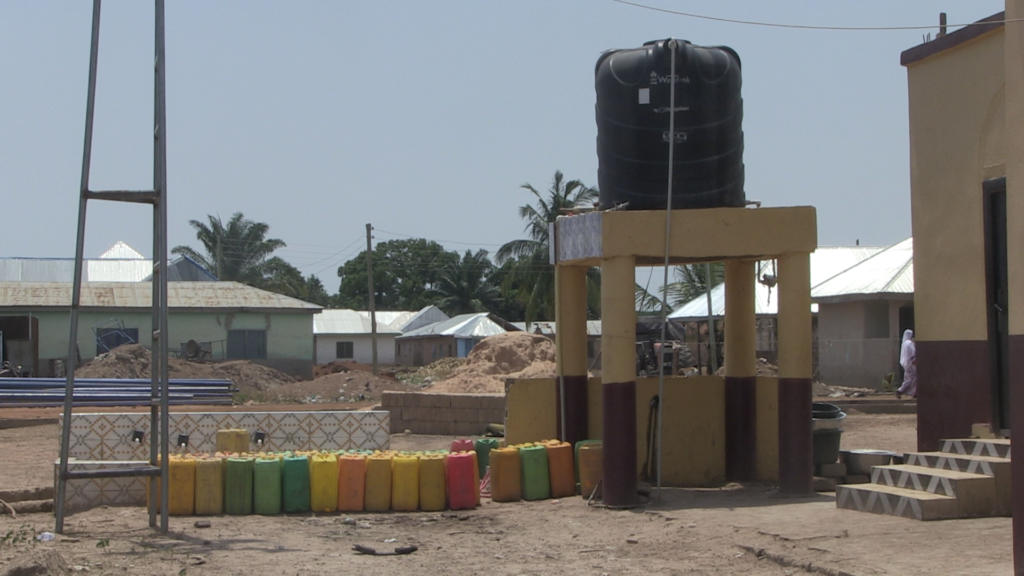
The system forces families to store water carefully and share limited supplies. Around the boreholes, long queues of containers wait for their turn.
The water crisis is also affecting education. At Best Brain College, head teacher Jonathan Forson says the problem is disrupting learning.
“In a class of about 30 students, sometimes only 15 or 20 arrive early,” he explains.
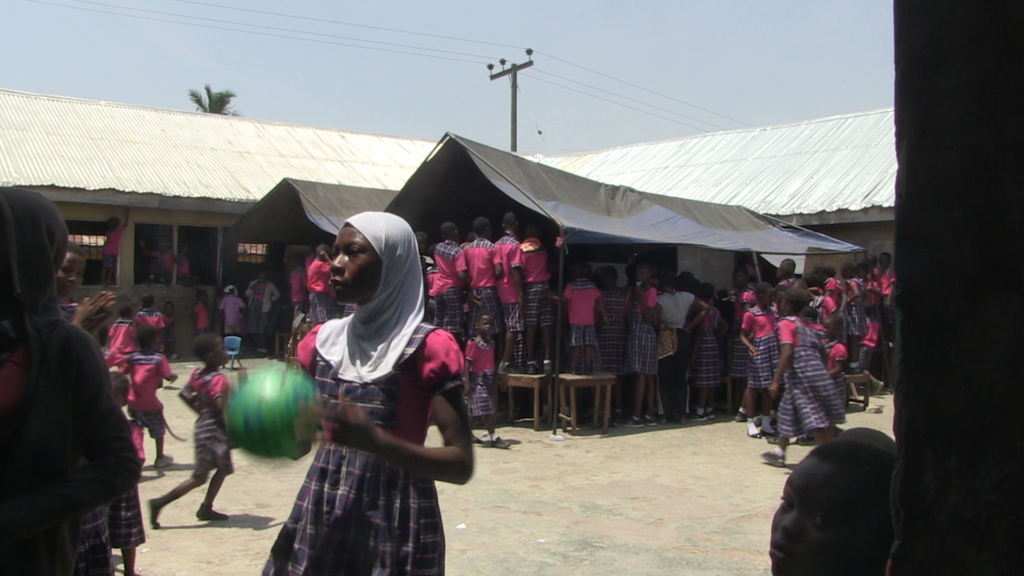
Many children spend their mornings searching for water before school. Others arrive tired after carrying heavy containers for long distances.
“Some students come late. Some look very tired in class,” he says. “The water problem is affecting academics seriously.”
Teachers face the same challenge. Some ask permission to leave school early so they can join the long queues for water.
For 14-year-old Musah Ramatu, a student at the school, the struggle begins before sunrise.
“The water situation here is very poor,” she says. Because of the daily search for water, she and many classmates arrive late for lessons.
“Sometimes when we carry the gallons, we feel very stressed,” she says. “When we come to class, we cannot learn well.” The physical strain, she says, is slowing down their education.
When water is not safe
Scarcity has also forced some residents to use unsafe water. A 29-year-old mother of five, Faustina Dakoraa, says many families now rely on the polluted nearby river source.
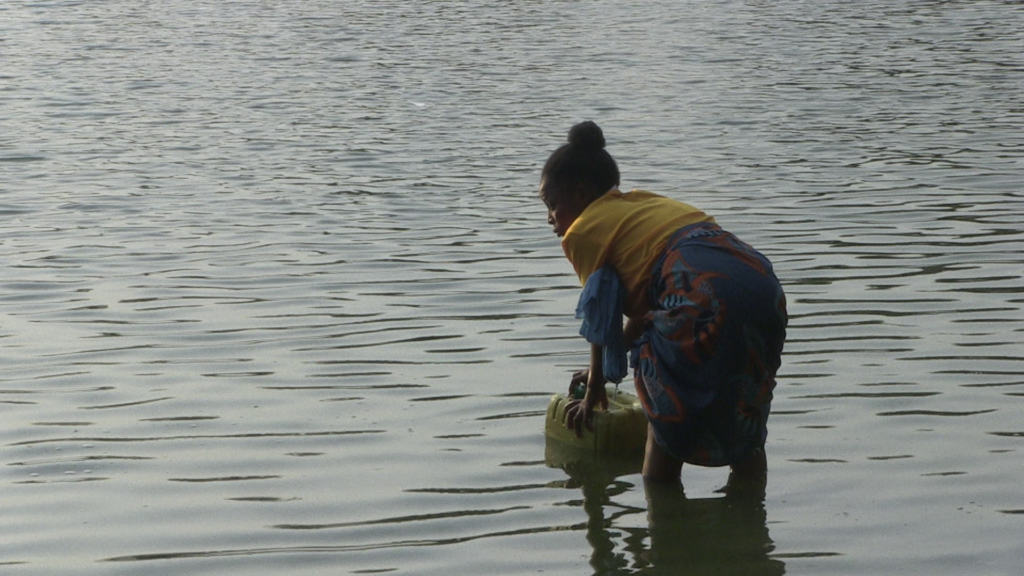
Every day, many residents, especially school-going children, gather at a nearby river to fetch water. The place often looks like a busy market.
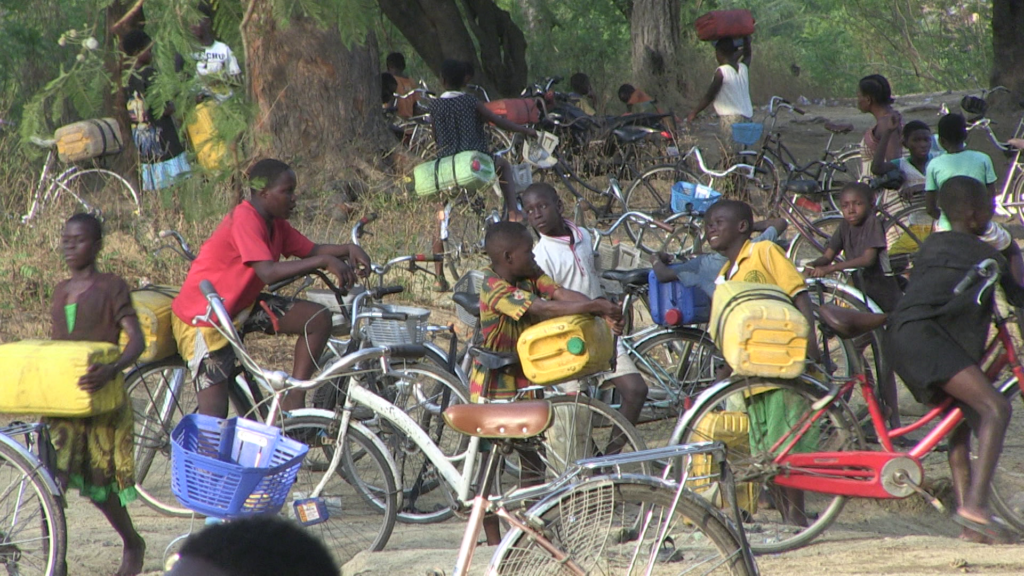
Children arrive on bicycles carrying yellow jerry cans tied to their bikes. Others walk quickly with buckets and pans on their heads. They rush to fill the containers and ride back home before school begins.
Mothers also fetch water. Despite the dirty water, the river has become one of the few reliable sources of water when boreholes and wells run dry.
Faustina says families have no other option. “When it rains heavily, waste from the rubbish dump enters the water,” she explains.
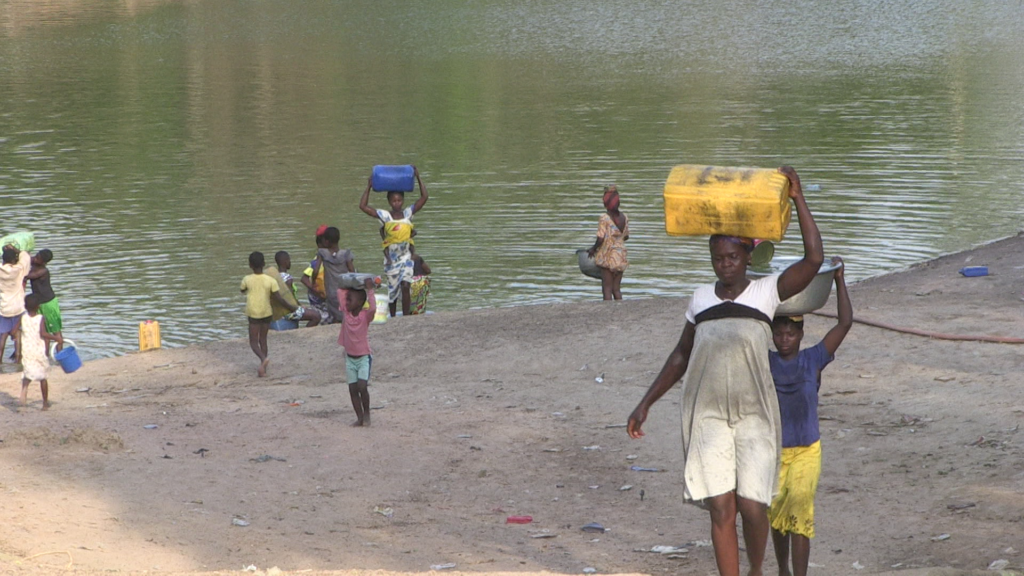
Waste such as diapers, sanitary pads and other refuse often ends up in the river. Yet, despite the contamination, many residents still rely on the water because they have few alternatives.
“Water is scarce, so people still use it,” she says. “Some even cook with it and drink it.”
Health officials in the Atebubu-Amantin Municipality say waterborne diseases are now among the three most commonly reported illnesses in the area.
Conditions such as Typhoid fever and Diarrhoea are becoming increasingly common, particularly among children.
“It brings sickness,” Faustina explains. “Typhoid and many other diseases. We really need help.”
Climate change making the situation worse
Experts say the water crisis in Atebubu is not only the result of local infrastructure challenges. Changing weather patterns are also making the situation more severe.
Data from the Ghana Meteorological Agency shows that parts of Ghana’s middle belt, including Atebubu, have recorded rainfall deficits of more than 20% in recent years, meaning the area is receiving significantly less rain than normal.
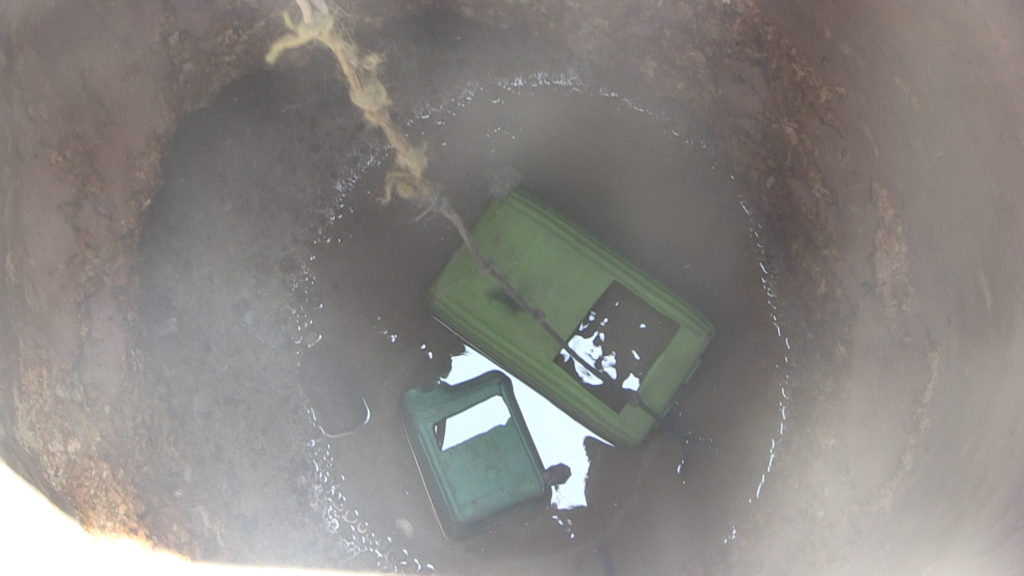
In Atebubu, access to water depends heavily on seasonal rains that replenish wells and boreholes. But when the rains delay or fall below average levels, groundwater levels drop rapidly.
During prolonged dry periods, many wells and household boreholes across the town stop producing water. For residents, that means the daily search for water becomes increasingly difficult.
Hydro-geophysicist Mohammed Abdul Mumin of Primux Technology says one major reason is that many of the boreholes in the area are too shallow.
These systems rely largely on seasonal rainfall to recharge groundwater. When rainfall becomes irregular — a growing effect of changing weather patterns — the shallow boreholes quickly dry up.
“The more rain the area receives, the more water is available underground,” he explains. “But when the rains reduce or delay, the boreholes stop yielding water.”
The geology of the area also plays a role. Much of Atebubu sits on sandstone formations, which store groundwater unevenly. In some locations, thick sandstone layers can supply water consistently, while in others, clay deposits restrict the movement of water.
As a result, boreholes drilled in the wrong locations often fail.
Experts say drilling deeper could help address the problem. Mr Abdul-Mumin recommends that boreholes in the area should reach at least 120 metres underground to access more reliable water reserves. He also stresses the importance of proper groundwater surveys by hydrologists before drilling begins.
“This scientific approach can significantly improve the chances of success,” he says.
Recent research supports these expert observations. A study published in July 2025 on the scientific platform Springer Nature examined groundwater potential and water quality in the Atebubu-Amantin Municipality.
The research found that underground rock formations in the area are often fractured, meaning they can store water — but mainly at deeper levels.
Sandstone, pebbly beds and limestone were identified as promising water-bearing formations. However, areas dominated by mudstone and shale were found to have low groundwater potential, making shallow boreholes less reliable.
Because of this, the study recommends drilling boreholes to depths of at least 120 metres to improve water supply in the municipality.
The research also confirmed a challenge residents are already familiar with: many boreholes only produce water during the rainy season, while more than 60 per cent of wells and small dams dry up during the dry months.
There was, however, some encouraging news. Tests showed that groundwater quality in the municipality is generally safe, with chemical and heavy metal levels within drinking-water standards set by the World Health Organization.
Researchers say the main problem is not water quality, but the limited amount available.
A new plan for Atebubu
The Atebubu-Amantin Municipal Assembly says it has begun implementing new measures to tackle the long-standing water crisis.
Municipal Chief Executive Mas’ud Musah Ayarba Thomas says the problem has persisted in the municipality for decades.
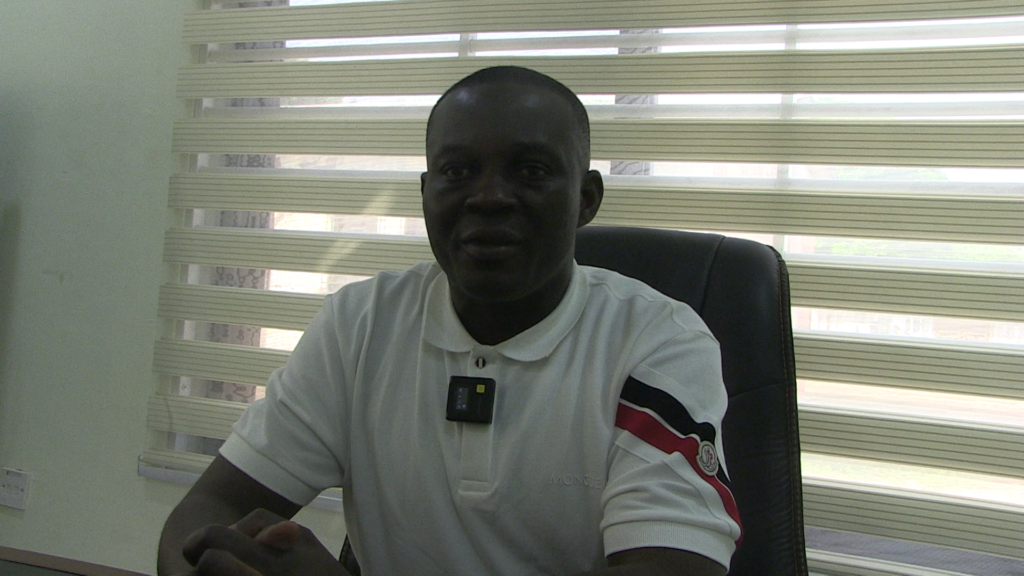
“Sometimes when we drill ten boreholes, only about six produce water,” he said.
To improve success rates, the assembly has engaged hydrologists to help identify the most suitable drilling locations. Based on their recommendations, 17 new boreholes have so far been drilled across the municipality.
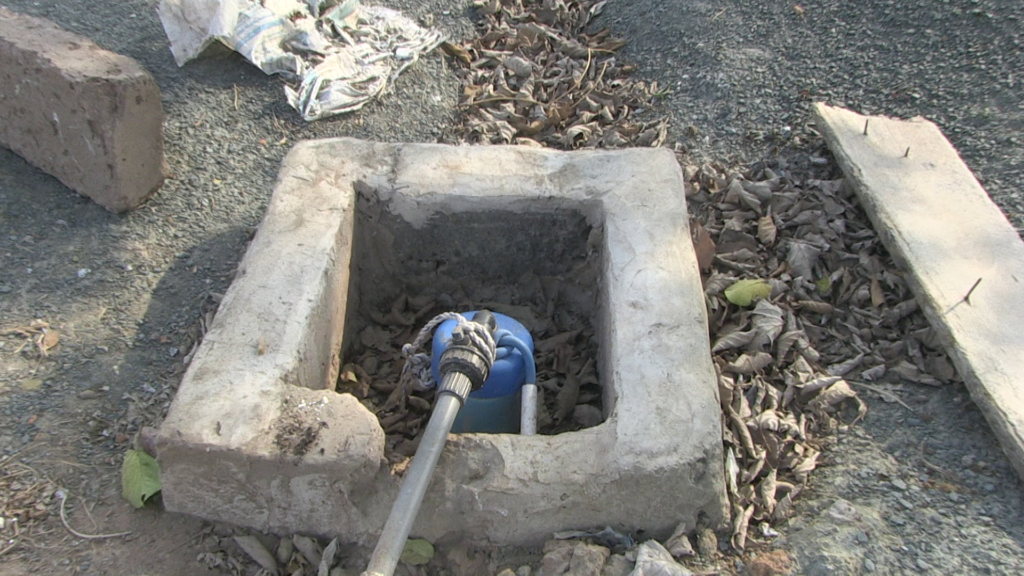
“All the sites identified by the hydrologist yielded water when we drilled,” he said.
Work is now underway to mechanise the boreholes so they can supply water to nearby communities. If the initiative proves successful, the assembly plans to drill an additional 15 boreholes over the next few years.

Local authorities say the lasting solution to the town’s water crisis may lie beyond the current stop-gap measures. Plans are underway to draw water from a nearby river, treat it, and supply it to the municipality through a proper distribution network.
The proposed project includes the construction of a water treatment plant to ensure the supply is safe for consumption. Officials stress that the water will undergo full treatment before reaching households.
“It will not be raw river water,” the municipal chief executive explained. “The water will be treated so people receive clean and safe drinking water.”
The proposal has already been presented to the central government, which has reportedly assured local leaders of its support for the project.
For residents like Fati Abdullai, a permanent solution cannot come soon enough. Each morning, she still walks long distances in search of water.
Yet the prospect of deeper boreholes, more scientific drilling and a future municipal water system is beginning to restore hope in the community.
In Atebubu, residents say daily life ultimately depends on one basic necessity: water. Without it, everything comes to a halt.