The Office of the National Chief Imam has called on Ghanaians to renew their spiritual commitment while taking urgent steps to safeguard the environment.
The message, signed by Executive Secretary to the Office of the National Chief Imam, Shaikh Dr. Osman Nuhu Sharubutu (Osmanu Seidu), extended warm greetings to Muslims in Ghana and across the world following the successful completion of Ramadan.
Describing the holy month as a time of sacrifice, discipline, and spiritual growth, the statement praised believers for their steadfast devotion. It also offered prayers for Allah’s acceptance of fasting, charity, and other acts of worship, invoking blessings, forgiveness, and peace for the Muslim Ummah.
The Office highlighted Eid-ul-Fitr as more than a celebration—it is also a moment for reflection and renewed responsibility.
Environment Central to Eid Reflections
A key focus of the message is the theme “Our Earth, Our Future,” which frames environmental protection as both a moral and religious duty. Drawing guidance from the Qur’an, the Office emphasised that the earth and its resources are signs of Allah’s greatness and a trust placed in humanity’s care.
The statement reminded believers of their role as Khalifah—stewards tasked with preserving the natural world. It highlighted the balance and harmony in creation and urged careful management of resources, which have been provided as sustenance for all living beings. Humans are expected to use these resources with wisdom, moderation, and gratitude.
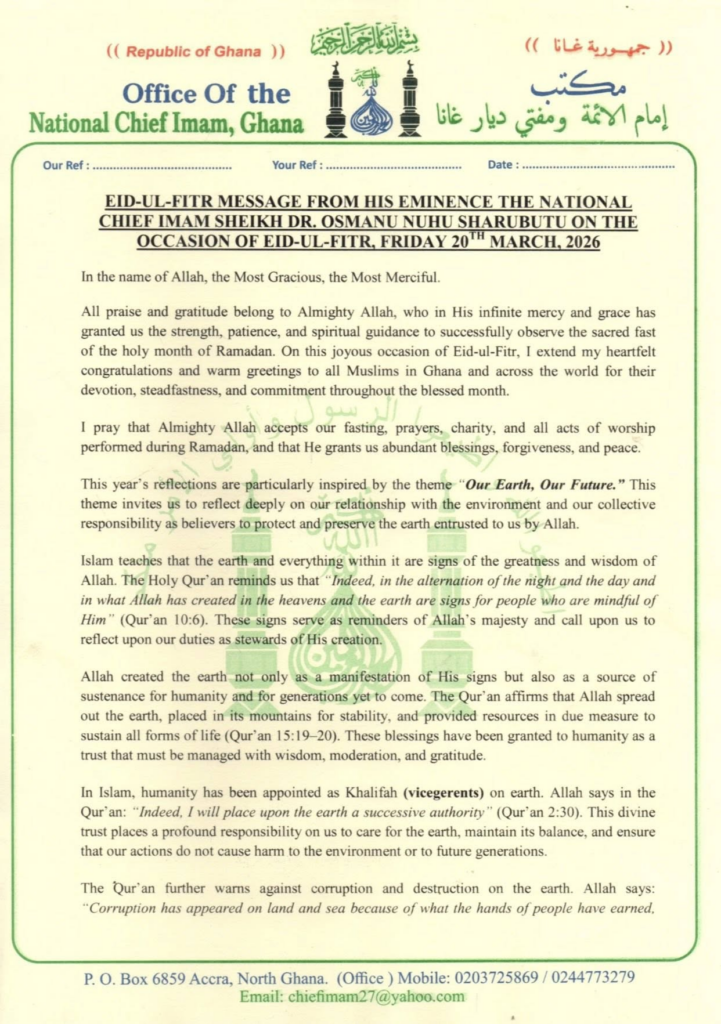
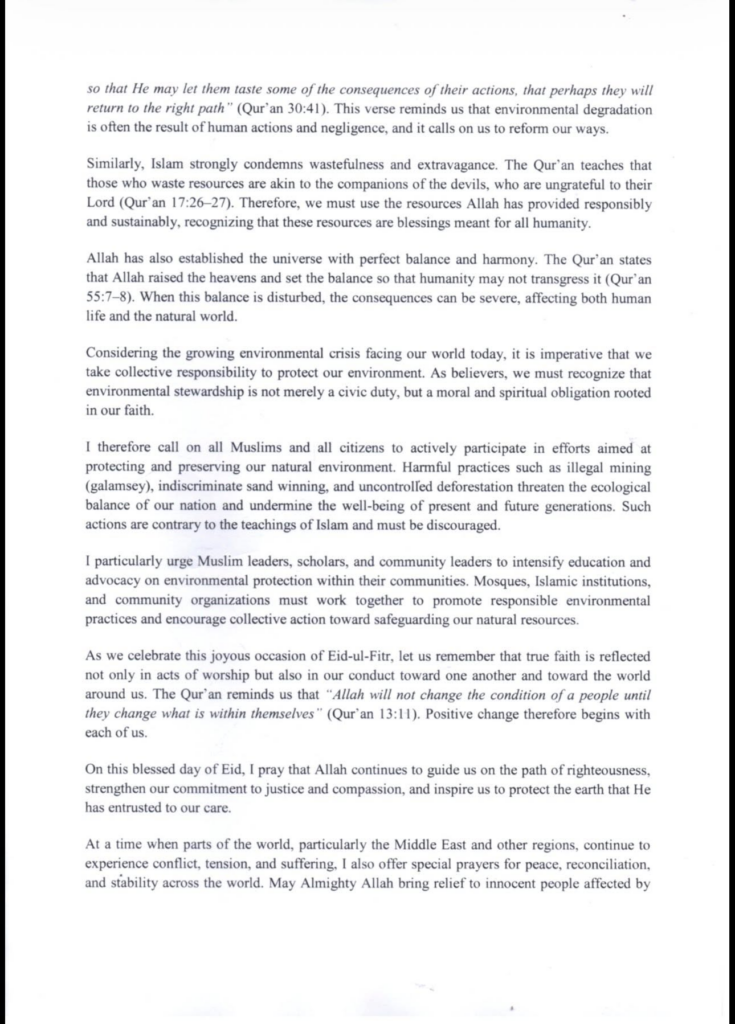
The Office of the National Chief Imam has raised concerns over the growing threat of environmental degradation, warning that many of today’s ecological challenges stem from human activity. Citing Qur’anic teachings that caution against corruption on land and sea, the statement described environmental harm as a direct result of irresponsible behaviour.
The message singled out illegal mining—commonly known in Ghana as galamsey—indiscriminate sand winning, and deforestation as particularly destructive practices that endanger ecosystems, pollute water bodies, and threaten long-term sustainability. It also criticised wastefulness and extravagance, noting that Islam encourages the responsible use of resources and discourages excess.
Call for Collective Action
The Office urged all citizens to take active responsibility for protecting the environment, stressing that stewardship is both a civic duty and a reflection of faith. Muslim leaders, scholars, and community organisations were encouraged to step up public education on environmental conservation, with mosques and Islamic institutions leading advocacy efforts and promoting sustainable practices within communities.
The statement emphasised that true faith is expressed not only through worship but also through daily actions toward others and the environment. Drawing on Qur’anic teachings, it highlighted that societal transformation begins with personal change.
Prayers for Peace and Stability
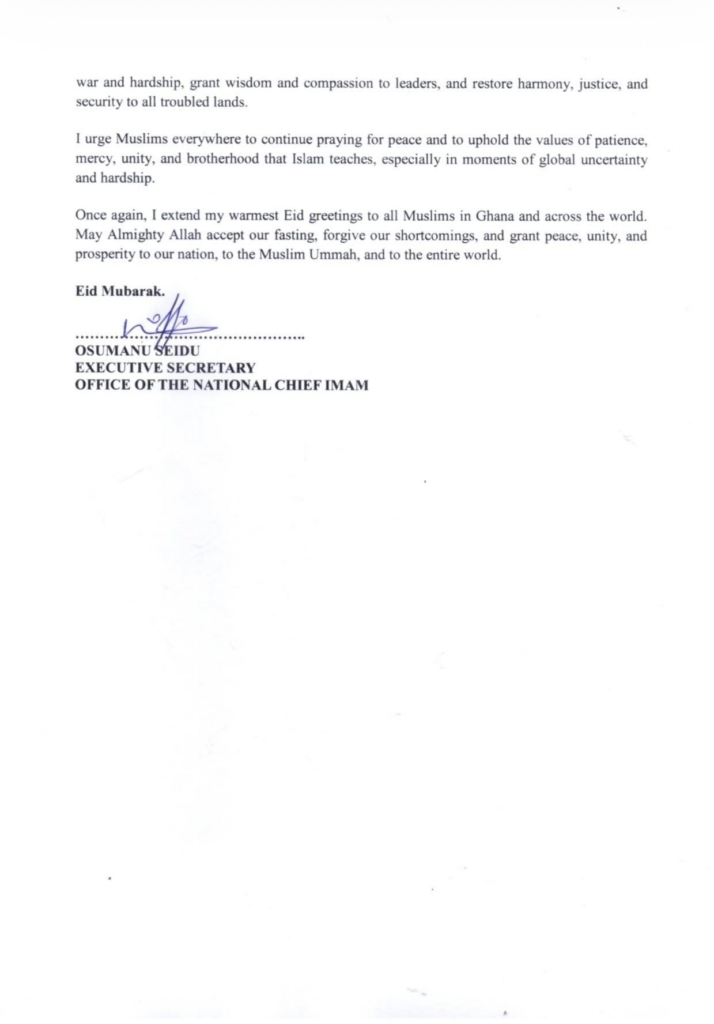
Beyond environmental issues, the Office addressed ongoing global conflicts, particularly in the Middle East, offering prayers for peace, reconciliation, and relief for those affected by war and hardship. Muslims were urged to uphold patience, unity, compassion, and brotherhood, especially during times of global uncertainty.
A Message of Hope
National Chief Imam Osmanu Seidu extended Eid greetings to all, praying for unity, prosperity, and harmony across Ghana and the wider world.