
A new nationwide study has revealed that Ghana’s micro, small and medium enterprises (MSMEs) are being choked by a complex and costly regulatory environment that is functioning as a hidden tax on entrepreneurship, and severely undermining job creation across the country.
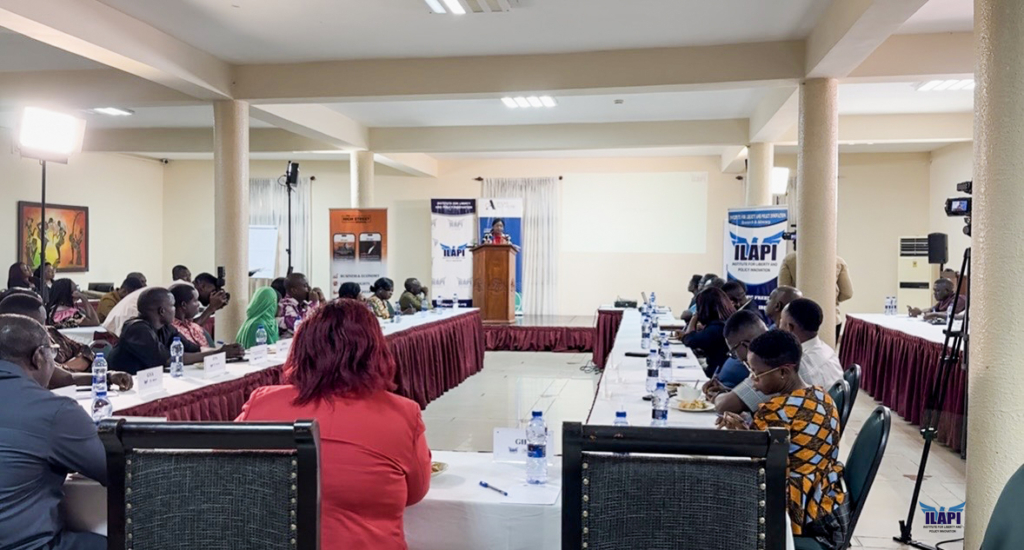
Chief Executive of Institute for Liberty and Policy Innovation (ILAPI), Peter Bismark Kwofie presented this study at the Institute of Liberty and Policy Innovation’s High-Level Business Regulatory Dialogue.
The study, conducted between September 2024 and July 2025, surveyed 600 MSMEs across manufacturing, ICT and tourism. It found that many businesses spend up to 30–40% of their annual revenue on regulatory compliance, including registration, licensing, permits, and unofficial payments to middlemen known as “goro boys.”
With MSMEs accounting for 92% of all businesses and contributing nearly 70% to Ghana’s GDP, these regulatory inefficiencies translate into economic consequences far beyond the enterprises themselves.

A Costly “Tax” That Starts Before a Business Can Operate
According to the study, the average MSME spends GH₵1,030 to register a business, GH₵1,275 to secure a permit from the MMDAs and up to GH₵10,100 to acquire licenses, some firms reported costs as high as GH₵20,000.
Most of these expenses were inflated by the overwhelming dependence on middlemen. Eighty-four percent (84%) of the respondents admitted to using “goro boys,” largely because the official process is slow, opaque and highly fragmented.

ILAPI found that 40.8% of MSMEs waited more than a month to receive their registration certificate.
It also revealed that those who avoided middlemen waited even longer, up to six months or more, despite the Office of the Registrar of Company’s stipulated 14 working days.
“Delays and bureaucratic hoops have effectively become a tax on formal entrepreneurship,” the study noted. “Entrepreneurs are spending scarce capital on paperwork instead of productive investment.”
Regulatory Bottlenecks Are Killing Jobs Before They Are Created
One of the study’s most alarming findings is the impact of regulatory costs on job creation.
If the average MSME spends 30% of its working capital or profits on regulatory compliance, ILAPI argues that each business loses the ability to employ at least three people.
According to the study, given that Ghana has over 1 million MSMEs, this amounts to a potential loss of 3 million jobs annually.
“This is not just a business problem. This is a national employment crisis, bureaucracy is silently pushing millions into unemployment and poverty” the study warns.

The study also highlights the ripple effect on youth migration. With young entrepreneurs losing significant capital to regulatory processes, many abandon plans to invest in Ghana and instead pursue risky migration routes overseas.
An Informal Sector That Keeps Growing, Because Formalization Is Too Expensive
Ghana’s informal sector, which contributes an estimated 70% to GDP and employs 86.4% of the population, continues to expand not because entrepreneurs prefer informality, but because the cost of entering the formal sector is prohibitive.
ILAPI found that 57.3% of MSMEs surveyed were operating without the required licenses at the time of the study.

“The regulatory burden is so heavy that many businesses prefer to stay invisible,” the report said. “This undermines revenue mobilization, weakens investor confidence and creates barriers for accessing credit and government support,” the study stated.
A Fragmented Landscape of Overlapping Laws
One of the major drivers of high compliance costs is the sheer number of institutions businesses must interact with.
Manufacturing firms, for example, deal with 13 separate laws and agencies, while tourism and ICT businesses navigate long lists of sector-specific approvals. Agencies such as the EPA, FDA, GSA, ORC, GNFS, LUSPA, MMDAs, GTA, and the Public Health Authority often have overlapping mandates, leading to duplicative inspections, conflicting instructions and repeated payment demands.
Only 44.6% of micro enterprises ever transition to small businesses, and a mere 28.2% make it to medium scale.
For many MSMEs, every attempt to expand triggers new layers of regulation, higher fees and additional permits, creating a ceiling on growth.

“It takes some businesses over a decade just to move from micro to medium, this is not a market failure, it is a regulatory failure,” the study found.
Reforms Needed: Create an Enabling Environment for a 24-Hour Economy
The ILAPI study calls for urgent reforms, including, a unified digital registration platform to eliminate duplication and middlemen, decentralized registration services via MMDAs, harmonization of overlapping regulations, especially in manufacturing and tourism, mandatory regulatory Impact Assessment (RIA) before new laws are passed, sector-specific one-stop shops for manufacturing, ICT, and tourism and full digitization of post-registration compliance.
The think tank argues that implementing these reforms could reduce compliance costs for SMEs by 30–40%, unlock job creation, and boost the government’s revenue base.
Ghana’s Economic Future Depends on Fixing This
The report concludes that Ghana cannot achieve economic transformation, investor confidence or the 24-hour economy vision unless the regulatory environment that governs MSMEs is fundamentally overhauled.
“Regulatory bottlenecks are not just slowing businesses, they are costing Ghana millions of jobs and pushing thousands into poverty, reform is not optional. It is urgent,” Peter Bismark Kwofie emphasized.