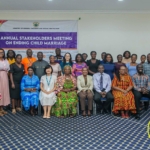
The Child Marriage Unit of the Ministry of Gender, Children and Social Protection, in collaboration with UNFPA Ghana and UNICEF Ghana, has held a two-day National Stakeholders’ Meeting on Ending Child Marriage in Ghana.
Organised under the theme “Achieving Gender Equality, Empowering Futures: Accelerating Action to End Child Marriage”, the meeting brought together key partners to review progress made and assess ongoing interventions aimed at ending child marriage in the country.
The meeting provided a platform for stakeholders to report on activities undertaken during the year under review, conduct a collective assessment of progress, and share lessons learned. It also marked the launch and dissemination of the new Operational Monitoring and Evaluation (M&E) Plan for 2025–2026, including agreed baselines and targets.
Participants further discussed and agreed on the process for developing a new National Strategic Framework on Ending Child Marriage (2027), to be done in consultation with stakeholders.
In a statement read on behalf of the Ministry, the Director of the Social Protection Directorate, Madam Francisca Atuluk, said child marriage remains a major barrier to gender equality and national development.
She noted that although Ghana has made progress in recent years through policy reforms and community-based interventions, the practice continues in some parts of the country.
“While progress has been made, child marriage continues to persist in some communities due to poverty, harmful cultural norms and limited access to education,” she said.
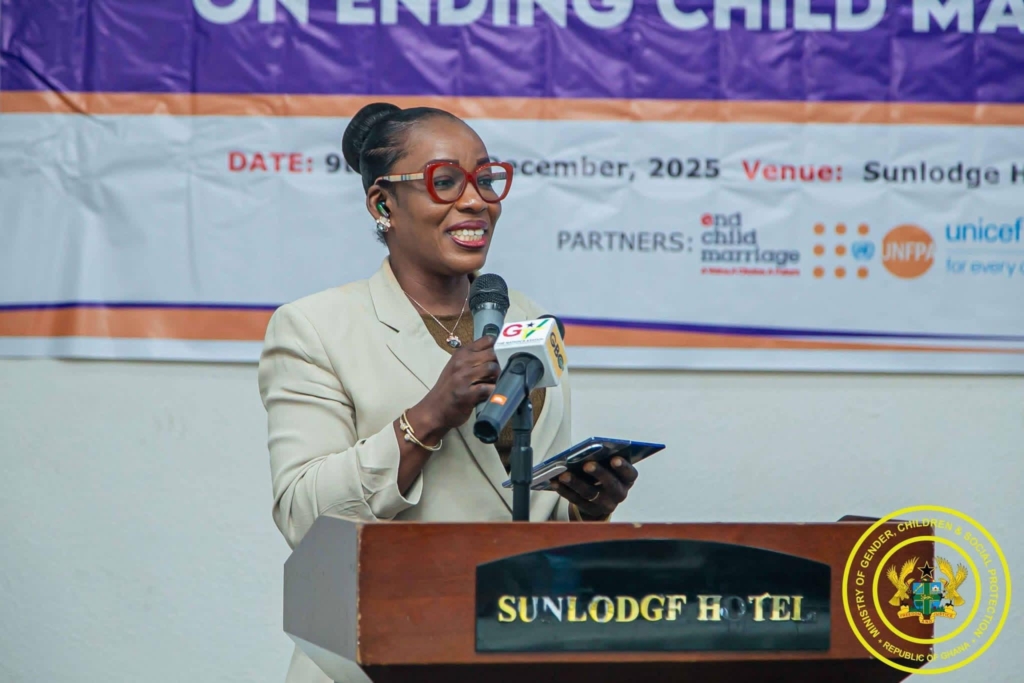
Madam Atuluk commended UNICEF Ghana and UNFPA Ghana for their “unwavering support and commitment” to the Ministry and the Child Marriage Unit. She urged stakeholders to remain focused on a shared national vision.
“We must be guided by a vision of Ghana where every child grows in safety, dignity and opportunity, and where no girl is deprived of education, health and her dreams,” she said.
The Head of the Child Marriage Unit, Madam Saphia Tamimu, stressed that efforts to end child marriage are interconnected and require strong collaboration.
“No single institution can end child marriage alone,” she said, adding that through “collective partnerships, evidence-based programming and active community participation,” Ghana can achieve lasting change.
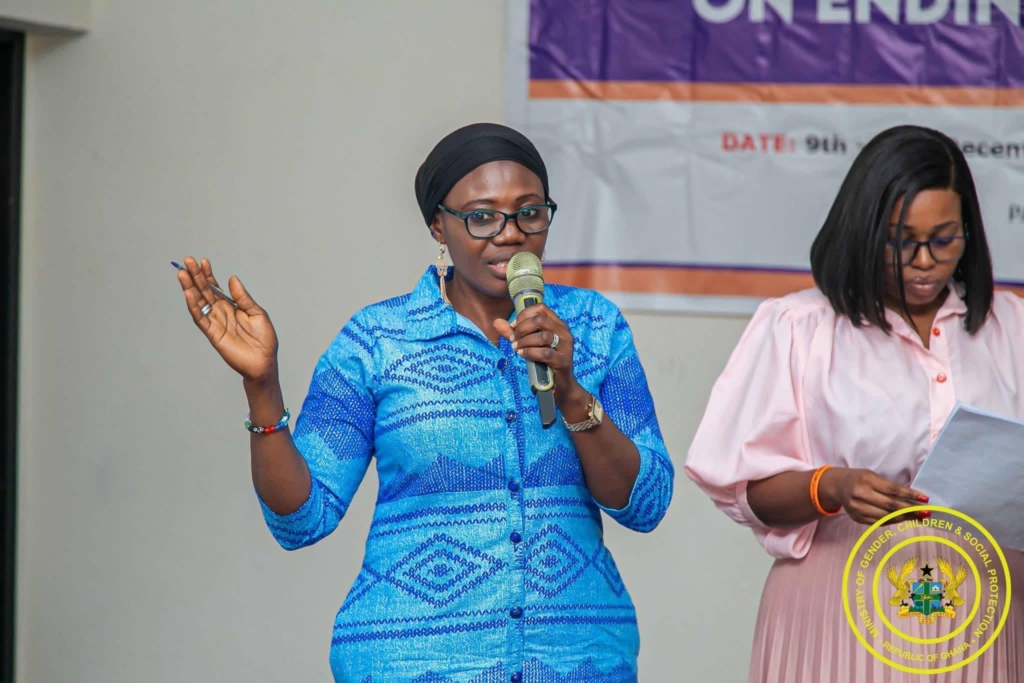
Representatives from UNFPA Ghana and UNICEF Ghana also addressed the meeting, describing child marriage as a violation of the rights of the girl child.
They noted that the practice robs girls of education, health, and future opportunities, and called on all stakeholders to work together to ensure that “no girl under the age of 18 is married off in Ghana.”
A key highlight of the meeting was a review of planned activities for 2025, including updates on the implementation status of the GTA Roadmap.
Presentations covered the National Operational M&E Plan on Ending Child Marriage for 2025–2026, the empowerment of girls by NGOs and civil society organisations, and community engagement strategies, among others.
The meeting began on Tuesday, December 9 and ended on Wednesday, December 10. It reaffirmed the importance of empowering girls as a critical strategy in the national fight against child marriage.