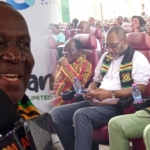
The Asante Professionals Club (APC) has called for Ghana to prioritise the use of local languages in official communication, arguing that the continued dominance of English limits inclusiveness and national development.
The call was made at the 8th edition of the Club’s flagship Opemsuo Lecture Series, held at the Prempeh Assembly Hall in Kumasi as part of APC’s 10th anniversary activities. This year’s lecture was held on the theme “Impact of Ghanaian Languages on Sustainable Development in Ghana.”
Speaking to the media, Isaac Kofi Antwi, President of the Asante Professionals Club, stated that the overreliance on English — a colonial legacy — has created a disconnect between leadership and the majority of citizens.
“Only about 20 per cent of Ghanaians understand the national budget when it is read in English, yet we continue to rely on the language our colonial masters left for us. It is not helping us,” he said.
According to Mr Antwi, meaningful participation in governance is impossible if citizens cannot understand official communication.
“If people don’t understand what leaders are saying, they cannot express their views or contribute to national discourse,” he added, questioning why politicians campaign in local dialects but revert to English once in office.
He announced that the Club intends to petition the Ministry of Education and the National Council for Curriculum and Assessment (NaCCA) to push for a national policy that adopts the Ghanaian language as the country’s official language.
Mr Antwi urged Ghana to learn from countries such as South Africa, Uganda and Kenya, where indigenous languages like Swahili have been formally adopted to promote inclusiveness and national cohesion.
Chairing the event, former First Deputy Speaker of Parliament and former MP for Bekwai, Joe Osei Owusu, supported the proposal, citing China’s development success following the adoption of its local language as the official medium.
According to him, the use of local languages enhances participation and ensures that development efforts carry everyone along.
However, Mr Osei Owusu noted that Ghana’s political divisions have made the adoption of a local language as an official language difficult.
“Even educational records show that Akan, particularly Twi, is the dominant language, but political considerations have stalled efforts to adopt it officially,” he said.
Despite the challenges, he urged Asanteman to prioritise the Akan language and called on parents to deliberately teach their children their mother tongue and cultural values.
The APC states that the discussion forms part of broader efforts to promote cultural identity, inclusive governance, and sustainable development through language policy reform.