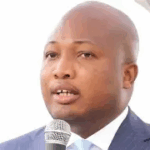
Minister for Foreign Affairs, Samuel Okudzeto Ablakwa, has cautioned that Ghana risks significant reputational harm internationally if growing tensions over religious practices in mission schools are not urgently resolved.
Speaking at the 87th Speech and Prize-Giving Day of Presbyterian Boys’ Secondary School on Saturday, November 29, Mr Ablakwa urged calm, warning that the rising disagreements could undermine Ghana’s long-standing reputation as a peaceful and tolerant nation.
“Ghana must not deviate, and we must not degenerate. It has always been possible to accommodate the religious persuasions or idiosyncrasies in our secondary schools, as PRESEC has always epitomised. So what exactly is this new national problem?” he asked. “To me, the essential point should not be about whether our schools are religious schools or public schools funded by taxpayers.”
He called for a shift in the national conversation from division to shared values. “The issue should be about the common humanity and love for one another,” he said.
Quoting Irish writer Jonathan Swift, the Minister added, “We have just enough religion to make us hate, but not enough to make us love.” He reminded Ghanaians that the country has long been celebrated for its religious harmony. “Ghana has hitherto been celebrated globally for our religious tolerance. Let’s not lose it,” he cautioned.
Mr Ablakwa also cited the National Chief Imam as a model of interfaith unity: “We must remember the iconic example of our revered National Chief Imam, His Eminence Osmanu Nuhu Sharabutu, who celebrated his 100th birthday by attending a service at the Christ the King Catholic Church in Accra.”
He argued that the country’s priorities were misplaced, insisting that national debates were being derailed by minor disputes over outward religious expressions. “Instead of focusing on how strict religious doctrines are being enforced in our schools and the weird correlation between short hair and disciplined students, it is time to ponder the real issues,” he said.
The Minister questioned the outcomes of the current education system, asking, “Why is our educational system producing graduates who criminally create thousands of ghosts to fleece the state when real human beings are looking for jobs?” He continued, “Why is our educational system producing graduates who would destroy our environment, pollute our river bodies, and create a public health crisis for the rest of us just to advance their greedy, galamsey search for gold?”
Reinforcing his earlier arguments, Mr Ablakwa urged the nation to prioritise addressing its fundamental challenges rather than enforcing rigid outward religious practices.