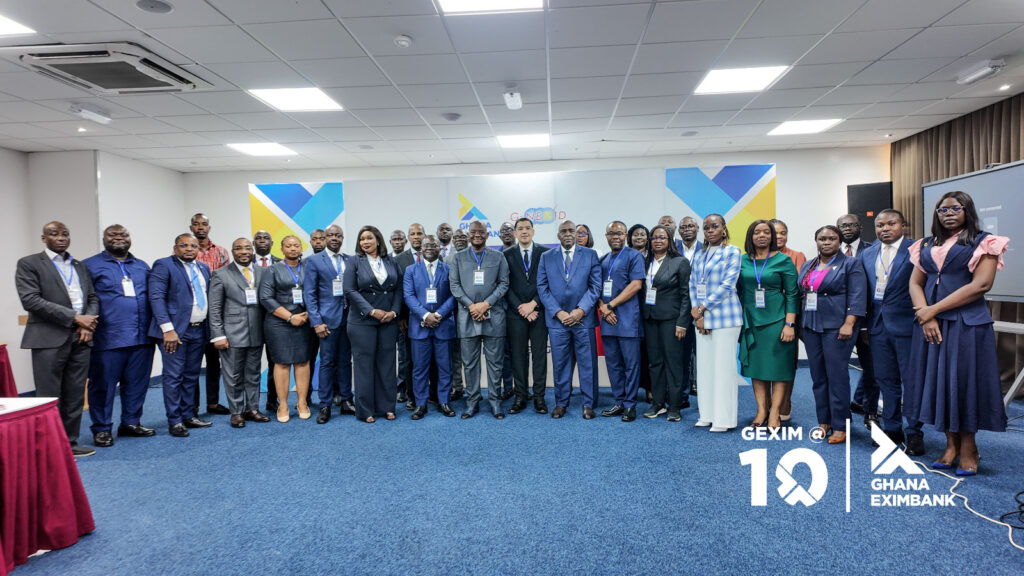
The Global Network of Export-Import Banks and Development Finance Institutions successfully held its 6th Exchange Programme, hosted by the Ghana Export–Import Bank in Accra on March 22–23, 2026.
The event brought together member institutions, partner organisations, and Ghanaian public agencies to promote dialogue on South-South trade, investment, and development finance, while creating opportunities for knowledge sharing and institutional collaboration.
Designed as a capacity-building and networking platform, the 2026 edition highlighted GEXIM’s experience in developing innovative solutions to advance intra-African and extra-African trade. It also showcased trade and investment opportunities in Ghana, particularly within the framework of the African Continental Free Trade Area (AfCFTA) and broader national development initiatives.
The Exchange Programme forms part of G-NEXID’s mandate to strengthen cooperation among export-import banks and development finance institutions, supporting South-South trade and investment. This 6th edition follows earlier successful programmes hosted by India Exim Bank (2016), BNDES (2017), Indonesia Eximbank (2018), Afreximbank (2019), and Saudi EXIM Bank (2025).
On the first day, participants received an update on G-NEXID’s institutional framework and 2026 work programme. Key presentations included an overview of Ghana’s economy by the Ministry of Finance, with a focus on debt-related challenges; an investment outlook by the Ghana Investment Promotion Centre; and detailed institutional briefings by GEXIM and the Development Bank Ghana on their mandates, initiatives, products, and services.
Discussions highlighted strong interest in sector-specific webinars and business dialogues, particularly in agribusiness value chains such as poultry and rice. Participants also emphasized the importance of ongoing information exchange and sharing best practices, especially in the area of guarantees.
The second day of the programme opened with a presentation on the government’s 24-Hour Economy and Accelerated Export Development Programme, a flagship economic transformation initiative launched by President John Dramani Mahama in July 2025.
The strategy is designed to boost productivity by promoting round-the-clock industrial activity, fast-tracking export growth, and reducing reliance on imports through targeted substitution. With plans to attract both private and development financing, the programme is expected to create tangible opportunities for G-NEXID members, particularly in areas such as co-financing, guarantees, trade finance, and technical partnerships.
The session also featured presentations from key regional institutions, including the African Guarantee and Economic Cooperation Fund and the West African Development Bank. Representatives from both organisations outlined their mandates, as well as the range of financial products and services they offer.
Following the presentations, the G-NEXID Secretariat held bilateral meetings with the two institutions as part of ongoing efforts to expand the network’s membership and strengthen collaboration.
Participants also engaged with insights from the Trade and Development Bank, alongside a showcase of key pipeline projects being developed by GEXIM.
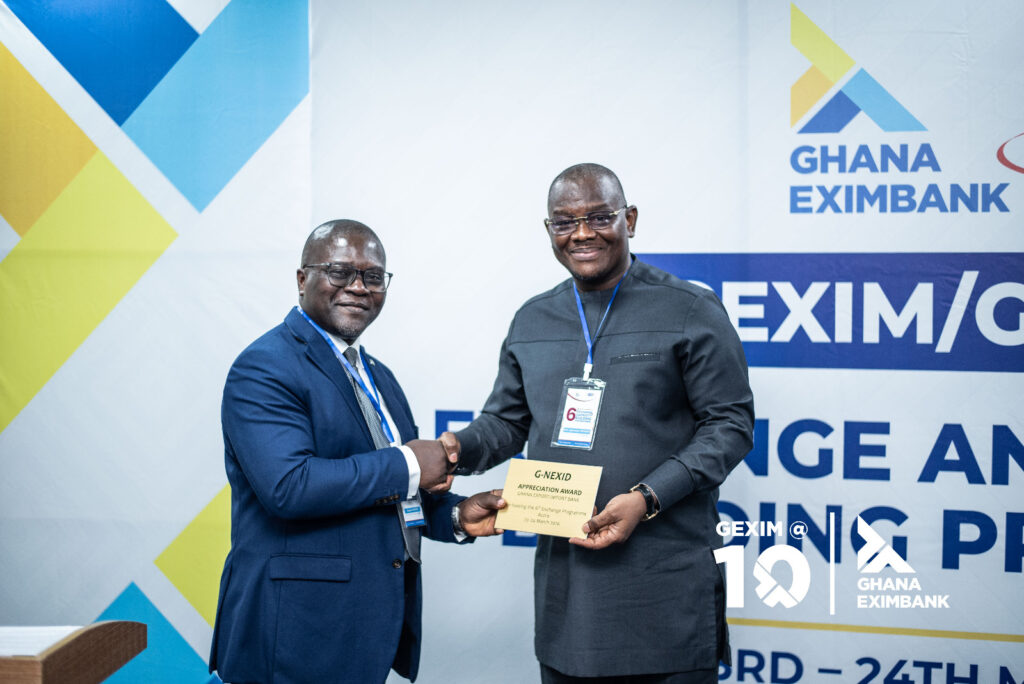
On the sidelines of the exchange programme, members of G-NEXID convened their 20th Annual General Assembly to assess progress and set strategic priorities for the years ahead.
Following the meeting, participants took part in the GEXIM@10 International Conference, held from March 24 to 25, 2026, under the theme: “A Decade of Enabling Export Trade and Industrial Transformation: Resetting GEXIM for the Next Frontier.”
The conference served as a key platform for discussions on how Ghana can accelerate its shift from exporting primarily raw commodities to becoming a more competitive force in value-added trade and industrialisation.