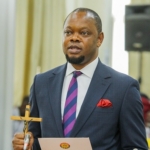
Ghana’s Deputy Attorney General and Minister of Justice, Dr Justice Srem-Sai, has assured that journalists injured while performing their duties will receive compensation, reiterating that safeguarding media practitioners is a constitutional responsibility of the state.
Speaking at the Ghana Journalists Association (GJA) Dinner Night held at the Ghana International Press Centre on Monday, December 23, Dr Srem-Sai emphasised the government’s commitment to upholding press freedom as a cornerstone of Ghana’s democratic governance.
Addressing attendees, the minister outlined the state’s commitment to journalist safety in four key areas: ensuring journalists are not harmed, preventing attacks by third parties, prosecuting offenders, and providing compensation to those affected.
“We will not harm journalists. We will not allow anyone else to harm them. We will ensure perpetrators are punished, and we will compensate any journalist who suffers harm in the line of duty,” Dr Srem-Sai said.
The minister stressed that these measures are not optional, but constitutional obligations designed to protect both the safety of journalists and the integrity of Ghana’s democratic processes. He said the government views press freedom as central to the country’s governance and development.
Dr Srem-Sai urged media practitioners to continue reporting without fear, noting that the state will actively intervene to ensure their protection and swiftly address any violations.
“Journalists play a critical role in holding institutions accountable and informing the public. Their safety is non-negotiable, and the state will ensure that any threats or attacks are met with the full force of the law,” he said.
The minister’s remarks come amid growing concerns over the safety of journalists worldwide, including instances of harassment and attacks while covering sensitive issues. Ghana has historically enjoyed a reputation for relative press freedom compared to other countries in the region, but authorities continue to stress the importance of maintaining and reinforcing protections for media practitioners.
The Ghana Journalists Association (GJA), which organised the dinner, lauded the government’s pledge. The association said measures to compensate injured journalists and prosecute offenders would strengthen the country’s democratic institutions and encourage responsible reporting.
During the event, media professionals highlighted the challenges faced by journalists in the field, including physical threats, intimidation, and pressures arising from reporting on corruption, crime, and political matters. Dr Srem-Sai acknowledged these risks and reaffirmed the government’s commitment to providing support and redress.
Experts say ensuring journalists’ safety is crucial not only for the individuals concerned but also for public confidence in the media and the broader democratic process. Compensation and legal recourse for journalists who are attacked are seen as essential steps in upholding these standards.
Dr Srem-Sai’s announcement also signals a proactive approach to governance, emphasizing that press freedom and protection of journalists are central to Ghana’s constitutional framework. Legal experts note that such commitments are consistent with international norms on media rights and human rights protections.
As part of the government’s strategy, measures will include monitoring media-related incidents, ensuring law enforcement takes prompt action against perpetrators, and providing clear channels for journalists to report threats or attacks. These interventions aim to foster a safer working environment for media personnel across the country.
The dinner event concluded with expressions of solidarity among journalists and reaffirmation of the GJA’s mission to safeguard the welfare of media practitioners. Dr Srem-Sai’s address underscored the government’s intention to back these objectives with practical support, including legal measures and compensation for affected journalists.
With these commitments, Ghana seeks to maintain its standing as a country that respects press freedom and supports journalists in their crucial role of informing the public and promoting transparency in governance.