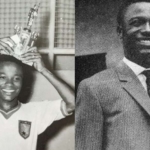
The Kumasi Jackson’s Park – in the 1950s and 1960s – was more than a hotbed of sporting activities. It was a bona fide soccer camp for nurturing talents through practice and intense competitions. The elementary schools that used the park included St Peter’s (my alma mater), St Joseph’s, Asem Government School, ECM Anglican School, St Paul’s, and others
Talent flowed in the area like the majestic Nile. Once, a particular St Peter’s striker in Middle School named “Dumfeh” took a corner shot during a crunch time in a competitive match. In the fashion of football legend David Beckam, the flight of the shot was so measured that as the ball reached the first goal post, it spinned and curved obediently into the goal scoring the winning point.
But sports at the time had its own home grown nemesis, and that was the dilemma. No matter how spectacular a pupil was on the playing field, the schools themselves and parents, especially, hardly encouraged the budding stars to pursue the sport. Though some natural athletes were clearly not the academic types, they were discouraged from sports.
The Jackson’s Park was also the practicing grounds for the evolution of Asante Kotoko, and for the grooming of key players for the Black Stars. World class footballers cut their athletic teeth at the park: Asebi Boakye (a captain), Baba Yara, Dogo Moro (the penalty specialist), Mohamed Salisu, Osei Kofi and Kwame Adarkwa (the dribblers), Kojo Mfum (the bulldozer), Kwao Baffoe (the goal keeper), and many others.
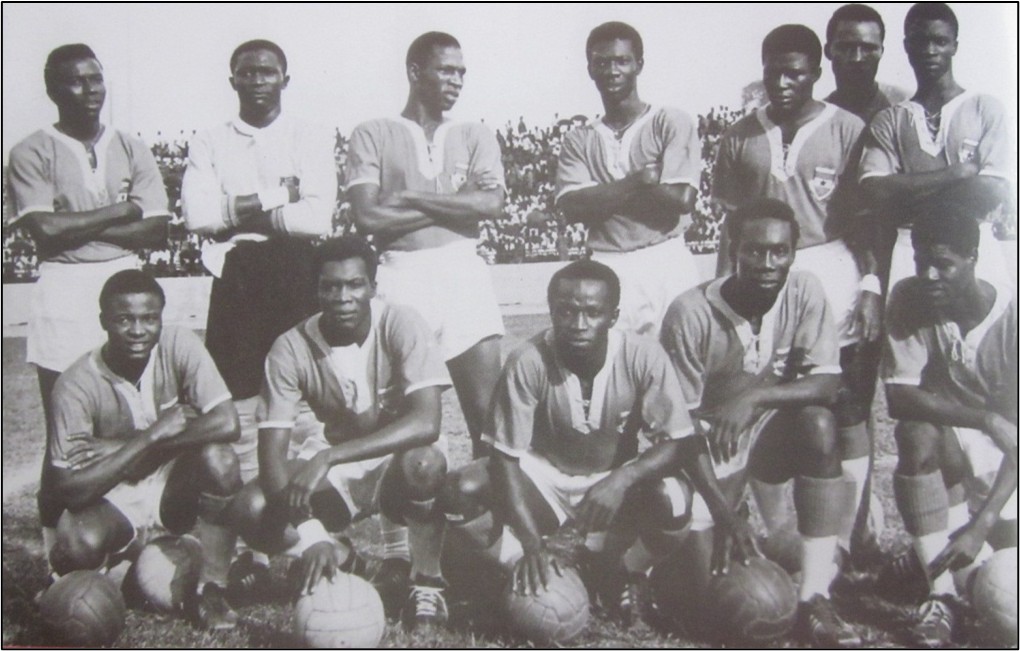
Often on our way home in the late afternoons, we’d stop by the park to meet the various players and watch them practice. When competitive football games were scheduled, (like matches with Accra Hearts of Oak led by skippers E.C. Briandt and C.K. Gyamfi, or Sekondi Eleven Wise with skipper Edward Acquah, for instance) we figured a way to see the action. With zero money for the gate fees, we’d climb the neem trees that bordered a side of the park. Now perched on the tree tops like primates, we were offered the panoramic view of the park. Taking it all in from that vantage point, we bubbled with excitement.
The player I admired the most was the indomitable Baba Yara (1936 – 1969), playing “right out” for Asante Kotoko. In competitive matches, we could not wait for the ball to be passed to him. Popularly called “Yaara”, he swayed and glided on the flanks – buoyed and balanced with finesse and ease – he was a wonder to behold. Here, truly, was God’s own gift to football! And whenever he scored from the right flanks, the whole area erupted into enduring spasmic echoes – gooaall!
Lately, recalling a particular soccer championship match on TV, I wrote that it was dazzling to watch Zenadine Zidane fly to connect a pass in mid air. The shot smashed the inner net in a flash. The master stroke seemed easy; but it took the world class champion a lifetime of practice to perfect his moves to thrill soccer fans with grace and precision. People like Yaara – who developed themselves to share such wondrous abilities – are blessed indeed; they made life itself worth living and enjoying.
Yaara was born in Kumasi and raised a Muslim. Tall and sturdy, he showed athletic genius in his youth and excelled in many sports – even as a sprint champion in school. His other interests at the time included horseback riding, and became a jockey at the Accra Turf Club from 1950. In 1955, he left the horses and registered with Asante Kotoko football club. That was the year he made his debut on the international scene. Wearing a number 7 jersey, in the Gold Coast team, he helped to massacre Nigeria by a score of seven nil. He scored two of the goals himself, and was the assist in four of the seven.
The thing I remember about him mostly was the cordial smiles for his fans. As a little boy, I was pulled to him as if by a magnet. You could see and feel his warmth and grace infect one’s own manner. Not only did he possess a handsome demeanour, he met and greeted you with smiles and left you smiling still. The thought of him today reminded me of the saying, “Beautiful thoughts make a beautiful soul, and a beautiful soul makes a beautiful face.”
Dubbed, the “King of Wingers of West Africa”, Yaara was credited with scoring about fifty goals for the Black Stars. To the end, he was faithful to his vocation, governed always by the love and respect he had for his admirers.