In the farming community of Forikrom, near Techiman, a quiet but consequential movement is taking root—one that reaches beyond the soil to the very heart of Ghana’s agricultural identity.
Against the pressures of globalised seed markets and mounting climate uncertainty, farmers, scientists and traditional leaders converged for the 2025 Indigenous Seed and Food Festival with a shared purpose: to safeguard Ghana’s indigenous seeds as a cornerstone of national food security.
What emerged was not merely a cultural gathering, but a strategic convergence of ancestral knowledge and scientific rigour—an intentional recalibration of how the country thinks about resilience, ownership and sustainability in agriculture.
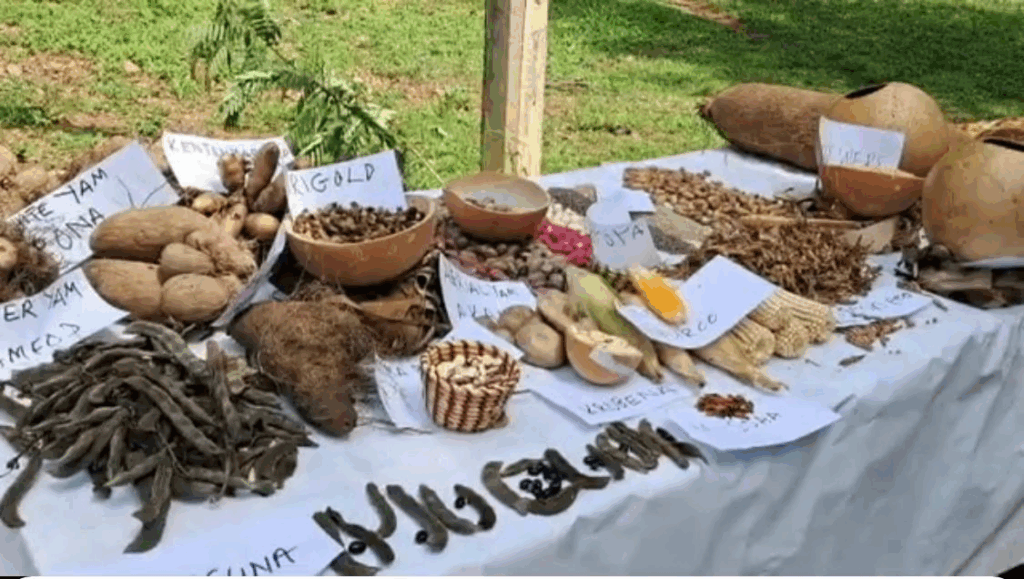
A living archive of heritage
The festival grounds unfolded like an open-air archive. Baskets brimmed with native varieties of millet, cowpea, groundnut, okra and maize—each seed carrying generations of accumulated wisdom.
“This is not just a fair; it is a living museum,” observed a reporter at the event. “The difference is that these artefacts are not locked behind glass. They remain in the hands of smallholder farmers, the true custodians of our biodiversity.”
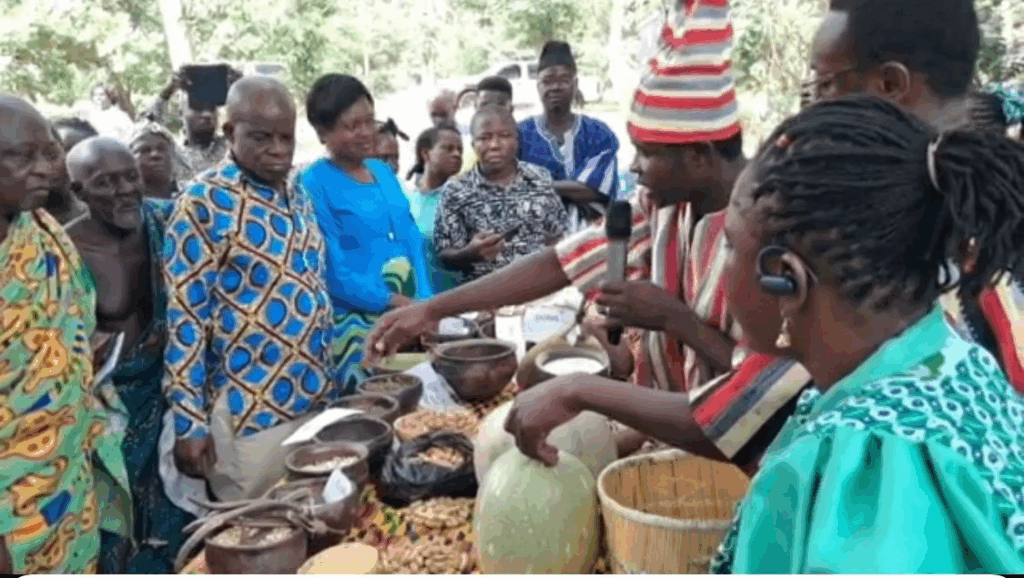
In a sector increasingly shaped by commercial hybrids, the visibility and validation of local seed systems marked a decisive shift in narrative.
From advocacy to implementation
At the centre of this shift is a growing partnership between the Centre for Indigenous Knowledge and Organisational Development (CIKOD), the Council for Scientific and Industrial Research (CSIR), and the Association of Church-Based Development Projects (ABOFAP).
CIKOD’s Executive Director, Benjamin Guri, articulated the strategic importance of the alliance in a forceful address.

“These local seeds are not just plants; they are the foundation of our agricultural system,” he said. “They carry the memory of our land. They are resilient, adaptive, and attuned to our climate. They understand the rhythm of our rains and the intensity of our sun.”
Mr Guri warned that dependence on imported hybrid seeds imposes a dual burden on farmers—high costs and structural dependency.
“Our local seeds are a national treasure,” he stressed. “They are affordable, accessible and inherently ours. What we need now is deliberate policy support to preserve and scale them.”
Science as a pillar of protection
That policy ambition is being reinforced by scientific intervention. Dr Rashid Tetteh of CSIR explained that the festival also functions as a critical conservation platform.
“We are here to identify, document and collect valuable indigenous varieties for inclusion in the national seed bank,” he said. “This is not passive storage. It is a rescue operation—a form of genetic insurance against extinction.”
According to CSIR, preserving these seeds under controlled conditions ensures that lost or threatened crops can be reintroduced, studied and developed for future agricultural needs.
Traditional authority and cultural legitimacy
The fusion of science and tradition received strong endorsement from the festival’s chairman and guest of honour, Nana Okogyeaman Kesse Bassahia III, Chief of Forikrom.
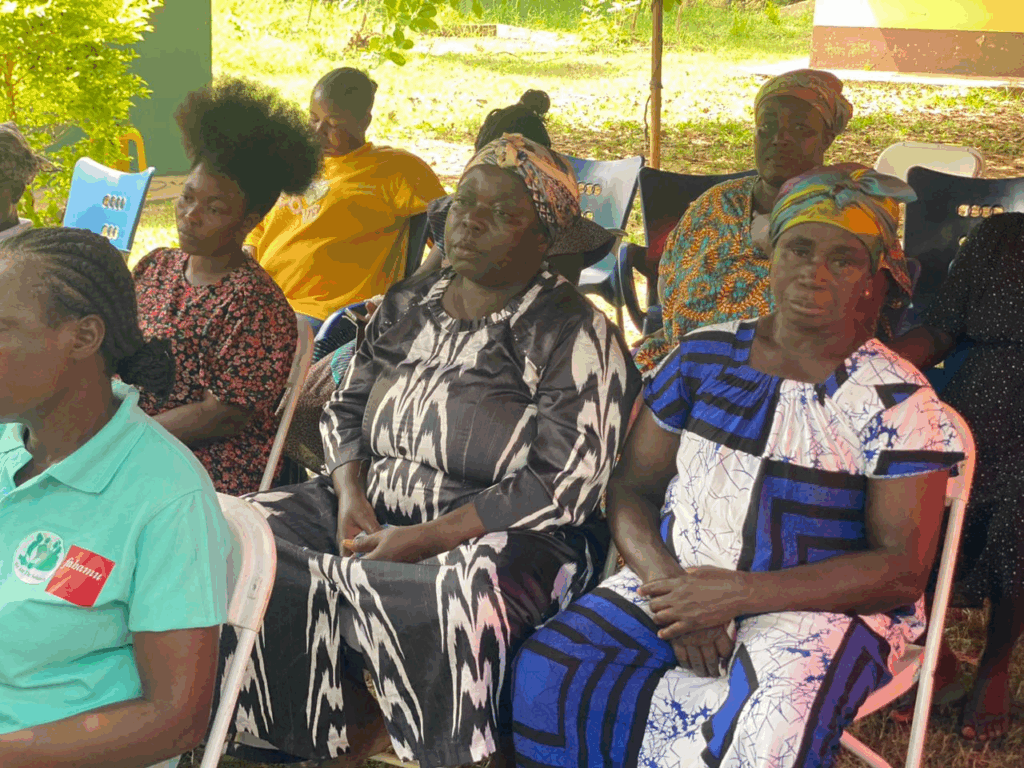
“To abandon our local seeds is to abandon a part of ourselves,” he told the gathering. “Our food is our culture. The taste of our meals and the nourishment we draw from them begin with the seeds handed down by our ancestors.”
His remarks reinforced the idea that food sovereignty is not solely an economic or environmental concern, but a matter of cultural continuity.
Farmers reclaiming confidence
For practitioners on the ground, the renewed focus on indigenous seeds is already yielding dividends. James, an agroecology farmer from the area, described the movement as both empowering and practical.
“This has inspired us,” he said. “We are rediscovering pride in what we grow. We are cutting costs, gaining independence and producing food that truly belongs to our land.”

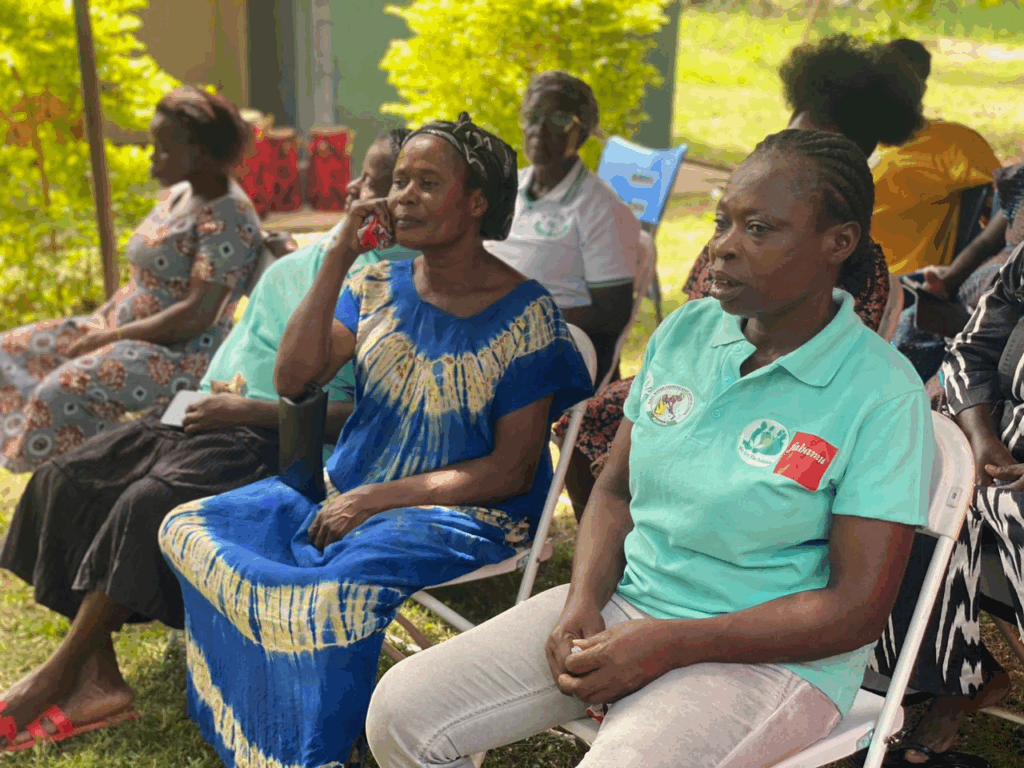
Across the festival, farmers exchanged seeds, techniques and experiences—rebuilding networks of shared practice anchored in ecological balance rather than external dependency.
Cultivating the future
As the festival drew to a close, a unifying message resonated across institutions and communities alike: Ghana’s long-term food security and climate resilience are inseparable from the protection of its indigenous seeds.

This is not a retreat from modernity, but a strategic return to first principles. In preserving native crops, Ghana is not only safeguarding biodiversity—it is cultivating sovereignty, resilience and a sustainable legacy for generations yet to come.
As Mr Guri aptly observed, what ultimately grows from this seed of an idea may well nourish the nation.