South Korean police have raided the headquarters of the Ministry of Land, Infrastructure and Transport as questions mount over its handling of the country’s deadliest aviation disaster.
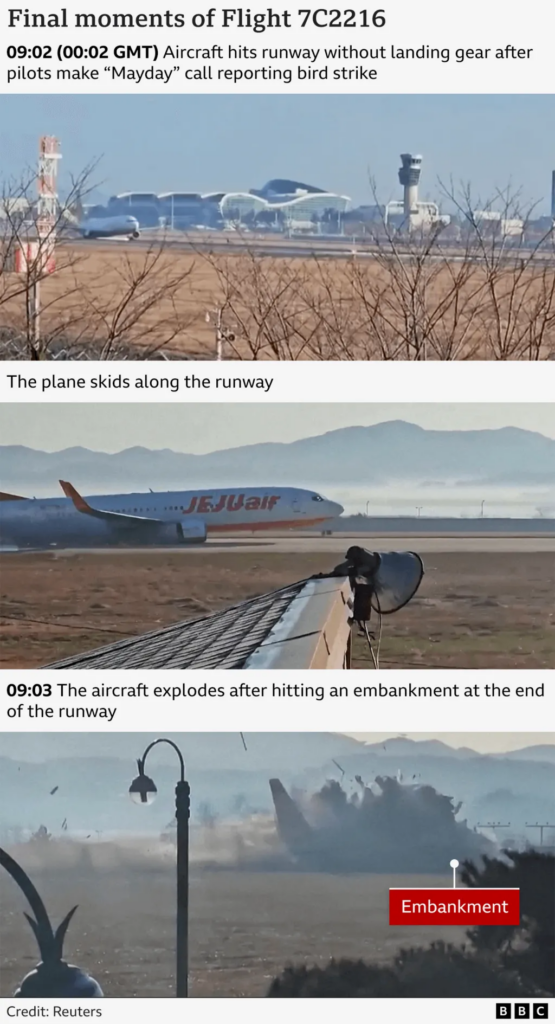
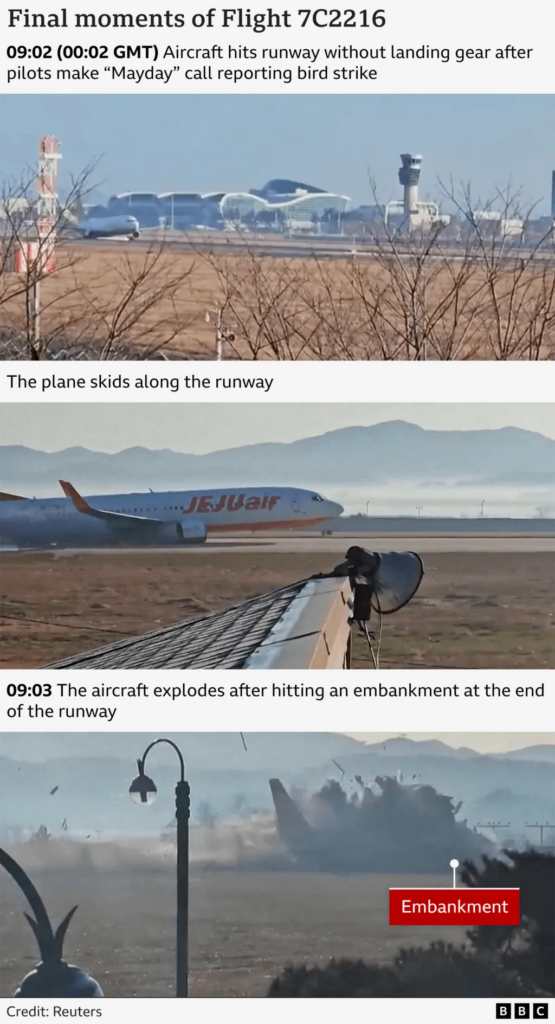
The tragedy occurred on 29 December 2024, when Jeju Air Flight 2216 overshot the runway at Muan International Airport and struck a concrete structure, killing 179 of the 181 people on board. Early investigations revealed that the Boeing 737-800 had encountered a bird strike, and the concrete mound at the end of the runway worsened the scale of casualties.
The raid, conducted in the central city of Sejong on Friday, is part of a government-ordered investigation into whether officials mishandled the crash and its aftermath, news agency Yonhap reported. The inquiry follows President Lee Jae Myung’s directive on Thursday after investigators discovered additional body parts and victims’ belongings.
“The latest findings prompted public outrage and led President Lee to order a full review of the recovery operations and disciplinary measures against those responsible for delays in handling human remains,” Yonhap reported.
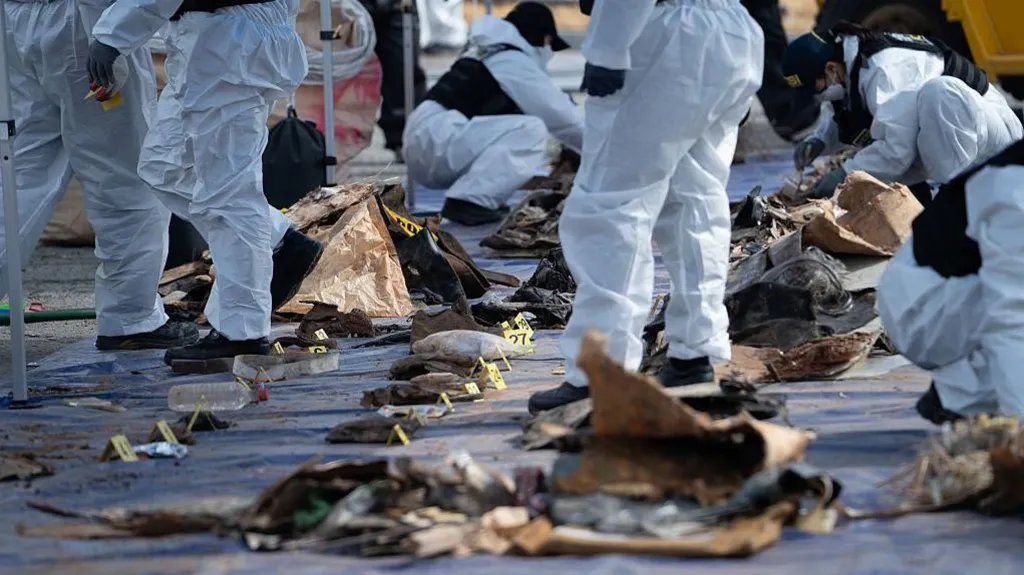
In recent months, authorities found body parts and personal effects stored in sacks alongside rubble collected from the accident site—a discovery that families of the victims had repeatedly requested be re-examined.
The Ministry has issued an apology, but the victims’ families have rejected it. “We are appalled by the transport ministry’s late and inadequate apology,” a family representative said. “It feels like killing the victims a second time.”
Alongside the police-led raid, parallel investigations are ongoing by other government agencies and the South Korean parliament. The main government probe is expected to release its findings by mid-2026.
A separate inquiry by South Korea’s Board of Audit earlier this week revealed that the concrete mound struck by Jeju Air Flight 2216 was built as a cost-saving measure.
Muan International Airport is located on sloping terrain. Rather than leveling the ground to install a critical antenna system for navigation, which would have been more expensive, authorities opted to build the system into an elevated concrete structure near the runway.
The Board of Audit noted that structures housing the antennas, known as localisers, should have been designed to break easily upon impact to prevent catastrophic accidents.
Simulations indicate that all 181 passengers and crew on board could have survived if the plane had not collided with the concrete mound, which caused it to explode into a fireball.
The plane had already been severely damaged after a flock of migratory ducks struck its engine, forcing the pilots to land on the aircraft’s belly. While the pilots successfully guided the plane down the runway, the collision with the concrete structure proved fatal.
One month after the crash, South Korean aviation authorities removed similar concrete navigation structures at seven airports to prevent a repeat of the disaster.