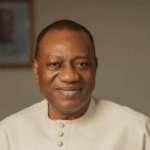
Labour Minister, Dr Rashid Pelpuo, says the current public debate over tariff hikes and base pay must be viewed in a broader context.
Speaking on Joy News’ PM Express on December 9, he said government is tracking the situation closely and wants labour and regulators to maintain an open dialogue.
“Government is very curious about what is going to happen. We are watching, and we are speaking to the public. We are speaking to labour as well, and we want to make sure there’s a close understanding of what has happened,” he said.
He stressed that both sides must stay engaged. He added that “labour continues to work as effectively as we know them to be doing, and government will continue to honour the promises we have made to them.”
Dr Pelpuo urged labour and the PURC to keep talking. He said that is why government is “encouraging the two to continue to talk PRC, to have you know more closer conversation with the labour, so that they can arrive at a conclusive situation where they understand each other very closely.”
He explained that government’s ability to intervene has limits because of the implications on the national budget.
“Government’s intervention will have a long-term effect. It will result after a long period of running a budget which has just been approved or which is just going to be approved.
“And so changing in figures there will have a consequence of having a total effect on the figures that we put out already.”
The minister said government hopes the issue is resolved through dialogue.
“We are praying that this thing will be solved soon, that we don’t have to intervene in any form that will offset the situation PRC is putting across or that will unbalance the labour demands,” he said.
He added that government is “out there making sure that we play a positive role in getting labour to understand and be able to move.”
Dr. Pelpuo praised labour for its cooperation over the years.
“In fact, we have always been lucky. I’ve always been lucky to see that labourers not just want to walk along, but are also willing to sacrifice a little, which is normal for every Ghanaian to do now,” he said.
He noted that there are moments when “you need to sacrifice a lot for the general good of the people.”
Dr Pelpuoe said labour has shown that understanding even in difficult times.
“I find the working, you know, labour at all classes, at all levels, come to a point when they appreciate the situation we face ourselves. And I want to commend them.”
He recalled how government briefed labour at the start of the administration.
“When we took over this economy, we told them the challenges we were facing, we told them the difficult nature of the economy, which is still having some effects in the present situation.
“And they get to understand the situation, and were willing to go along with this. And you’ve seen it in the increments that we negotiated and agreed on.”
Dr Pelpuo said the wider question is how much of the national revenue should go to compensation.
“Should we spend 47% of our total revenue compensation for people who are less than 1 million, or should we increase it to 50% should we increase it to 65%?” he asked.
He explained that these options depend on “how much request they are making for increases in salaries.”
When asked whether the tariff increases meant workers were shortchanged in the base pay agreement, he pushed back against that framing.
“It will be difficult to give you a direct answer to that. Maybe we don’t call it short change, but we look at it as a question, how will it have a total effect on the worker?” he said.
He asked whether the tariff increment is “going to be a direct consequence of deliberately hurting the income of workers and creating a problem for them,” and how future measures could ease the pressure.
He said labour concerns must be weighed alongside the work of the PURC.
“How can the PURC have a conversation that will result in workers not feeling short-changed?” he asked. He explained that the PURC’s process considered many factors.
“The negotiation that went on, including the influence of the PURC, that resulted into the 9.8% was because of every indicators, many of the indicators they brought to fore, which enabled them to come to reality and find what we and presented what we have today.”
Dr Pelpuo said workers should not see the outcome negatively. “So I think that it shouldn’t be looked at in a negative form,” he said.