Volodymyr Zelenskyy has warned that Ukraine could face a shortage of key missiles used in its defence against Russia, as the ongoing conflict in the Middle East places increasing strain on global military resources.
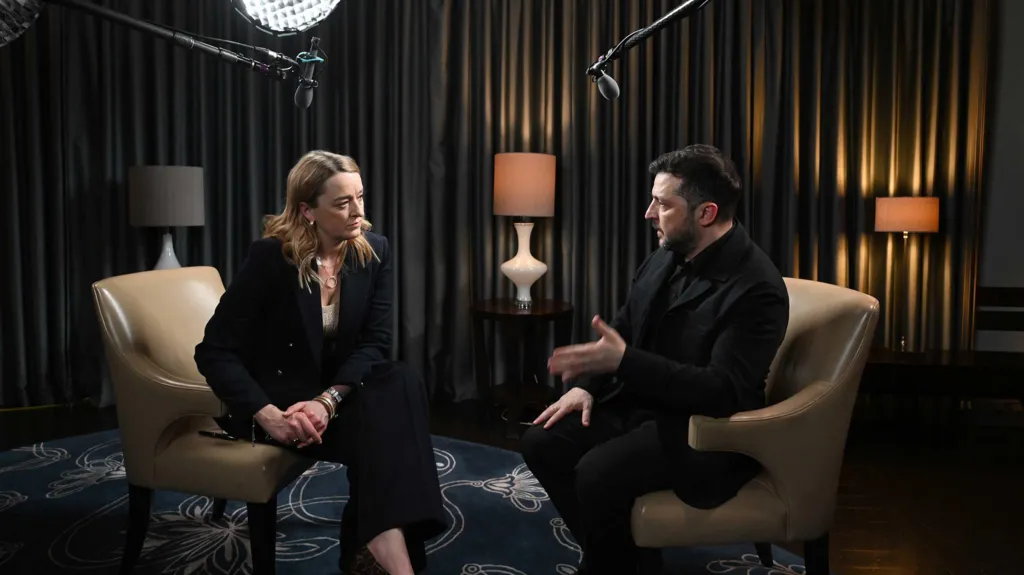
In an exclusive interview with the BBC, Zelensky said Vladimir Putin would benefit from a prolonged conflict involving the United States, Israel and Iran, arguing that it would divert attention and resources away from Ukraine.
According to him, a drawn-out war in the Middle East could weaken Kyiv’s position, particularly if US military supplies are redirected to other theatres.
Zelensky also suggested that Donald Trump has not taken a clear side in Ukraine’s war with Russia, and appears reluctant to take steps that could provoke Moscow.
He further called for dialogue between Trump and Keir Starmer, urging the two leaders to meet and find common ground following a series of public criticisms directed at the UK prime minister by the US president.
Now in its third week, the Middle East conflict has widened across the Gulf, with Iran launching retaliatory attacks on neighbouring states following earlier strikes by the United States and Israel.
Volodymyr Zelenskyy warned that the escalation is already having knock-on effects on Ukraine’s war effort, saying he has a “very bad feeling” about how it could derail progress towards peace.
According to him, efforts to negotiate an end to the war are being “constantly postponed”, largely because global attention has shifted to the crisis involving Iran.
Zelensky also argued that the situation is working in favour of Vladimir Putin, as rising energy prices boost Russia’s revenues while straining Ukraine’s position. He added that the conflict could also lead to shortages of critical military supplies.
“For Putin, a long war in Iran is a plus,” he said, explaining that it could drain US stockpiles and stretch air defence production capacity, ultimately leaving Ukraine with fewer resources.
He warned in particular of a potential shortage of Patriot missile systems, describing it as a looming challenge. The scale of weapons use in the Middle East, he noted, raises concerns about how quickly existing stockpiles could be depleted.
Zelensky said the United States produces roughly 60 to 65 such missiles each month, but highlighted that hundreds were reportedly used in a single day at the start of the Middle East conflict.
He also commented on the stance of Donald Trump, suggesting the US leader is positioning himself more as a negotiator than a direct supporter in Ukraine’s war against Russia’s invasion.
Zelensky said he believes Trump wants to bring the war to an end, but noted that the US administration appears to favour maintaining dialogue with Moscow, rather than taking steps that could provoke further tensions with the Kremlin.
The conflict sparked by US and Israeli strikes on Iran has escalated into a diplomatic dispute, following criticism from Donald Trump directed at NATO allies and concerns over what he described as a lack of decisive military action by Keir Starmer.
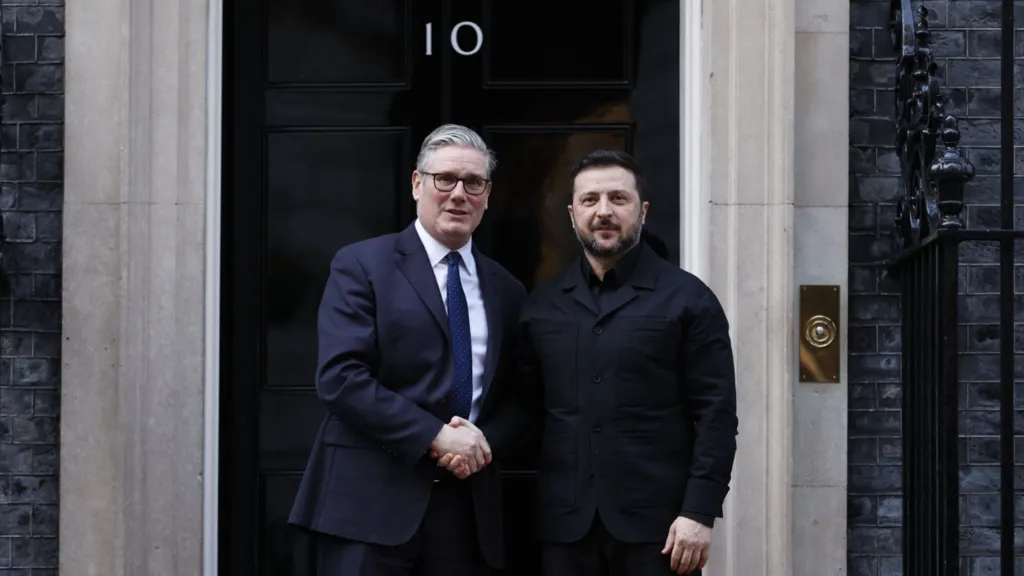
Amid the tensions, Volodymyr Zelenskyy has urged Western leaders to avoid divisions, warning that unity remains critical. Speaking to the BBC after talks with Sir Keir, he said while he would not dictate Trump’s actions, a meeting between the two leaders could help “reset” relations.
“I would really like President Trump to meet with Starmer… so that they have a common position,” Zelensky said.
Trump, however, renewed his criticism on Tuesday, describing Starmer as “no Winston Churchill”. While calling him a “nice man”, he said he was “disappointed” in the UK leader’s approach.
Sir Keir struck a measured tone in response, insisting the UK would not be drawn into a wider conflict. Downing Street also reaffirmed the strength of the longstanding US-UK relationship.
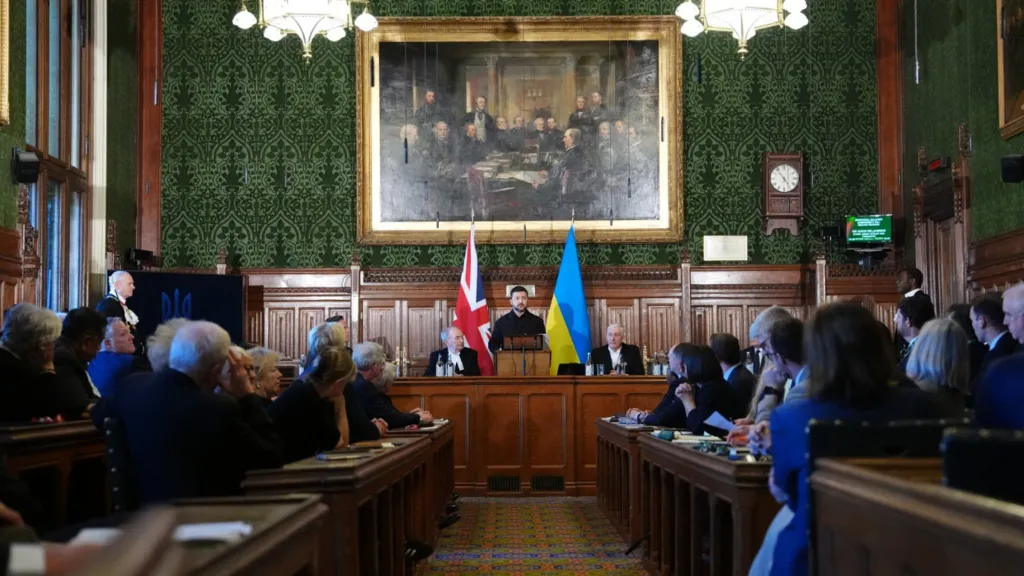
Zelensky’s visit to London included talks at Downing Street and an address to MPs in Parliament. The trip is part of a wider European tour, following a visit to Paris last week and ahead of a scheduled stop in Madrid.
The diplomatic push comes as the Middle East crisis risks overshadowing Ukraine’s ongoing war with Russia, now in its fourth year since the full-scale invasion.
“I think it’s really important that we are clear that the focus must remain on Ukraine,” Sir Keir said.
Addressing lawmakers in a packed Westminster committee room, Zelensky drew parallels between Moscow and Tehran.
“The regimes in Russia and Iran are brothers in hatred, and that is why they are brothers in weapons,” he said. “We want regimes built on hatred to never, never win in anything—and we do not want such regimes to threaten Europe or our partners.”
Senior figures in attendance included Mark Rutte, UK Defence Secretary John Healey, and leaders of opposition parties.