Katya says her 30th birthday celebration took a frightening turn when masked men stormed a nightclub she had hired for the party, just as she was about to blow out the candles on her cake.
She told a BBC World Service investigation that the group began physically and verbally attacking guests, using abusive language. “They called us faggots and lesbians. I could hear violence from every corner,” she said, adding that her mother was forced to get down on all fours during the incident.
The raid was carried out by a vigilante group known as Russkaya Obshina, which says it supports President Vladimir Putin’s push to promote so-called traditional values and oppose what it describes as Western liberal influence.
In some cases, police officers have reportedly joined such operations. In a video later posted on social media, Russkaya Obshina said it had been searching the venue for evidence of LGBT “propaganda”, which is prohibited under Russian law. No such evidence was found, but Katya was still questioned by law enforcement afterwards.
Nine months later, she was convicted of blasphemy in connection with a red neon cross-shaped light that had been displayed inside the nightclub.
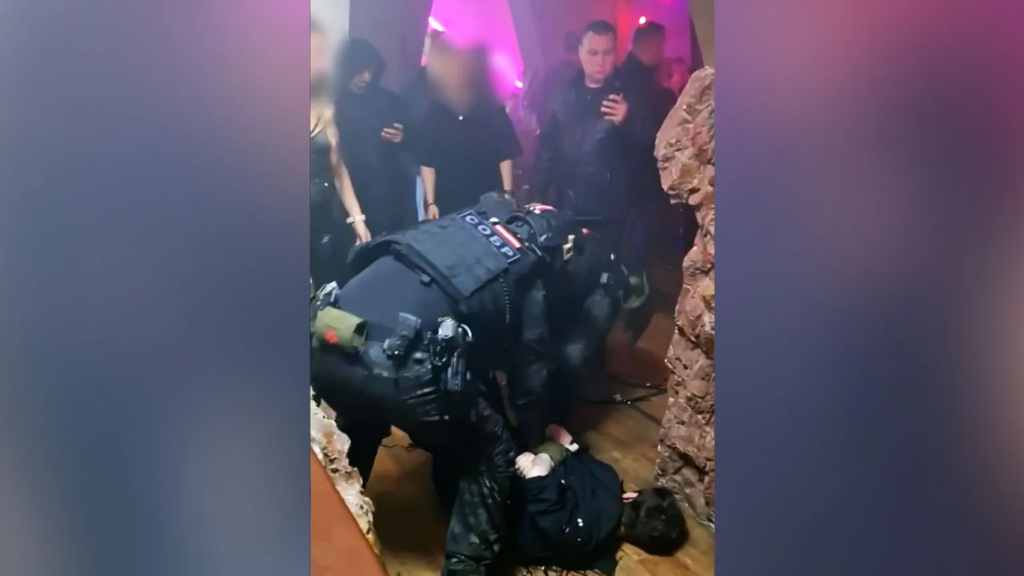
Russkaya Obshina is the largest of a network of nationalist groups operating in Russia, with our investigation finding that the number of raids it carries out has increased sharply over the past two years. We also found indications that the group has received funding through charitable foundations linked to individuals close to the Kremlin.
Katya, who is well known in her home city of Arkhangelsk for organising events within an alternative social scene, says she was told during questioning by a law enforcement officer that she did not align with “traditional values” and that there was “something wrong” with her.
She was later sentenced to 200 hours of community service. During the court proceedings, a witness who was identified as a Russkaya Obshina member said that seeing a cross displayed at one of her events caused him “emotional shock and deep confusion.”

Katya says she now lives in fear after coverage of her case in local media and on Russkaya Obshina’s social media channels led to widespread online harassment. Despite this, she said she felt it was important to share her experience with the BBC.
Over the past year, the BBC World Service has spoken to around half a dozen current and former members of Russkaya Obshina, as well as individuals like Katya who say they have been directly affected by the group’s actions.
What has emerged is a picture of a movement made up of highly motivated nationalist and religious activists who patrol towns and cities, carrying out raids on shops, warehouses, hostels, nightclubs, and other locations they believe may be violating traditional values or breaking the law. In many cases, they also push for the prosecution of those they target.
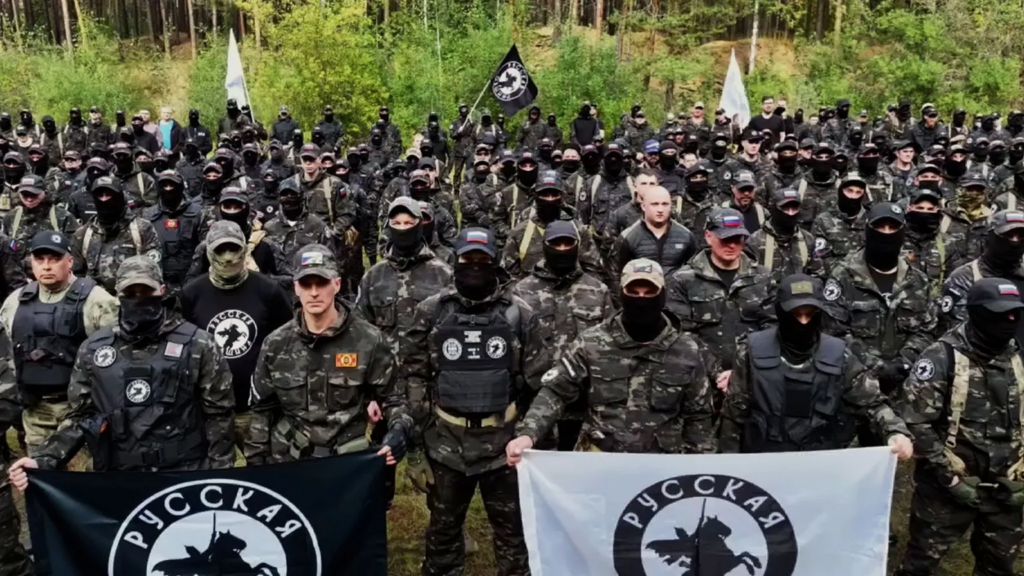
Much of Russkaya Obshina’s activity appears to focus on migrants. In videos shared by the group, members are seen confronting people at workplaces and in public spaces, accusing them of criminal behaviour. Our analysis found that around one in four posts reference migrants, often using language that critics describe as racist.
The group did not respond to BBC requests for comment, but addressed the allegations on its social media channels. It claimed that Russkaya Obshina is an informal network with no legal entity or official membership, and rejected suggestions that the BBC had identified current or former members.
“Even though Russkaya Obshina is an informal community of people, with no legal entity and no membership, the BBC’s great thinkers have somehow ‘found’ former and current members of the Obshina… If you grab anyone off the street and call them a member of the Obshina, you can put any nonsense you like into their mouth,” the post said.
We also spoke to a man who says he left the group only a few months ago. Like many others involved, he is a former soldier who returned injured from the Ukraine front line and was searching for purpose in civilian life.
He asked to be identified as Dimitry. He said he joined Russkaya Obshina to apply his military experience to what he sees as domestic challenges, describing migration as “foreign intrusion” affecting Russian culture.
“People from other cultures come in and Russkaya Obshina responds like an antibody, stopping them harming the organism. You could say Russkaya Obshina is like a kind of doctor,” he said.
Last year, the Russian Orthodox Church, a powerful institution closely aligned with the state, encouraged bishops to form partnerships with Russkaya Obshina, effectively strengthening ties that were already emerging and lending the group further legitimacy as it promotes values aligned with church teaching.
Analysts say that given the strict regulation of public life in Russia, it is unlikely that a group of this nature could operate without at least tacit approval from the Kremlin.
In recent years, the Russian government has increasingly promoted a more traditional and nationalist identity, a position that became more pronounced following the full-scale invasion of Ukraine in February 2022. In November that year, President Vladimir Putin signed a decree focused on preserving what he called “traditional Russian spiritual and moral values”.
Russkaya Obshina strongly supports Russia’s military operations in Ukraine. In December, the group announced the formation of a joint unit on the front line alongside members of the Espanola brigade, a far-right regiment made up of football supporters that has already been sanctioned by the UK government.
While the group denies being backed by major financiers, documents seen by BBC Eye suggest it has received funding through charitable foundations linked to influential individuals.
Among them is a foundation connected to sugar industry magnate Igor Khudokormov, a major food producer with reported ties to former agriculture minister and current Deputy Prime Minister Dmitry Patrushev. Patrushev’s father previously headed Russia’s security services and is widely described in Russian media as part of President Vladimir Putin’s inner circle.
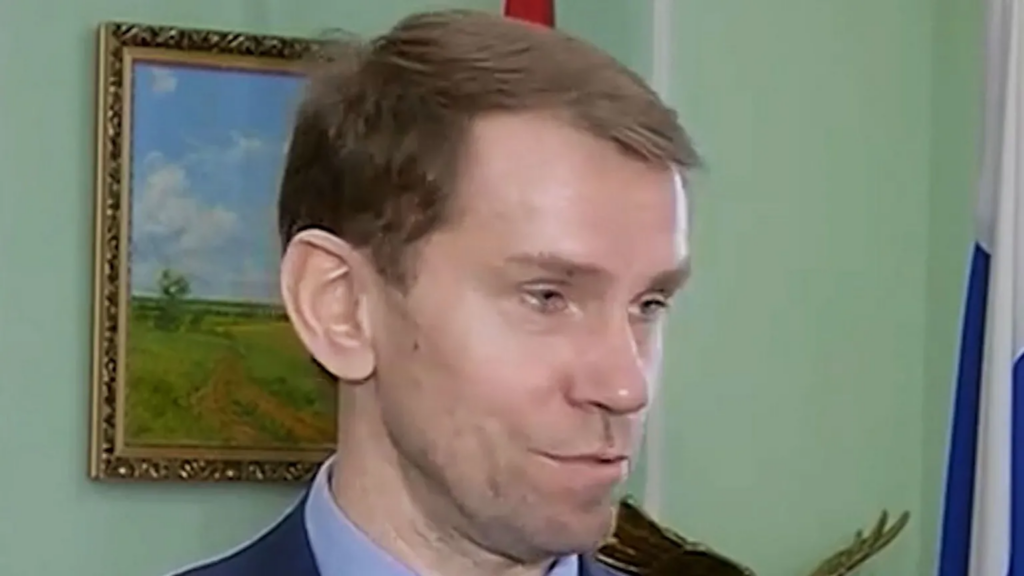
Khudokormov’s agriculture conglomerate, Prodimex, is reported to be a major trading partner with the European Union, according to US-based trade data platform ImportGenius.
However, concerns have been raised about his reported backing of Russkaya Obshina, a group linked to activities related to the war in Ukraine and alleged human rights abuses. Tom Keatinge, a finance and security expert at the Royal United Services Institute (RUSI), said the relationship should prompt scrutiny from international partners and companies.
“Do you want… a Russian company providing critical materials into the food chain, especially [one run by someone]… funding the sort of activity he’s funding? That’s a question governments and companies have to answer,” he said.
Khudokormov did not respond to requests for comment.
The documents also reference another alleged funder, Sergei Mikheev, a well-known Russian media commentator who has reportedly worked with the Kremlin and Russian intelligence on election-related campaigns in several former Soviet states.
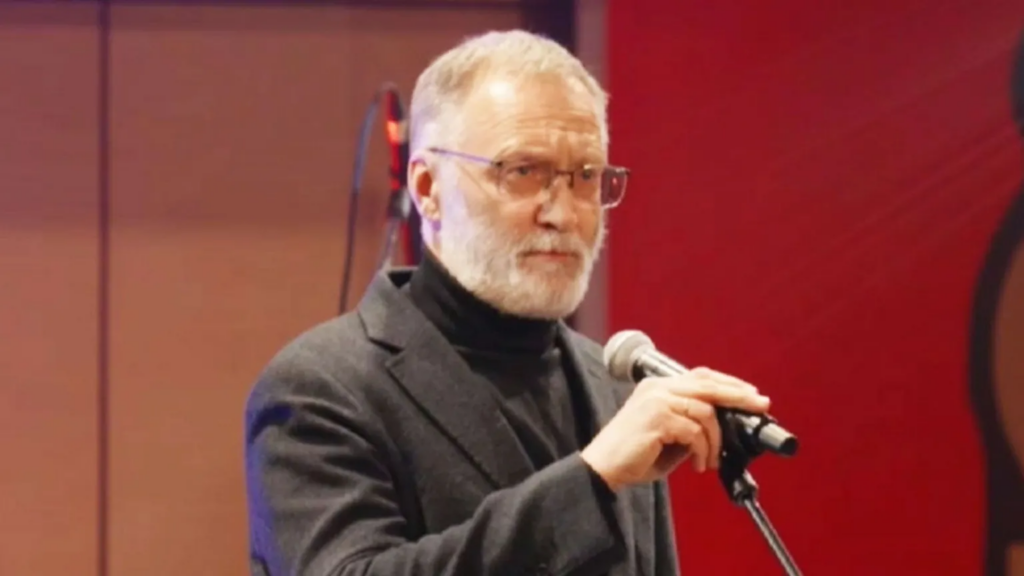
Sergei Mikheev told the BBC that his charitable organisation, the Sergei Mikheev Charity Foundation, has never transferred any funds to Russkaya Obshina, insisting that any documents suggesting otherwise are fabricated.
“To understand the scale of Russkaya Obshina’s activities, BBC Eye analysed images and videos from more than 21,000 posts published between 2020 and 2025 across the group’s main social media channels,” the report noted.
According to the analysis, the group’s first recorded raid appears to have taken place in May 2023. From then until the end of 2025, the data suggests Russkaya Obshina carried out more than 900 raids, around 300 of which reportedly involved law enforcement officers. Researchers say the true figure could be higher, as not all activities are publicly documented.
The BBC also developed a multi-agent AI system, combining several artificial intelligence tools under journalist supervision, to collect and analyse social media content from multiple Russian nationalist groups and assess their level of activity on the ground.
The findings indicate that Russkaya Obshina has maintained the most active street presence among more than 10 similar groups studied.
Russkaya Obshina has positioned itself within Russia’s long-standing system of civilian patrol groups—organisations registered with authorities and sometimes permitted to assist police in maintaining public order. However, Russkaya Obshina itself is not officially registered for such duties, despite reports of police participation in some of its operations.
Sergei Ognerubov, who leads a registered patrol group in St Petersburg, said he has allowed members of Russkaya Obshina to take part in his organisation, but criticised the wider movement for operating without formal oversight.
“If you want to tackle migration, join us and do it legally. Simply running into a market in masks isn’t fighting migration—that’s more like petty hooliganism,” he said.
Moscow-based researcher of the Russian far right, Alexander Verkhovsky, also warned that targeting specific groups without legal justification could amount to a breach of the law.
“Russkaya Obshina—which claims to uphold law and order—mainly operates through intimidation, which is itself illegal in this context,” he said.
Responding to the BBC investigation, the Russian embassy in London said the group’s popularity reflects “the growth of interest in national culture and historical traditions,” adding that “civic engagement in Russia provokes irritation among those who seek to denigrate and discredit our country.”
For Katya, a professional events organiser, life has changed dramatically since a raid led to legal proceedings and community service, including cleaning hospital floors.
“For 10 years, I lived in a certain rhythm. It made me happy—it was my life. What do you feel when a part of you is taken away? You feel loss,” she said.