Ghana has been urged to pursue a balanced energy transition that safeguards jobs, strengthens energy security and supports economic growth while meeting its climate commitments.
Speaking at a seminar on the theme, “A Just Energy Transition: The Role of Petroleum Engineers in Africa’s Energy Future,” held at Takoradi Technical University, the Policy Lead for Climate Change and Energy Transition at the Africa Centre for Energy Policy (ACEP), Charles Gyamfi Ofori, said the country’s shift to cleaner energy must not come at the expense of economic development.
He stressed that although the global transition to low-carbon energy is inevitable, petroleum will continue to play an important role in people’s lives and national economies for years to come.
“The transition would happen, but petroleum still becomes relevant in the way we manage our lives. What we can do is position ourselves to benefit not just around the environment but also around the economics and the social opportunities,” he said.
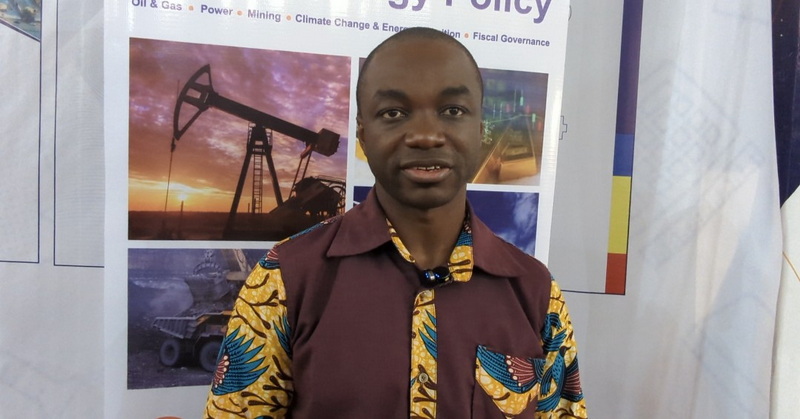
Mr. Ofori said Ghana’s approach to the global energy transition must strike a balance between addressing climate change and meeting the country’s development priorities.
He explained that while the global shift towards cleaner energy is largely driven by efforts to reduce greenhouse gas emissions and limit the effects of climate change, Ghana’s policies must be tailored to its own economic and developmental realities.
According to him, Ghana has continued to strengthen its climate commitments under the Paris Agreement through successive Nationally Determined Contributions (NDCs).
“Ghana submitted its first Nationally Determined Contributions in 2015. It was updated in 2021, and in 2026 we are now working on our NDC 3.0,” he said.

According to Mr. Ofori, Ghana has committed to increasing the share of renewable energy in its electricity generation mix to 10 per cent, improving energy efficiency and replacing liquid fuels with natural gas in thermal power generation as part of efforts to reduce carbon emissions.
He noted, however, that despite the rapid growth of renewable energy, the oil and gas sector will remain a vital pillar of Ghana’s economy for decades to come.
Mr. Ofori said the country’s energy future should not be viewed as a choice between fossil fuels and renewables, but rather as an opportunity to harness the strengths of both.
“Do you think petroleum will be relevant in the next 20 to 30 years? Yes. Do you think renewable energy will also be relevant? Yes. The issue is not choosing one over the other but positioning ourselves to benefit from both,” he said.

Mr. Ofori noted that affordability is increasingly influencing consumer choices.
”People are thinking not just around the environment but also around economics. If I can spend GH¢100 to charge my car and travel about 300 kilometres instead of buying GH¢500 worth of fuel for the same distance, which one becomes more economical?” he asked.
He encouraged engineering students to broaden their expertise beyond petroleum, saying “the evolving energy landscape presents opportunities in renewable energy, hydrogen, carbon capture and storage, geothermal energy and critical minerals such as lithium.”
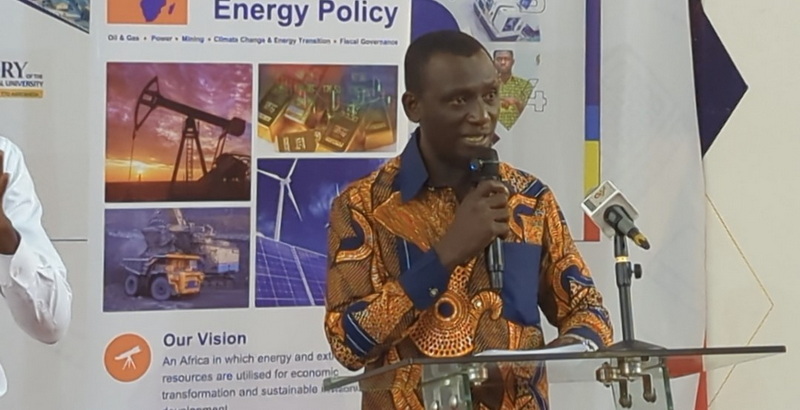
The Head of the Department of Oil and Natural Gas Engineering at Takoradi Technical University, Dr. Joseph Sakyi-Ansah, says Africa’s transition to cleaner energy must be carefully managed to address the continent’s unique development needs.
Speaking at the seminar, Dr. Sakyi-Ansah noted that while countries around the world are accelerating efforts to adopt low-carbon energy systems, more than 600 million Africans still do not have reliable access to electricity.
He stressed that Africa’s energy transition must go beyond simply moving away from fossil fuels and instead strike a balance between environmental sustainability, energy security, economic growth and social development.
“While the world accelerates its transition to low-carbon energy systems, over 600 million Africans still lack access to reliable electricity. For Africa, a Just Energy Transition cannot simply mean abandoning fossil fuels. It must balance environmental sustainability with energy security, economic growth and social development,” he said.
Dr. Sakyi-Ansah also underscored the continued importance of petroleum engineers in Africa’s evolving energy landscape, saying their expertise will remain vital as the continent embraces emerging energy technologies.
“Petroleum engineers remain central to Africa’s future because their expertise is increasingly required in carbon capture and storage, geothermal energy, hydrogen systems and integrated energy infrastructure,” he added.

He encouraged students to broaden their expertise beyond their core disciplines, urging them to develop multidisciplinary skills that will enable them to remain competitive as the global energy industry continues to evolve.
Speaking at the seminar, Consultant and Technical Advisor at the Africa Centre for Energy Policy (ACEP), Dr. Joseph Willie Amoah, highlighted natural gas pricing as one of Ghana’s most pressing energy issues, citing its direct impact on electricity tariffs.
He explained that about 30 per cent of Ghana’s electricity is generated from natural gas, making the cost of the commodity a major factor in determining the price consumers ultimately pay for power.
“About 30 per cent of all the electricity produced in Ghana is generated using natural gas, and that has implications for the cost of electricity because the end price of natural gas feeds into electricity pricing,” he said.
Dr. Amoah stressed that policymakers must carefully assess the consequences of decisions made within the natural gas sector, particularly who ultimately bears the financial burden.
“The key question is: Who bears the cost of the decisions that are taken?” he asked.
He maintained that Africa’s energy challenges cannot be blamed on a shortage of natural gas resources, insisting that the continent has sufficient reserves to meet its energy needs.
“Africa is not gas poor,” he emphasised.

Dr. Amoah noted that Africa is richly endowed with natural gas resources, yet millions of people across the continent continue to live without reliable electricity.
He said Africa has an estimated 600 trillion cubic feet of proven natural gas reserves, with Nigeria alone accounting for about 180 trillion cubic feet. Despite this vast resource base, more than 600 million Africans still lack access to electricity.
According to him, although Africa consumes only about six per cent of the natural gas it produces, the continent has more than enough reserves to generate electricity for its growing population.
“Africa is not gas poor,” he stressed.
Dr. Amoah argued that the continent’s biggest obstacle is not a lack of natural resources or technical know-how, but weak institutional and policy frameworks.
“The issue is not geological—we know where the gas is. The issue is not technological—we have the expertise to develop our gas resources. The problem is that we have not designed institutions that ensure our gas is produced and used for the benefit of Africans,” he said.
He described the situation as a developmental injustice, saying Africa possesses sufficient natural gas to expand electricity access and drive industrialisation, yet millions remain without power while a significant share of the continent’s gas is exported.
Dr. Amoah therefore called on policymakers to strike a better balance between export ambitions and domestic energy needs, stressing that energy security and long-term economic development must remain central to Africa’s pursuit of a just energy transition.
The remarks were made during a seminar organised by the Africa Centre for Energy Policy (ACEP) in collaboration with Takoradi Technical University. The event brought together students, academics and energy professionals to examine the evolving role of petroleum engineers in Africa’s energy sector and explore how future engineers can help Ghana transition to a low-carbon economy while safeguarding energy security and promoting sustainable national development.