The Ghana Meteorological Agency (GMet) has warned that Accra is at increased risk of flooding this June, with rainfall in the Coastal Zone expected to range between 100 and 150 millimetres.
According to the agency, the city’s vulnerability to flooding has worsened over the years, with even about 30 millimetres of rainfall now enough to cause inundation in some parts of the capital.
Flood risk in Accra
Speaking in an interview with Graphic Online’s Joshua Bediako Koomson, the Deputy Director and Head of Research and Applied Meteorology at GMet, Francisca Martey, said Accra’s ability to absorb and drain rainwater has significantly declined due to human activity, leading to more frequent and severe flooding.
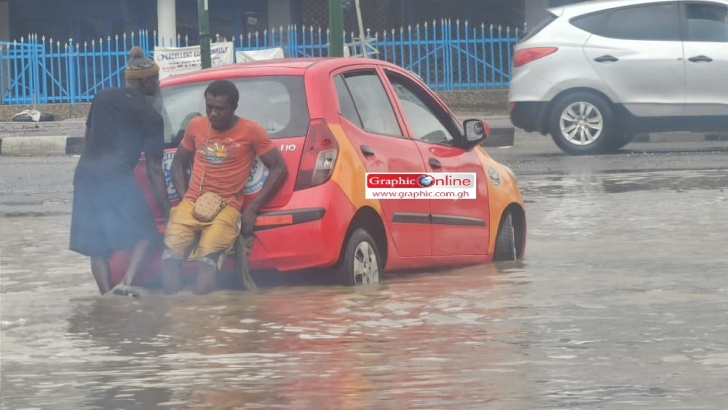
She explained that flooding in Accra is not driven by rainfall within the city alone, but also by runoff from surrounding communities, including higher-lying areas.
“When it rains in Accra, it’s not only water from Accra itself. It includes places like Berekusu and other surrounding communities. All of it eventually flows into Accra,” she said.
Mrs. Martey noted that many natural flood retention areas that once absorbed excess rainwater have now been taken over by development.
“Those places were naturally designed to hold rainwater, but they’ve all been built on. So what do we expect?” she asked.
She warned that the situation could worsen this month, given the rainfall outlook.
Impact of urbanisation
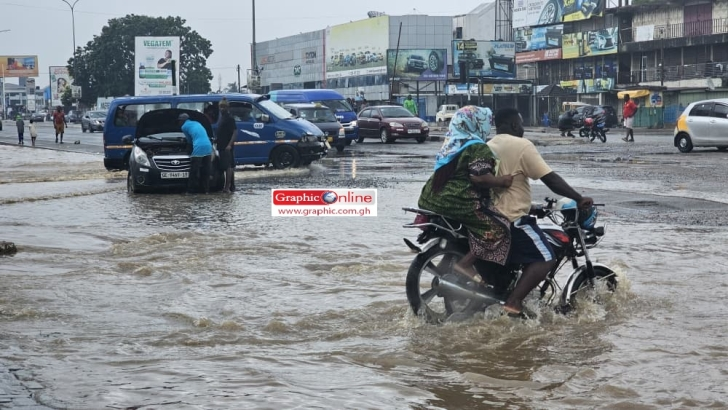
According to her, rapid urbanisation has channelled stormwater into narrow drainage systems that are often unable to cope with heavy flows.
“Previously, rainwater would spread out over large areas and gradually soak into the ground. Now we’ve confined everything into small drains,” she explained.
“When the volume becomes too much for the gutters, they overflow and flood surrounding communities,” she added.
She cited parts of Tema, including the Bel Aqua area, as an example of locations built on natural waterways.
“When you get to the Bel Aqua area in Tema, you realise it sits on a watercourse. The last time I passed there, it took me over two hours to move from the overhead bridge to the junction after work. That area being on a waterway contributes significantly to the flooding challenges there,” she said.
Mrs. Martey emphasised that while the Ghana Meteorological Agency (GMet) provides forecasts and early warnings, responsibility for long-term solutions lies with urban planners, engineers and city authorities.
“The city authorities know what needs to be done. Town and country planning knows what to do. I provide the forecasts; they are responsible for the action,” she said.
Other areas
The Ghana Meteorological Agency (GMet) says its June 2026 Rainfall Outlook indicates generally wet conditions across most parts of the country, with the forest and coastal zones expected to receive the highest rainfall activity.
In the Savannah Zone, which includes Navrongo, Zuarungu, Tamale, Walewale, Bole and Yendi, rainfall is expected to remain largely within normal levels. However, stronger chances of normal to above-normal rainfall are forecast for Wa and Bolgatanga, with cumulative totals projected between 150 and 210 millimetres.
In the Transition Zone, areas such as Kintampo, Wenchi, Atebubu, Mim, Salaga and Kete Krachi are likely to record normal to above-normal rainfall, estimated between 200 and 250 millimetres. By contrast, Bui, Sunyani, Dormaa and Ejura are expected to experience normal to below-normal rainfall patterns.
The Forest Zone, including Dunkwa, Kumasi and Akim Oda, is expected to see relatively higher rainfall activity, with totals ranging between 200 and 400 millimetres. Akuse and nearby communities, however, are projected to receive comparatively lower amounts.
Along the Coastal Zone, rainfall is expected to remain generally normal to above normal, with cumulative totals projected between 100 and 150 millimetres.
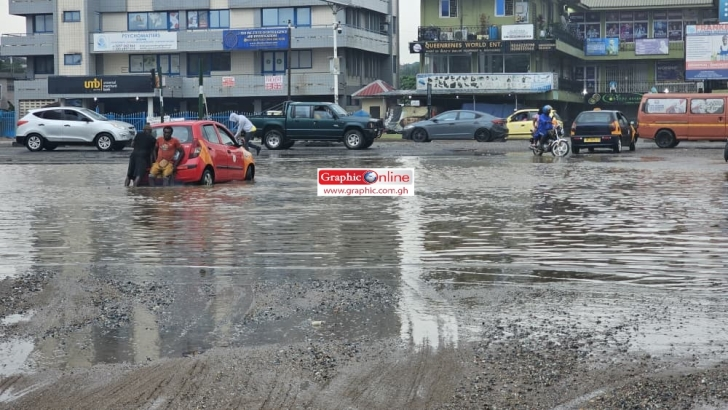
Mrs. Martey has urged disaster management institutions to strengthen their emergency preparedness systems in anticipation of possible localised flooding.
She noted that while the expected rainfall could benefit agriculture and improve water availability, it also comes with risks that require heightened vigilance from authorities and community leaders.
According to her, proactive risk-reduction measures will be essential to minimise potential impacts and ensure communities remain safe.