The Deputy Commandant of the Kofi Annan International Peacekeeping Training Centre (KAIPTC), Brigadier General Zibrim Ayorrogo, has underscored the need for stronger partnerships, expanded applied research, and evidence-driven policymaking as the Centre undertakes a major institutional transformation to better address the changing security landscape in West Africa.
Speaking at a Partners’ Meeting held at the KAIPTC in Accra on Thursday, June 18, Brig. Gen. Ayorrogo described the event as both a reaffirmation of the Centre’s long-standing partnerships and the beginning of a new phase in its institutional growth.
He said the meeting provided an opportunity for stakeholders to reflect on shared achievements, strengthen existing collaborations, and align efforts towards addressing emerging peace and security challenges across the region.
According to him, the Centre’s ongoing reforms are aimed at enhancing its capacity to generate policy-relevant research, support informed decision-making, and deliver practical solutions to the increasingly complex threats confronting West Africa.
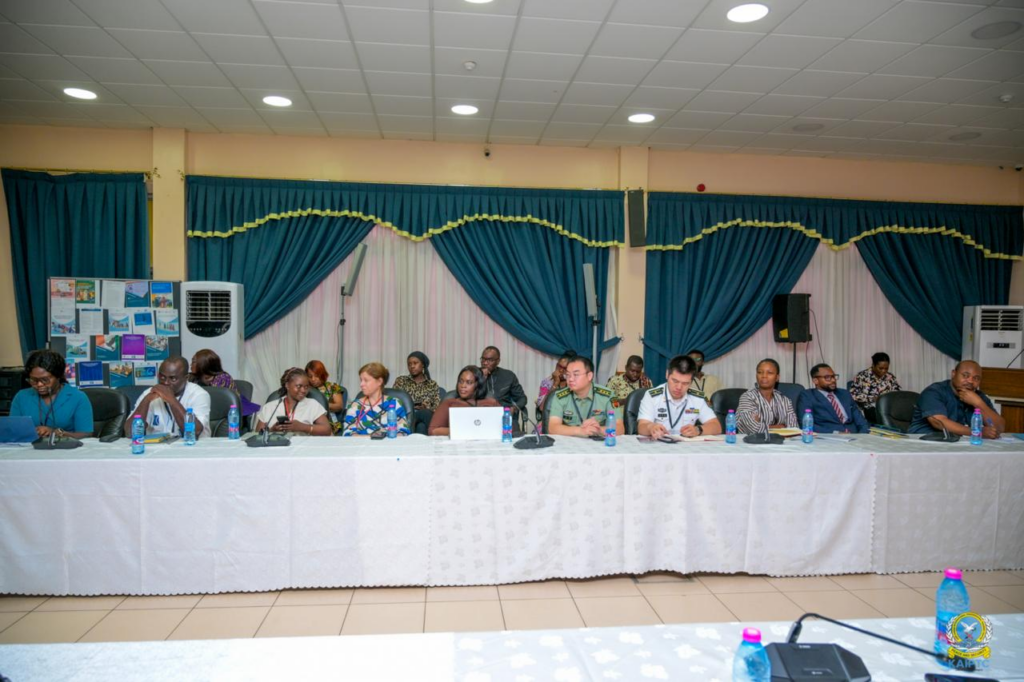
Brigadier General Ayorrogo said the reforms being undertaken by the Kofi Annan International Peacekeeping Training Centre (KAIPTC) are guided by its 2024–2028 Strategic Plan, which seeks to strengthen the institution’s capacity to respond effectively to the evolving peace and security challenges confronting Africa and the wider global community.
At the heart of the reform agenda is the restructuring of the Centre’s former Faculty of Academic Affairs and Research into two separate entities—a dedicated Academic Faculty and the newly established Department of Applied Research and Innovation in Peace and Security (DARIPS).
According to Brig. Gen. Ayorrogo, the restructuring is intended to enhance the policy relevance of the Centre’s work, expand its research impact, and ensure that its outputs address the real-world challenges facing governments, security institutions, and communities.
He explained that DARIPS will serve as KAIPTC’s hub for applied research and innovation, helping to bridge the gap between academic scholarship and practical policy solutions.
The Deputy Commandant situated the reforms within the broader context of a rapidly changing security environment in West Africa, which he described as increasingly complex and interconnected.
He expressed concern over the continued spread of violent extremist groups from the Sahel into coastal West African countries, warning that the trend presents a significant threat to regional peace and stability.
Brig. Gen. Ayorrogo also highlighted the impact of unconstitutional changes of government in parts of the region, noting that such developments have weakened governance systems and placed additional pressure on regional peace and security mechanisms.
He stressed that these emerging challenges underscore the need for stronger research-driven responses and closer collaboration among stakeholders to build resilience and safeguard stability across West Africa.
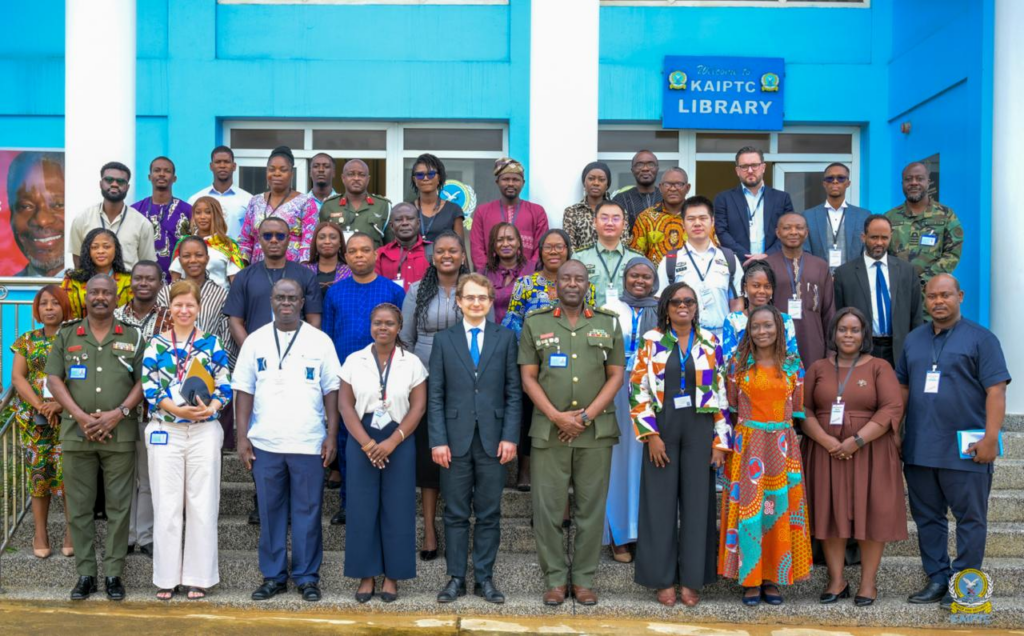
Brigadier General Ayorrogo noted that the region’s security challenges are being intensified by worsening humanitarian crises and persistent governance deficits that continue to affect millions of people across West Africa.
“These are not abstract concerns confined to security briefings,” he said, stressing that insecurity has real consequences for livelihoods, economic development, and the overall well-being of communities.
According to him, addressing these challenges requires responses that are grounded in credible evidence and adaptable enough to keep pace with the rapidly evolving nature of modern threats.
Reaffirming the Kofi Annan International Peacekeeping Training Centre’s (KAIPTC) role as an ECOWAS Centre of Excellence, Brig. Gen. Ayorrogo highlighted the institution’s responsibility to support Member States of the Economic Community of West African States (ECOWAS) in strengthening sustainable peace and security capacities.
He explained that the Centre’s mandate goes beyond training to encompass knowledge generation, applied research, policy support, and institutional development across the region.
While acknowledging the importance of training, he cautioned that traditional capacity-building approaches alone are no longer sufficient to tackle the complex security challenges facing West Africa today. Instead, he advocated for a stronger integration of rigorous, field-based research into all capacity-building initiatives.
He said the Dynamic African Research and Innovation Programme Strategy (DARIPS) was established to bridge the gap between research, policy, and practice by ensuring that evidence gathered from the field informs both training programmes and policy decisions.
This approach, he noted, will help improve the effectiveness of peace and security interventions at both national and regional levels.
Ultimately, Brig. Gen. Ayorrogo said the objective is to equip policymakers and practitioners not only with technical expertise but also with the critical analytical skills needed to make informed, timely, and effective decisions in increasingly complex security environments.
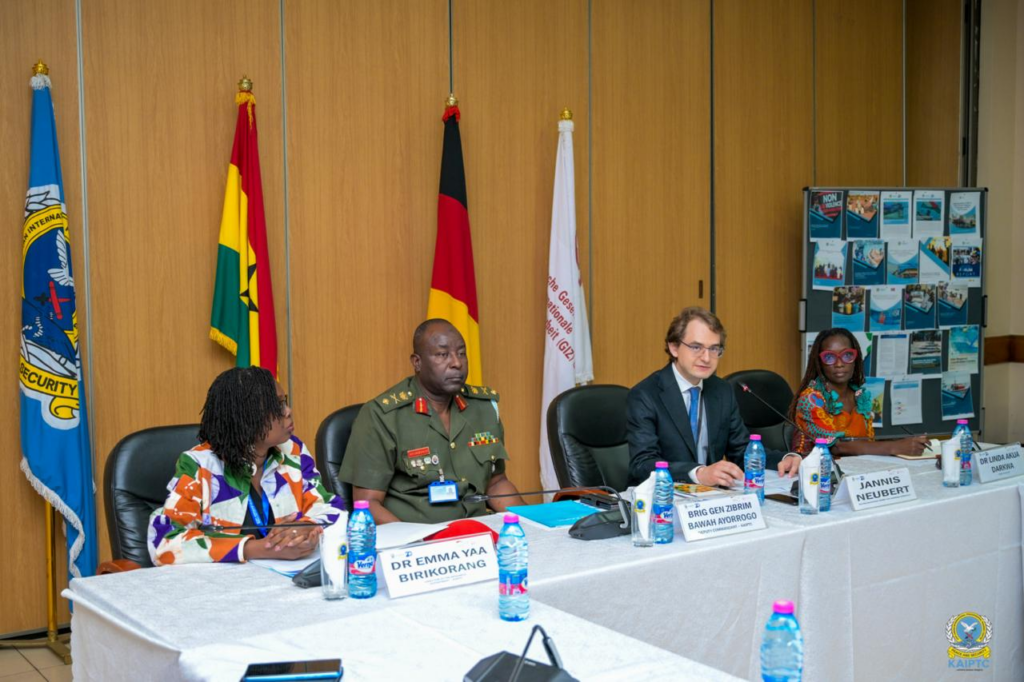
Brigadier General Ayorrogo unveiled four new thematic programmes under the Dynamic African Research and Innovation Programme Strategy (DARIPS), aimed at addressing some of the most pressing peace and security challenges facing the region and beyond.
The programmes focus on Conflict, Governance and Leadership; Technology and Security; Climate Security and Migration; and Peace Operations, Stabilisation and Peacebuilding.
According to him, the thematic areas have been carefully designed to reflect the increasingly interconnected nature of modern security threats. He noted that issues such as weak governance structures, rapid technological change, climate-induced displacement, and evolving conflict patterns require integrated and forward-looking responses.
Brig. Gen. Ayorrogo urged development partners and stakeholders to engage actively with the new programmes during the meeting. He encouraged participants to openly share their perspectives, identify areas of overlap, highlight gaps, and offer constructive feedback on how the initiatives can be strengthened.
Such candid discussions, he said, are critical to ensuring that the Kofi Annan International Peacekeeping Training Centre’s (KAIPTC) research agenda remains relevant, responsive, and capable of delivering meaningful impact.
The Deputy Commandant further underscored the importance of partnerships to the Centre’s success, noting that KAIPTC’s reputation and achievements over the past two decades have been built through strong collaboration with governments, international development partners, academic and research institutions, and civil society organisations.
He emphasised that the Centre’s progress has been driven by collective effort and shared commitment, rather than the work of any single institution, reaffirming the value of sustained cooperation in advancing peace and security across West Africa.
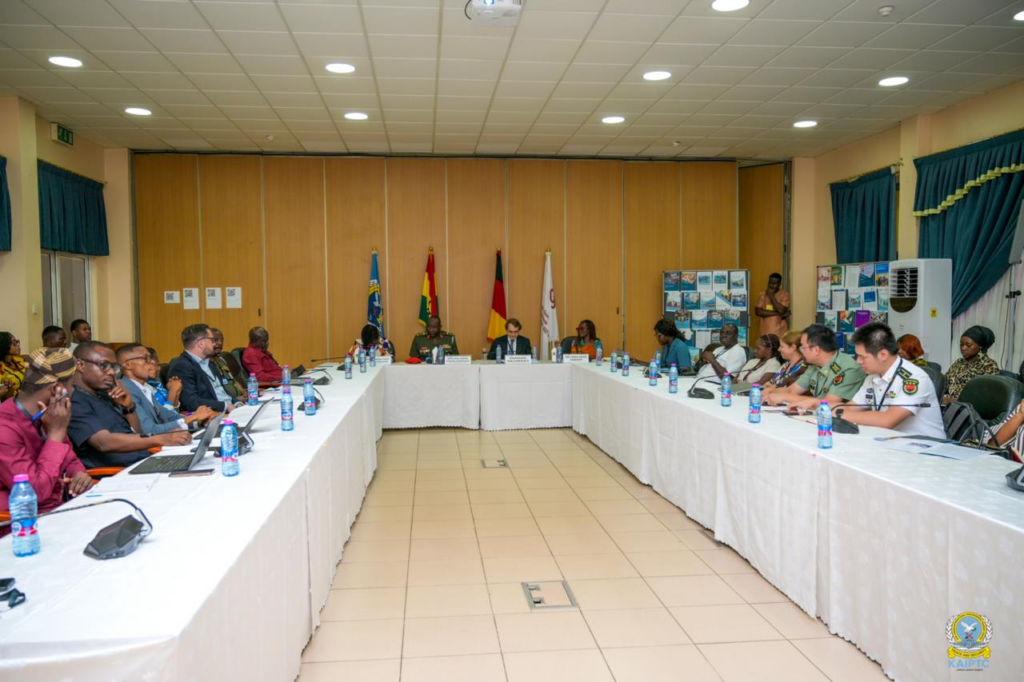
In this context, he described the reintroduction of DARIPS not as a shift from established practice, but as an opportunity to deepen and strengthen the partnerships that have long supported the Centre’s work.
According to him, collaboration remains at the heart of the Centre’s efforts to promote peace and security, and KAIPTC is committed to ensuring that these partnerships continue to thrive.
The Deputy Commandant also expressed appreciation to the Government of Germany and the Deutsche Gesellschaft für Internationale Zusammenarbeit (GIZ) for their support in facilitating the Partners’ Meeting. He commended their unwavering commitment to strengthening peace and security institutions across West Africa, noting that their involvement underscores the importance of KAIPTC’s mission.
Looking ahead, Brigadier General Ayorrogo expressed optimism that the meeting would foster a shared understanding of strategic priorities and enhance coordination among stakeholders. He said he expected participants to gain a clearer appreciation of how their individual efforts complement one another, while identifying practical steps to strengthen future collaboration.
Officially declaring the Partners’ Meeting open, Brig. Gen. Ayorrogo wished participants fruitful deliberations and meaningful engagement. He reaffirmed KAIPTC’s commitment to advancing evidence-based solutions that contribute to sustainable peace and security across West Africa.