As 48 nations compete for World Cup glory, another group has quietly endured an equally demanding journey to football’s biggest stage: the referees.
For this tournament, FIFA selected 52 referees, 88 assistant referees and 30 video assistant referees (VARs), forming a 170-member officiating team — the largest in World Cup history. The expanded format now includes 48 teams and 104 matches.
Officials come from 50 FIFA member associations across all continental confederations, including eight from the United States. Six women are also part of the team, following FIFA’s decision to include female referees at the previous World Cup in Qatar.
The role has, at times, been thrust into the spotlight in unexpected ways. A Somali referee initially assigned to a marquee fixture was denied entry to the United States due to “vetting concerns.” In the opening match alone, a record three red cards were issued. Meanwhile in China, fans have rallied behind the country’s only representative at the tournament after the national team failed to qualify.
“It was my first World Cup game — and South Korea’s first World Cup match at home too. We had 50,000 spectators all in red jerseys. The noise was incredible,” recalled Leif Lindberg, one of the assistant referees for the 2002 World Cup final between Brazil and Germany, speaking about his debut on June 4, 2002.
“Every one of us was dreaming about officiating at the World Cup.”
But reaching that level requires far more than fitness and consistent performances. For many referees, the path comes with significant personal sacrifice, especially when balancing officiating duties with full-time careers.
“Most referees have been through at least one divorce,” said Lindberg, who is now retired and on his second marriage. “Many sacrifice family life in one way or another.”
How referees are selected
According to FIFA, the selection process for this World Cup began immediately after Qatar 2022. Candidates attended seminars, completed rigorous fitness tests, and were required to have prior FIFA tournament experience.
Their performances in domestic and international competitions have been closely monitored over the past three years, before a final committee confirmed the tournament lineup.
“In every major match leading up to the World Cup, there are one or two observers,” former assistant referee Renato Faverani told CNN Sports, explaining that elite referees are typically grouped into fixed officiating teams and assessed collectively throughout international assignments.
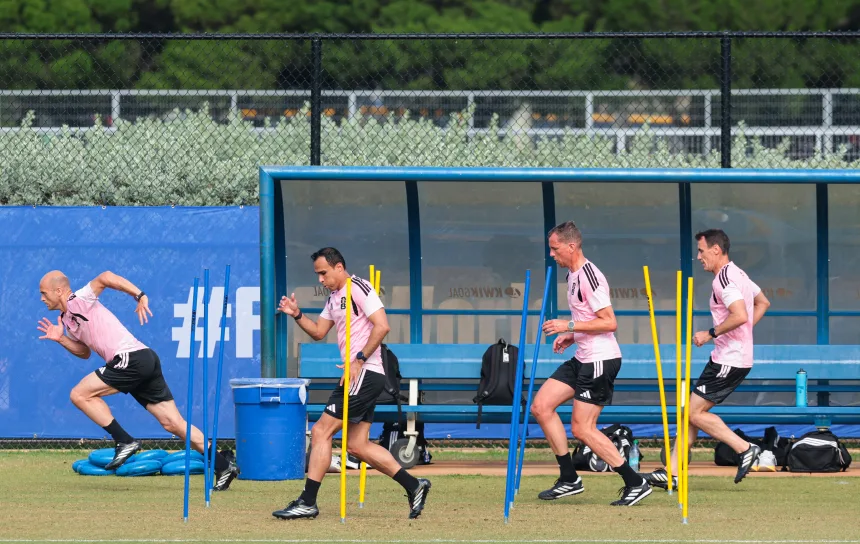
“Afterwards, you receive an evaluation, which is then compared across all referee teams,” said the Italian, who officiated four matches at the 2014 World Cup, including the final between Germany and Argentina.
Even reaching that stage is highly competitive, as only officials operating regularly at the top level are considered. Before his World Cup appointment, Faverani had already built an extensive résumé across the UEFA Champions League — including the 2013 final — the European Championship, and Italy’s Serie A, among others.
Once selected for the World Cup, referees are assigned matches three to four days in advance as the tournament progresses, with appointments based on performance. FIFA also prevents officials from overseeing matches involving their home country to avoid conflicts of interest, meaning there is no fixed list of candidates for the knockout stages.
“It was a very special moment to follow our national team and hope they would lose,” Sweden’s Lindberg recalled with a laugh. “If they had reached the semi-finals, I would have had to go home.”
“Sweden went out in the round of 16 in very unlucky circumstances, but for me it was lucky.”
The call-up to the final
So how do referees learn they have been chosen for the World Cup final?
The moment, by all accounts, is overwhelming.
After a training session near his hotel, Faverani returned to find all the officials gathered in a large hall. At the front stood FIFA president Sepp Blatter, who unfolded a sheet of paper and began to read.
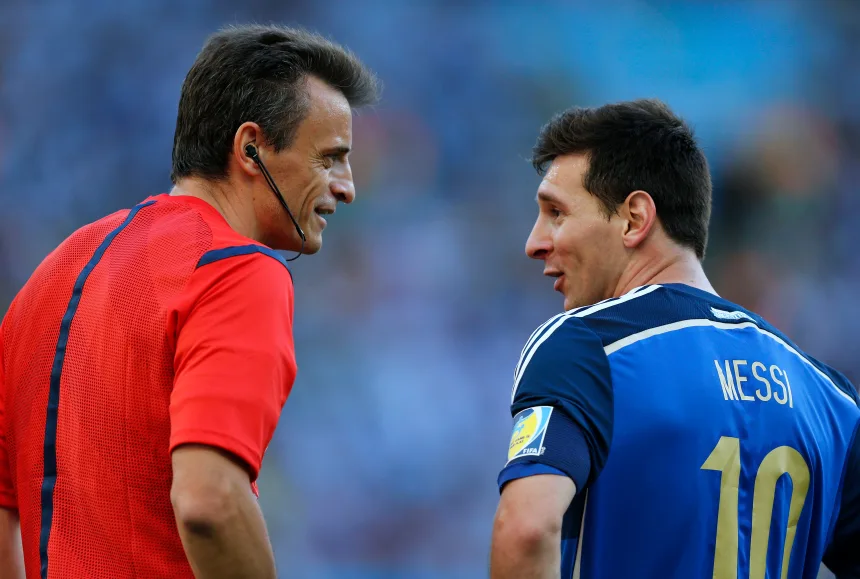
“Referees for the World Cup final are: Mr…” Sepp Blatter began, before pausing for effect. A few tense seconds followed, then Faverani’s name was announced.
Colleagues and senior officials — including England’s Howard Webb, who refereed the 2010 World Cup final in South Africa — immediately stepped forward to congratulate him.
“For two or three hours, it was the best moment,” Faverani recalled. “After that, the pressure and responsibility set in. You just hope the match comes quickly because the pressure is very high.”
Once the initial excitement faded, preparation for the final began in earnest.
On and off the pitch
What many fans don’t see is how extensive the preparation is in the days leading up to kickoff. Knowing the Laws of the Game is only the starting point. Alongside daily fitness routines — long runs and gym sessions — referees also attend technical briefings and study the teams they will officiate in detail.
“It is vital to understand a team’s defensive tactics and players’ characteristics,” Faverani explained. He would spend hours reviewing match footage of the teams involved and speaking with colleagues who had already officiated them, using their insights to anticipate potential challenges.
Assistant referees are responsible mainly for offside decisions, as well as signalling fouls and misconduct. Understanding which players are prone to disputes or heated exchanges helped Faverani stay composed on the pitch — sometimes even responding to tense moments with a calm, knowing smile.
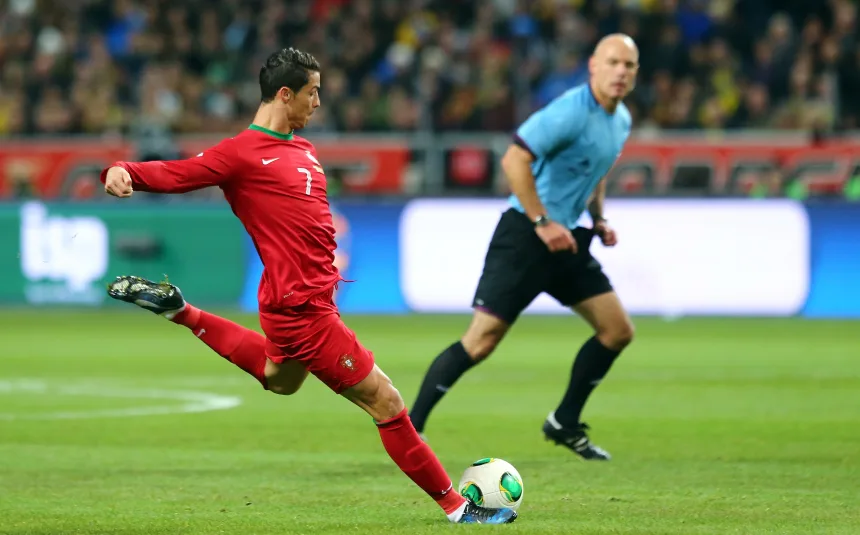
A defining moment came during the 2013 World Cup playoff between Portugal and Sweden — a clash featuring two of football’s biggest names, Cristiano Ronaldo and the now-retired Zlatan Ibrahimović. Both were known for their fierce competitiveness and unique styles of play.
Faverani served as assistant referee that night, and says his experience reading attacking movements and defensive lines helped him anticipate play before it unfolded.
Despite being so close to global superstars, he stresses that referees must remain unaffected by reputation. “When the whistle blows, it’s just 11 against 11, nothing more,” he said.
While much has been debated about Video Assistant Referee (VAR), the technology was only introduced in 2018. Before that, every decision was made in real time with the naked eye — a standard that still largely applies today, even with the option of review. And at times, those split-second calls proved decisive.
One such moment — described by Faverani as “very difficult” — still stays with him from the 2014 World Cup final in Rio de Janeiro’s Maracanã Stadium. As the first half neared its end in a tense goalless draw, Germany won a corner.
The ball was delivered into Argentina’s crowded penalty area, where Benedikt Höwedes rose highest and powered a header toward goal. It struck the post and bounced back into play, falling to Thomas Müller. In the scramble, the German forward was in an offside position — by less than 10 centimetres (around four inches), according to Faverani.
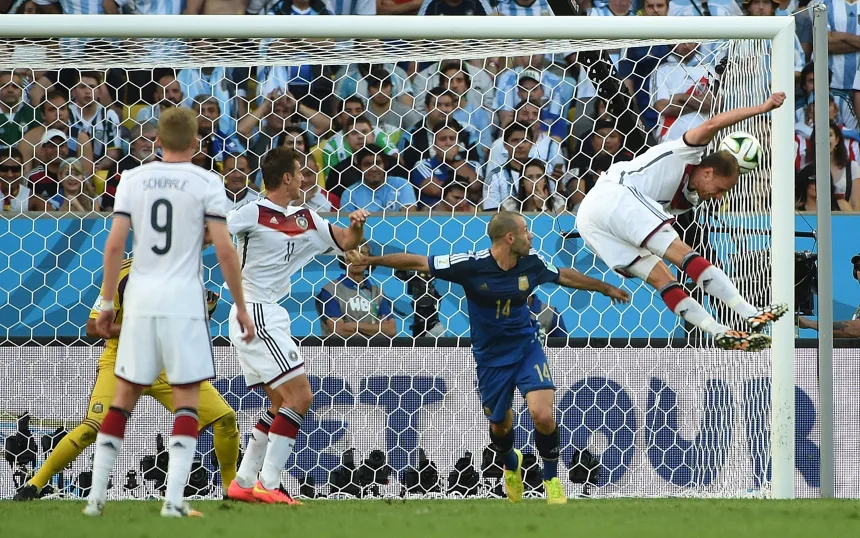
“I was focused, so I raised the flag,” he said with excitement. The decision, later nicknamed the “Robo Assistant Referee” by a German newspaper, ultimately proved correct.
The cost of three decades
For Faverani and Lindberg, the journey from amateur leagues to the World Cup took nearly 30 years — a long climb marked by sacrifices, especially time away from family.
The numbers highlight just how competitive the pathway is. Of FIFA’s 3,725 listed international officials, only about 4.5% made it to North America this summer, with just a handful ever trusted to officiate a final. Behind them are hundreds of thousands who never reach the global stage.
Refereeing also comes with an unstable structure: opportunities only arise when matches are scheduled, often lasting just a few hours. As a result, most officials must maintain full-time jobs alongside their officiating careers.
“At the time, you had a full-time job, your games, and your training. You more or less had to make a choice, and many people chose refereeing over family life, paying the price later on,” Lindberg said, reflecting on his divorce.
He added that his own situation was unusual: “I was running my own company, so I could leave at three in the afternoon and get home at a normal time. That was a huge advantage for me.”
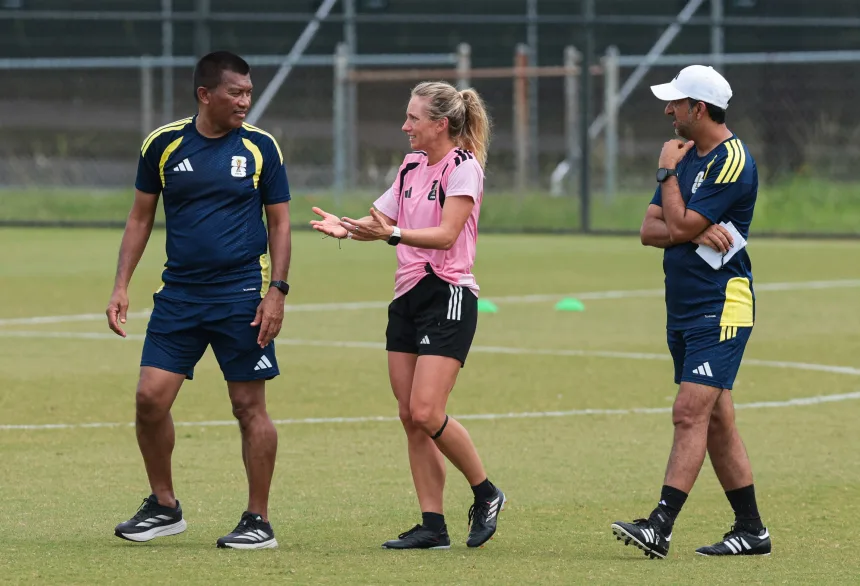
The extensive hours spent staying match-fit highlight another challenge for referees: the strain of an ageing body. While players are often 10 to 20 years younger, officials must push themselves harder just to keep up with the pace of elite football.
“Players train in many different areas that we don’t necessarily need, but we do a lot more physical preparation than they do because of age,” he explained.
For Faverani, refereeing at the highest level also came with personal sacrifices. He never gave up his office job as a credit manager, meaning he balanced two demanding careers at once. During the season, he regularly travelled across Europe for midweek Champions League fixtures and weekend Serie A matches, while also keeping up with work commitments through calls and emails.
“It is a passion for me, but I now realise how much time I took away from my family — my wife, my daughters, my mother,” he said, becoming emotional.
Boos and abuse
The rise of technology has transformed football, but it has also placed referees under far greater scrutiny, with every split-second decision analysed and debated. Increasingly, officials also face online abuse from frustrated fans, including some involved in betting.
That hostility is beginning to take its toll. Daniele Curcio, president of Referee Abroad — a non-profit organisation promoting refereeing worldwide — says declining trust in officials is contributing to fewer young people staying in the profession.
“It is something every federation in the world now has to deal with,” he told CNN Sport. “There needs to be a cultural change.”
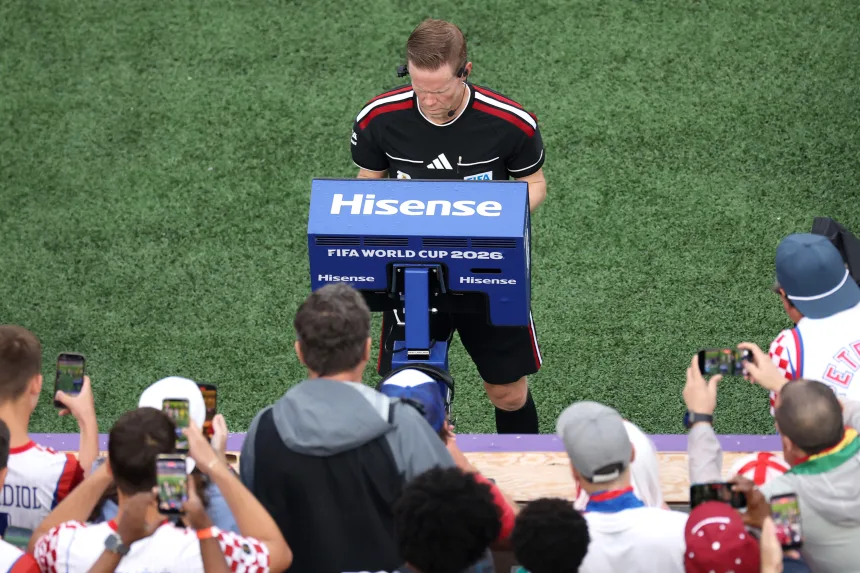
“Referees can make mistakes, just like players can miss penalties. But you have to trust them and believe in their integrity,” the speaker said.
Despite the criticism and the often unseen effort behind the job, both Lindberg and Faverani agree that officiating remains a rewarding path for those who stick with it.
“It’s a great job. It develops you not only as an athlete, but as a person,” Daniele said. “It teaches you lifelong soft skills you wouldn’t really learn otherwise.”