President John Mahama has officially launched Ghana’s Free Primary Healthcare programme, a flagship initiative aimed at expanding access to essential health services and advancing the country’s drive toward universal health coverage.
The launch took place on Wednesday, April 15, at the Shai Osudoku District Hospital in Dodowa, where the President outlined plans to improve healthcare delivery, particularly in underserved communities across the country.
The programme, which is expected to cost about GH¢1.2 billion annually, will begin with implementation in 150 underserved districts as part of its first phase.
As part of the rollout, medical equipment will be supplied to all participating districts, while public education campaigns will be intensified through town hall meetings and stakeholder engagements. The initiative will also deploy trained volunteers to support existing community health workers.
In addition, more than 350 container-based health service points will be set up in busy public locations such as markets and lorry stations to make basic healthcare more accessible.
Speaking at the launch, President Mahama said the programme is a key step toward achieving universal health coverage and strengthening Ghana’s healthcare system.
He added that the initiative is designed to complement existing health interventions while addressing long-standing gaps in access to primary care services across the country.
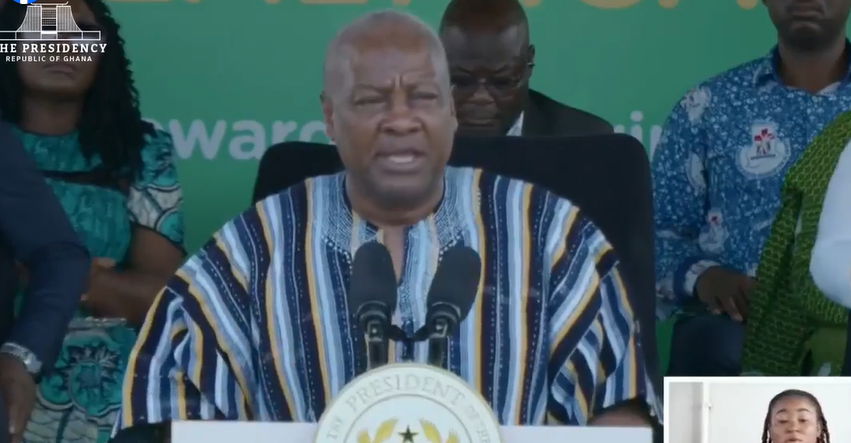
The President has acknowledged that while Ghana has made notable progress through the National Health Insurance Scheme (NHIS), significant gaps in coverage still remain, leaving some individuals and communities underserved.
He explained that the newly introduced programme is not meant to replace the NHIS, but to operate alongside it under the supervision of the National Health Insurance Authority.
“The Free Primary Healthcare is complementary to the national health insurance; it is not coming to replace it, it is coming to complement the national health insurance,” he said.
He further clarified that the introduction of the programme does not remove the need for citizens to maintain their NHIS membership.
“It doesn’t mean that because the free primary healthcare has come, you shouldn’t get the national health insurance card. You should still have the national insurance card,” he added.
President Mahama noted that the initiative is aimed specifically at strengthening primary healthcare delivery and expanding access to basic health services, while the NHIS will continue to play a vital role, particularly in providing coverage for higher-level care.
The launch is being described by government officials as part of a broader effort to address long-standing gaps in the healthcare system and improve equitable access to quality healthcare across the country.