A hidden network of legal advisers and middlemen is charging migrants thousands of pounds to help them falsely claim asylum on the basis of sexual orientation, an undercover investigation by BBC News has revealed.
In the first part of the investigation, reporters uncovered how individuals facing visa expiry are allegedly being coached to fabricate claims — complete with rehearsed personal stories and manufactured evidence such as letters, photographs and even medical reports.
Many of these applicants go on to seek asylum, claiming they are gay and would face persecution if returned to countries such as Pakistan or Bangladesh, where same-sex relations are criminalised.
Responding to the findings, the Home Office said anyone attempting to abuse the system would face serious consequences, including removal from the UK.
The UK’s asylum framework is designed to protect people who cannot safely return to their home countries due to threats such as persecution. However, the investigation suggests the system is being exploited by some advisers who profit from migrants desperate to remain in the country.
Unlike those arriving through irregular routes, many of the individuals involved are already in the UK on student, work or visitor visas that are nearing expiration. This category now accounts for around 35% of all asylum claims, which surpassed 100,000 in 2025.
After receiving tip-offs, BBC reporters went undercover, posing as international students from Pakistan and Bangladesh with expiring visas, to test whether advisers would assist in building false claims.
Their findings were striking.
One law firm allegedly charged up to £7,000 to prepare a fabricated asylum case, assuring clients that the likelihood of rejection by the Home Office was “very low.”
In some instances, individuals were advised to visit doctors and claim depression to obtain medical records that could support their cases. One person was even said to have falsely claimed to be HIV positive in an attempt to strengthen an application.
An immigration adviser reportedly claimed to have spent more than 17 years facilitating such cases, offering to arrange staged evidence — including individuals willing to pose as former same-sex partners.
In another case, an undercover reporter was told he could bring his wife from Pakistan to the UK after securing asylum, and that she could then submit her own claim by presenting herself as a lesbian.
Separately, a lawyer linked to another firm allegedly admitted to helping clients pose as either gay or atheist to obtain asylum. He quoted fees of £1,500 for assistance, with an additional £2,000 to £3,000 for creating supporting evidence.
“Nobody is gay here”
The scale of the issue was further highlighted during a visit to a community gathering in Beckton, east London.
On a Tuesday evening, more than 175 people crowded into a local centre for a meeting organised by Worcester LGBT, a group that describes itself as a support network for gay and lesbian asylum seekers.
Attendees had travelled from across the UK — including South Wales, Birmingham and Oxford — underscoring the reach and influence of such networks, even as questions grow over the authenticity of some of those seeking support.

The organisation’s website states that only genuine gay asylum seekers are welcome.
But when our undercover reporter spoke to men leaving one of its meetings, several openly said that not everyone attending was genuine.
“Most of the people here are not gays,” said a man who gave his name as Fahar.
Another attendee, Zeeshan, was even more direct.
“Nobody is a gay here. Not even 1% are gay. Not even 0.01% are gay,” he said.
The reporter’s investigation into the group began in late February, after he contacted Mazedul Hasan Shakil, a paralegal with Law & Justice Solicitors, an immigration law firm with offices in Birmingham and London.
Shakil, who is also the founder and chairman of Worcester LGBT, has previously used the organisation’s website to promote his legal services.
In an initial phone call, he told the reporter that asylum applications require evidence of persecution and suggested there was no obvious basis for a claim in his case.
However, within hours, the reporter received an unexpected call from a woman identifying herself as Tanisa.
The conversation, which switched to Urdu, took a different tone. Tanisa appeared more receptive, discussing the possibility of an asylum claim based on sexual orientation.
When told directly that he was not gay, she allegedly responded: “Listen to me. There is nobody who is real. There is only one way out in order to live here now and that is the very method everyone is adopting.”
She declined to explain how she obtained the reporter’s number. However, investigators later linked her WhatsApp profile image and first name to Tanisa Khan, an adviser associated with Worcester LGBT.
“A comprehensive package”
That evening, the undercover reporter met Tanisa in Forest Gate, East London, for what she described as an initial consultation.
Rather than meeting in an office, the discussion took place at her home. The reporter was invited inside and taken to a bedroom upstairs.
Sitting on the edge of the bed, Tanisa outlined what she said was the most viable route to securing a UK visa.
“At the moment there is only one route from where you can get a visa and it is open,” she said. “It is the asylum visa…it is on human rights and it is called gay case or same sex. There is no hope for any other visa.”
She also stressed that any application would require preparation and consistency, including memorising a detailed personal account for a Home Office interview.
“You are the one who has to go and take the exam. I am here to prepare everything for you but ultimately it is you who has to go there,” she explained.
Over the course of about 45 minutes, the conversation provided a rare glimpse into how carefully constructed some allegedly fraudulent asylum claims can be, and how challenging they may be for officials to detect.
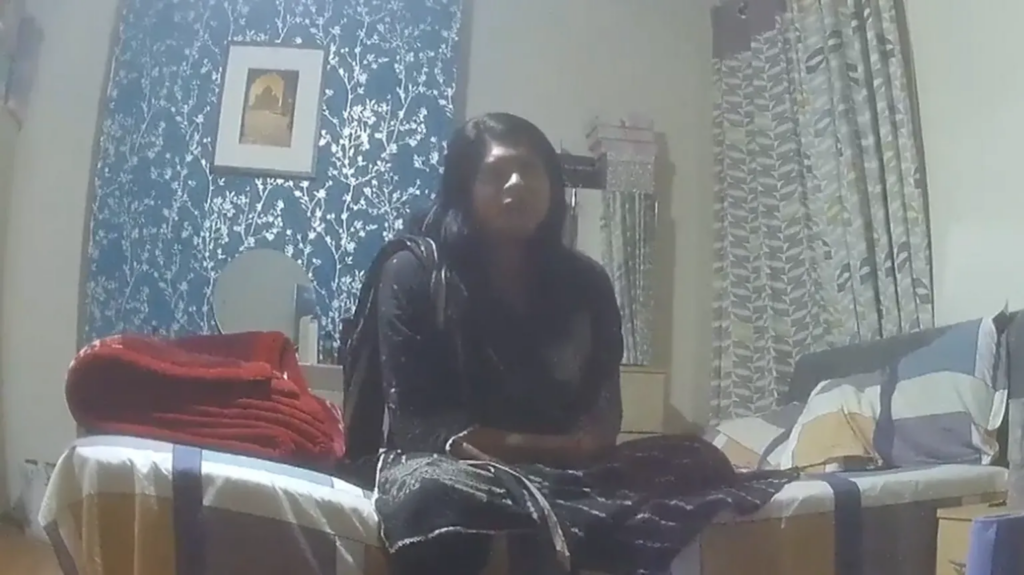
An undercover investigation has alleged that some immigration advisers and linked community figures are willing to help asylum seekers fabricate claims based on sexual orientation in order to remain in the UK.
Asylum seekers typically go through an initial screening with the UK’s Home Office, followed by a detailed “substantive interview” that can last several hours, during which their accounts are closely examined. Refusals can be challenged through the courts.
During covert meetings, an individual identified as Tanisa told an undercover reporter that asylum applications do not involve checks to verify sexual orientation, claiming instead that outcomes depend largely on the narrative presented.
“The main thing is what you say,” she was recorded as saying, encouraging applicants to simply state they are gay and present it as their lived reality. She also suggested that there were others in similar situations “not gay but applying for the visa,” adding: “You are not alone.”
She went on to outline what she described as a preparation process for interviews, including compiling photographs from LGBT venues, letters of support, and other documentation intended to strengthen an application. She also suggested arranging statements from individuals claiming past sexual relationships with applicants.
The service, she said, would cost £2,500, with higher fees if cases reached appeal. Successful claims, she added, would allow applicants to live and work in the UK and access public benefits.
When asked about family implications, she reportedly said that a spouse could also apply later, and suggested their claim could be framed around sexual orientation as well.
Tanisa, who claimed to have worked in the field for more than 17 years, is not a regulated immigration adviser. Under UK law, providing immigration advice without authorisation is illegal.
She described her role as gathering “fieldwork,” while implying that legal professionals handled formal procedures. She also referred to working with a paralegal linked to the Law & Justice Solicitors, where she later met the reporter during two separate meetings.
During one encounter, the reporter was introduced to Shakil, a legal figure associated with the firm, and shook his hand in an adjoining room. Tanisa said she used the office for meetings and coordination.
She also referenced an organisation called Worcester LGBT, which she described as able to provide membership letters and attendance records to support asylum claims. She told the undercover reporter that attendance at a forthcoming meeting would be essential to obtain evidence of affiliation with an LGBT organisation.
Separately, at a meeting with another legal adviser at Connaught Law, senior adviser Aqeel Abbasi allegedly outlined how applicants could be guided to build a claim. He reportedly suggested attending LGBT venues, obtaining photographs, and securing supporting statements, including from individuals posing as partners.
He also indicated that applicants might need to explain previous heterosexual relationships through prepared narratives, and said fees for his services would be around £7,000.
The BBC investigation also examined the role of community groups such as Worcester LGBT and others, with claims that monthly meetings attract individuals seeking documentation to support asylum applications. However, the organisation has stated that it does not create or endorse false evidence.
Ejel Khan, founder of the Muslim LGBT Network, said he had encountered similar attempts, describing it as “a vast problem,” and adding that some individuals had openly admitted they were not gay but wanted to remain in the UK.
Legal experts reviewing the footage said the alleged conduct, if accurate, would amount to fraud and would undermine legitimate asylum seekers with genuine claims.
Ana Gonzalez, an immigration lawyer with decades of experience, said fabrication of claims damages trust in the system, particularly in cases involving sexual orientation, where evidence is often subjective and based on personal testimony rather than physical proof.
Following contact from BBC News, Tanisa denied wrongdoing, describing the allegations as a misunderstanding and stating she does not speak Urdu fluently. She rejected claims that she advised false applications or fabricated evidence.
Shakil also denied any involvement in fraudulent activity, saying he was unaware of any attempt to construct false asylum claims and that his organisation does not produce or validate such evidence. He added that internal investigations were underway into Tanisa’s conduct and access to office premises.
Law & Justice Solicitors said she had no formal link to the firm and that it was investigating possible unauthorised use of its office space. Connaught Law also declined to comment on specific allegations but confirmed the adviser met by the reporter was a senior staff member.
The investigation also included wider data showing that Pakistani nationals account for a significant proportion of asylum claims based on sexual orientation in recent years, despite representing a smaller share of overall asylum applications.
Some individuals interviewed anonymously described previous experiences of being advised to fabricate sexuality-based claims, including attending LGBT events and gathering evidence under legal guidance, before later leaving the UK due to financial and legal pressures.
The findings have prompted political reaction in the UK. Labour MP Jo White called for tougher enforcement and urged authorities to investigate those implicated. Conservative shadow home secretary Chris Philp described the findings as exposing serious abuse within the asylum system, while Reform UK’s home affairs spokesman Zia Yusuf said those involved should be held accountable.
In response, the Home Office said it is a criminal offence to submit asylum claims based on deception and that all applications are rigorously assessed. It added that misuse of the system is actively investigated and procedures are regularly reviewed to prevent abuse.
The Home Secretary, Shabana Mahmood, has recently announced changes to asylum policy, including shorter periods of protection and more frequent case reviews. However, during the investigation period, Tanisa allegedly told the undercover reporter that such reforms would not necessarily prevent success if sufficient supporting material was provided.
As discussions concluded, she encouraged the reporter not to delay an application and asked whether he would refer others needing similar assistance in the future.